The Takhi Comeback Story, Told From the Ridge
Extinct in the wild by 1969, down to a handful of zoo founders, then flown back to the Mongolian steppe from 1992. How the wild takhi came home to Hustai, and what a guide sees on the grass today.
 By Bat-Erdene Ganbaatar, Hustai National Park tour guide and wildlife specialist
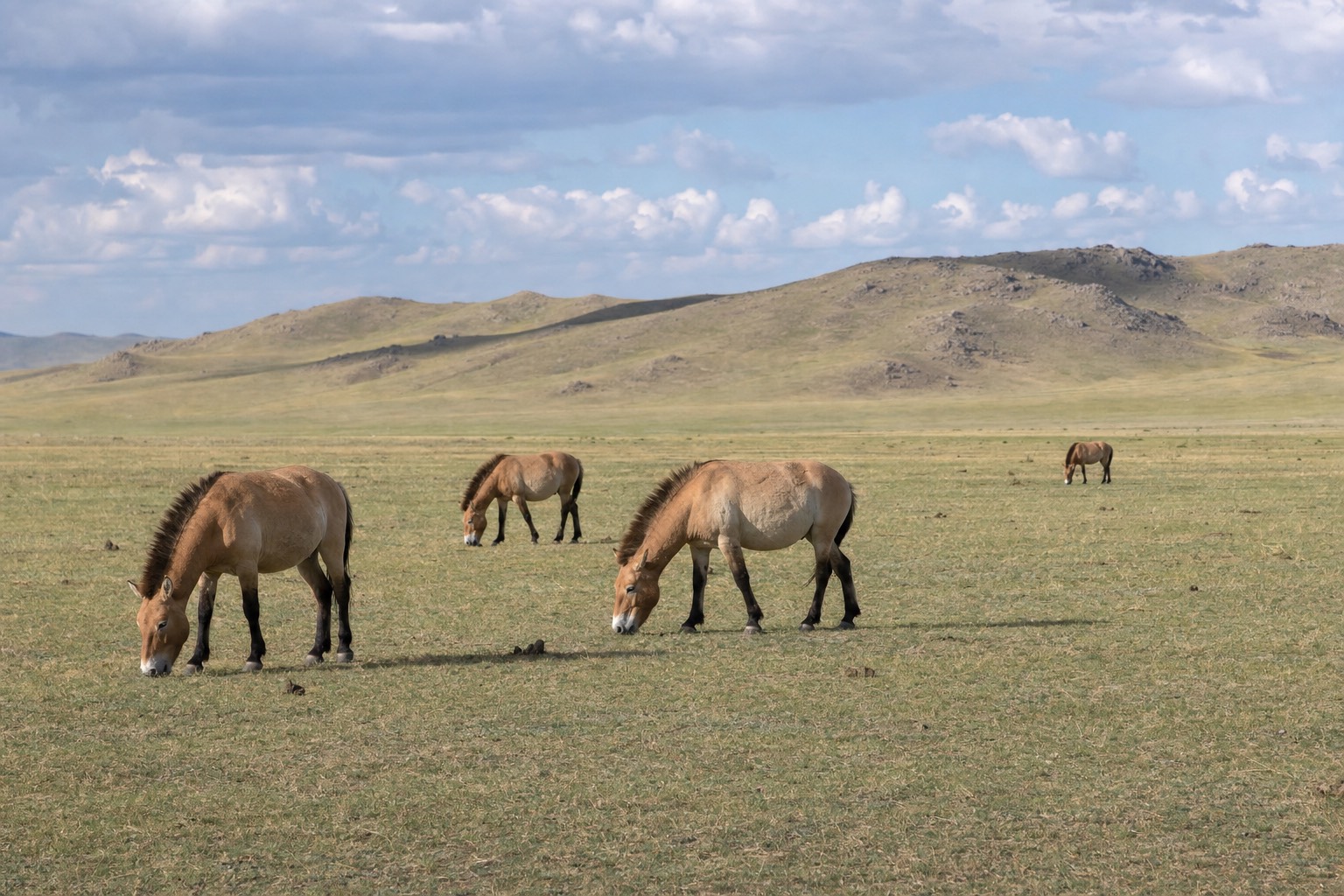
TL;DR: The takhi, Mongolia's wild horse, was declared extinct in the wild by 1969. Every one alive today descends from a small group of animals caught for European zoos, around 14 founders by the Smithsonian's count. From 1992 a Dutch-led effort flew them back to Hustai. The park now counts roughly 380 across about 34 harems, and standing on that grass, the whole rescue feels very close.
There is a spot on the ridge above the Moiltyn valley where I stop groups and let the view do the talking before I say a word. Horses on the slope below, a stallion turning his head, the wind moving the grass in long grey waves. Then I tell them the part that reorders how they look at it: sixty years ago, none of this existed here. Not one wild horse on this whole steppe. The land had them, then it did not, and then people put them back one crate at a time.
I have guided this reserve since 2022, and the comeback is the story I never get tired of telling, because you can see its result breathing in front of you.
What happened to the wild horses of Mongolia?
They vanished from the wild. Hunting pressure, harsh winters, competition with livestock for water, and captures for zoos ground the takhi population down through the twentieth century. The last confirmed wild sighting was in 1969, in the Gobi. After that, the only Przewalski's horses left on Earth lived in captivity, and the species was gone from its home range.
That 1969 date is the hinge of the whole story. It marks the moment the takhi became a horse that existed only behind fences, in zoos scattered across Europe and beyond. What saved the species was that a handful of animals had been caught decades earlier and bred in captivity, so the bloodline, though frighteningly thin, had not disappeared entirely.
The scale of that bottleneck is hard to overstate. The Smithsonian's National Zoo records that every Przewalski's horse alive today traces back to around 14 founding animals caught in the wild between 1910 and 1960. From that narrow base grew every herd now standing on the steppe, in China, in Russia, and here at Hustai. If you want the deeper genetics and how "truly wild" the takhi really is, the Przewalski's horse guide walks through it properly.
| Year | What happened |
|---|---|
| Early 1900s | Foals caught in the Gobi and shipped to European zoos and estates |
| 1945 onward | Wild numbers crash from hunting, hard winters and livestock competition |
| 1969 | Last confirmed wild takhi sighting; the species is extinct in the wild |
| 1970s to 1980s | Captive breeding and studbook work keep the thin bloodline alive |
| 1992 | First takhi flown back to Hustai; the reintroduction begins |
How did the takhi get back to Hustai?
By plane, in stages, starting in 1992. A Dutch-led conservation partnership working with Mongolian authorities selected zoo-bred takhi with the healthiest genetics, flew them to the steppe, and released them in managed batches. Hustai was chosen as a core site, and the horses were given time in enclosures to adapt before ranging free across the reserve.
The reintroduction was not a single dramatic release. It was patient, unglamorous work: choosing animals from the studbook to keep the gene pool as wide as possible, transporting them across the world, then letting them relearn a wild life in the country their ancestors had left generations before. Hustai's hill steppe, with its valleys, water and grazing, suited them, and the newly formed Hustai National Park Trust took on the long job of protecting the ground and monitoring the herds.
What strikes me most is how recent it all is. The people who drove the early transports are still alive. The park's own account of this recovery sits on the official Hustai National Park site, and the reserve was recognised as a UNESCO Man and Biosphere Reserve in 2002, a decade into the project, once it was clear the horses were staying. This is not ancient history you read on a plaque. It is a living programme, and the day trip you take out from the city drops you straight into the middle of it. The easy way to stand on that ground is a group day out, and you can book the day trip like the Hustai Day Trip from Ulaanbaatar and check live availability and prices on GetYourGuide to lock in a date.
How many wild horses are at Hustai now?
The park's official current figure is around 380 takhi in roughly 34 breeding harems, and some 2026 field reports put the herd nearer 450 as more foals survive. Hustai holds one of the largest free-ranging populations of the species anywhere, and the count has climbed steadily from the handful released in the early 1990s.
From near-zero on this steppe to several hundred wild-born animals is the number that tells the story. And these are not managed pets: they form their own harems, foal on their own, and work out their own social order across the reserve. When I say "wild-born," I mean foals dropped on the open grass to mares who were themselves born here, two or three generations on from the crates that arrived in 1992.
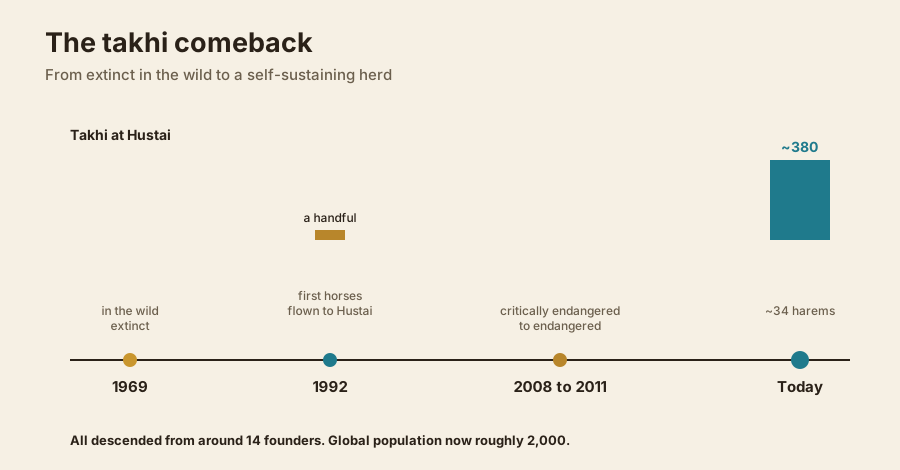
Hustai is one node in a wider recovery. Mongolia has a second stronghold in the Great Gobi B protected area, China's population has grown fast, and small herds range in Russia. Add it all up and the global total sits at roughly two thousand animals, every one descended from that tiny founder group. The by-the-numbers version, and how the counts differ by source, is laid out in how many Przewalski's horses are left.
| Population by site | Approximate figure | Source of the count |
|---|---|---|
| Hustai National Park | ~380 (some 2026 reports say ~450) | Park's official count / field reports |
| Great Gobi B, Mongolia | 350 or more | Conservation monitoring data |
| China | 900 or more | Chinese conservation reporting, 2026 |
| Russia (Orenburg steppes) | Around 125 to 133 | Regional reintroduction reports |
| Global total | Roughly 2,000 | Combined free-ranging and managed populations |
Why does the takhi matter so much to Mongolia?
Because it is the only horse that was never domesticated, and it is the national animal of Mongolia. The takhi carries 66 chromosomes against the domestic horse's 64, cannot be ridden or tamed, and stands as a living symbol of the open steppe. Bringing it back from extinction in the wild is a point of national pride, not just a science project.
Mongolians did not simply lose a species and get it back. They got back the wild horse, in a country whose entire history is bound up with horses. The domestic Mongolian horse is everywhere, in the herds you pass on the drive, in Naadam racing, in daily nomadic life. The takhi is something older and separate: never broken to a saddle, genuinely wild, and now grazing the same hills it grazed before people caught the last of them.
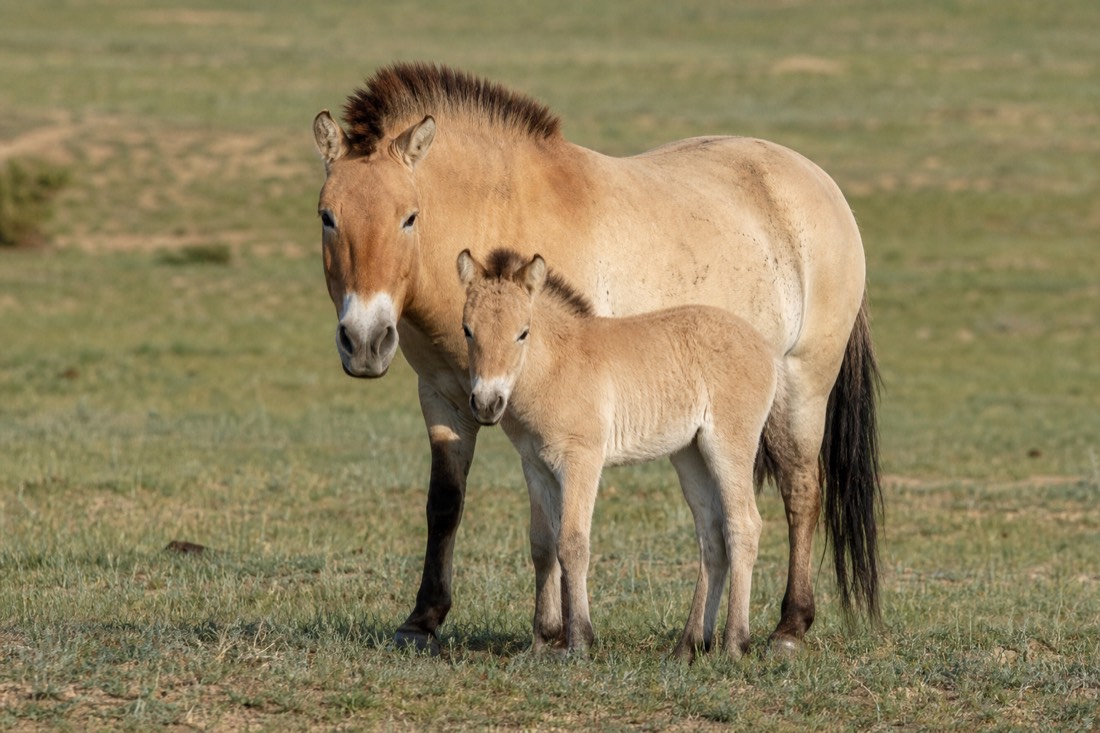
That status shift, from vanished to recovering, is written in the record books too. The species was reclassified as critically endangered in 2008, then upgraded to endangered in 2011 as the wild herds took hold, one of the rare times the international conservation ledger has moved in the right direction for a large mammal.
| Red List status | Year | What it signalled |
|---|---|---|
| Extinct in the Wild | Through the late 20th century | No self-sustaining wild population remained |
| Critically Endangered | 2008 | Reintroduced herds counted, at extreme risk |
| Endangered | 2011 | Wild populations judged to be taking hold |
The reclassification history and the "is it a real wild animal" question both sit in the wider wild horses of Mongolia guide if you want the fuller frame.
Common questions about the takhi reintroduction
Were the takhi ever truly extinct? Extinct in the wild, yes, with the last sighting in 1969. They survived only in zoos, which is what made the reintroduction possible.
Who brought them back? A Dutch-led conservation partnership working with Mongolian authorities, with the first Hustai releases in 1992.
Are the horses at Hustai tame? No. They form wild harems, foal on their own, and keep their distance. Visitors stay 200 to 300 metres back.
Can I still see the descendants of the first releases? You are almost certainly looking at them. Most horses on the reserve today are wild-born from those early founders.
Every time I bring a group up to that ridge, someone asks whether the horses "know" what they represent. Of course they do not. They are just being horses on the grass their kind was pulled off and carried back to. That, to me, is the point. The takhi did not save itself. People decided a wild horse belonged on the Mongolian steppe, and then they made it so.