We Only Saw Marmots: Honest Wildlife Expectations at Hustai
A Hustai guide on why some visitors leave having seen mostly marmots and takhi, what a realistic day actually delivers, and how to raise your sighting odds.
 By Bat-Erdene Ganbaatar, Hustai National Park tour guide and wildlife specialist
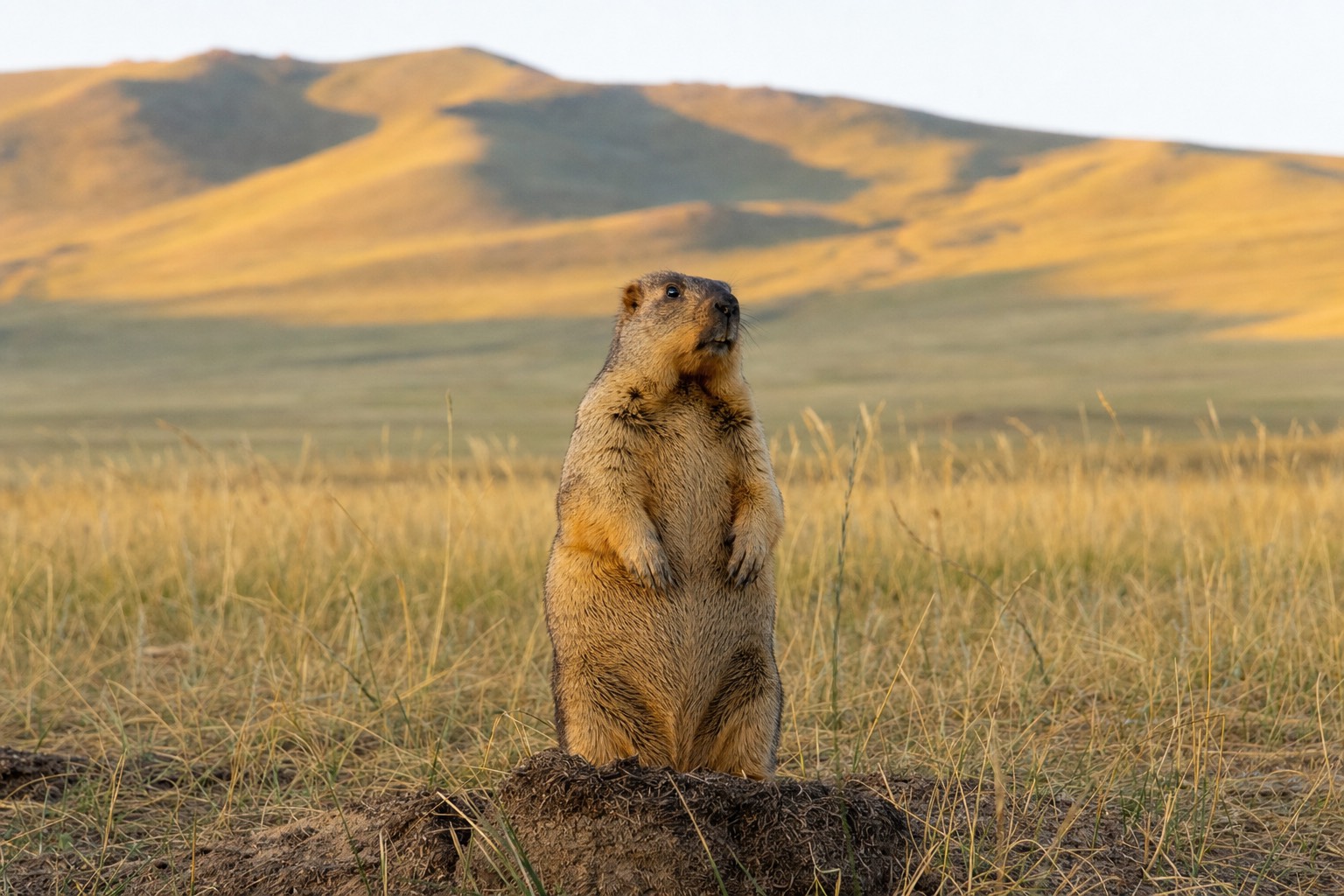
The first marmot of the morning always makes people laugh. It sits up on its haunches beside a burrow, whistles once, and drops out of sight before anyone can lift a camera. By the time we reach the first valley I have usually heard that whistle a dozen times, and I know the question that comes next: is this all we are going to see?
Some visitors do go home a little deflated. One honest line I keep reading in reviews of the park sums it up: the travel books promise more than ten species, and the day delivered squirrels, marmots and the takhi. I understand the feeling. I also think the day was better than that sentence suggests, and I want to explain why, without pretending the steppe is a zoo.
Why do some people only see marmots and horses?
Hustai is wild grassland, not a drive-through enclosure. Marmots live in the open beside the road, so everyone sees them. The takhi are managed and monitored, so a guide who knows the valleys can almost always find a harem. Everything else is genuinely wild and moves on its own schedule, which is why sightings swing so much between visitors.
Two things are working against the casual visitor. First, timing. Red deer, gazelle and wolves are most active at the edges of the day, and a lot of group itineraries reach the park in late morning when those animals have already moved to cover. Second, the honest reality that a protected steppe is not densely stocked. The park supports 55 mammal species and 223 bird species according to the park's own fauna records, but "supports" is not the same as "puts them beside your vehicle." Most of those 55 mammals are small, nocturnal, or so shy that even I go weeks without seeing them.
The tarbagan marmots are the exception, and thank goodness for them. A 2024 field survey inside the park recorded thousands of burrows, many of them active, and they sit right out in the open. They are the animal you are guaranteed to see. The takhi are the second guarantee if your guide works for it. Beyond those two, you are into the lottery that makes it wildlife rather than a petting farm.
What does a realistic day at Hustai actually deliver?
With a knowledgeable guide and a dawn or dusk visit, you are very likely to see at least one takhi harem and plenty of marmots, quite likely to catch red deer at the tree line, possible to spot gazelle on the open plain, and unlikely but not impossible to glimpse a wolf. Birds of prey are almost a given overhead.
Let me set expectations against what the brochures imply. The gap between the two is where the disappointment lives, so here it is laid out plainly.
| What the brochure suggests | What the steppe actually gives |
|---|---|
| Herds of wild horses on demand | One or two harems, found by a guide who knows their valleys, usually at range |
| Ten-plus species in a day | Two reliable (marmot, takhi), three or four possible with luck and timing |
| Close-up animal encounters | A 200 to 300 metre minimum distance from the takhi, by park rule |
| Constant action | Long, quiet stretches of grass, wind and birdsong between sightings |
| Wolves and gazelle "featured" | Real residents, but shy, and never guaranteed on a single visit |
None of that is a criticism of Hustai. It is the difference between a wild reintroduction site and a safari park that stocks animals for viewing. The takhi here descend from horses reintroduced starting in 1992, and the whole point of the place is that they now live free. That freedom is exactly what makes them hard to schedule.
Which animals are you most likely to see, species by species?
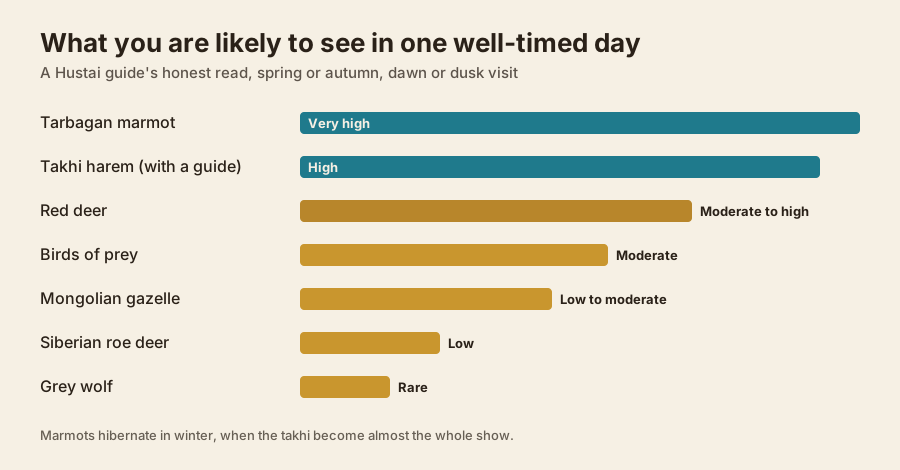
Marmots are a near certainty in the warm months. Takhi are highly likely with a guide. Red deer are a good bet at dawn and dusk near cover. Gazelle and raptors are a maybe. Wolves are rare. Winter changes everything, because marmots hibernate and the takhi become the whole show.
Here is my own field judgement after guiding since 2022, expressed as odds rather than promises. These are not park statistics, they are what I have watched happen across hundreds of mornings.
| Species | My sighting odds (well-timed spring or autumn day) | Best conditions |
|---|---|---|
| Tarbagan marmot | Very high | Warm daylight, roadside grassland; absent in winter (hibernating) |
| Takhi (Przewalski's horse) | High with a guide | Dawn and dusk, when harems come down to the valleys to graze |
| Red deer | Moderate to high | First and last light, near the wooded valley edges |
| Birds of prey | Moderate | Mid-morning thermals over the ridges |
| Mongolian gazelle | Low to moderate | Open plains, often at distance; the park population passed 500 |
| Grey wolf | Low | Chance only, usually a distant crossing at dawn |
| Siberian roe deer | Low | Quiet wooded draws, early or late |
The red deer story is the one I wish more visitors knew before they arrived. The park's herd has grown from around 50 animals to well over 1,300 across roughly twenty-five years, so your odds on deer are far better than the brochures make them sound. You simply have to be there when the light is low. If you want the fuller picture of what lives here, our guide to the animals of Hustai National Park runs through the whole cast, and the wild horses of Mongolia explainer covers the takhi's biology in depth.
How does a good guide raise your odds?
A guide raises your chances by controlling the three things you cannot: timing, position and knowledge of the harems. Arriving at first light, driving to the specific valleys where harems have been grazing, positioning you downwind and uphill, and reading fresh sign turns a hopeful drive into a reliable sighting.
This is the honest case for going with someone who works the park rather than just renting a car. The takhi are monitored, and a guide who is in the park regularly knows which valley a given harem favoured last week. That local memory is the single biggest lever on your day.
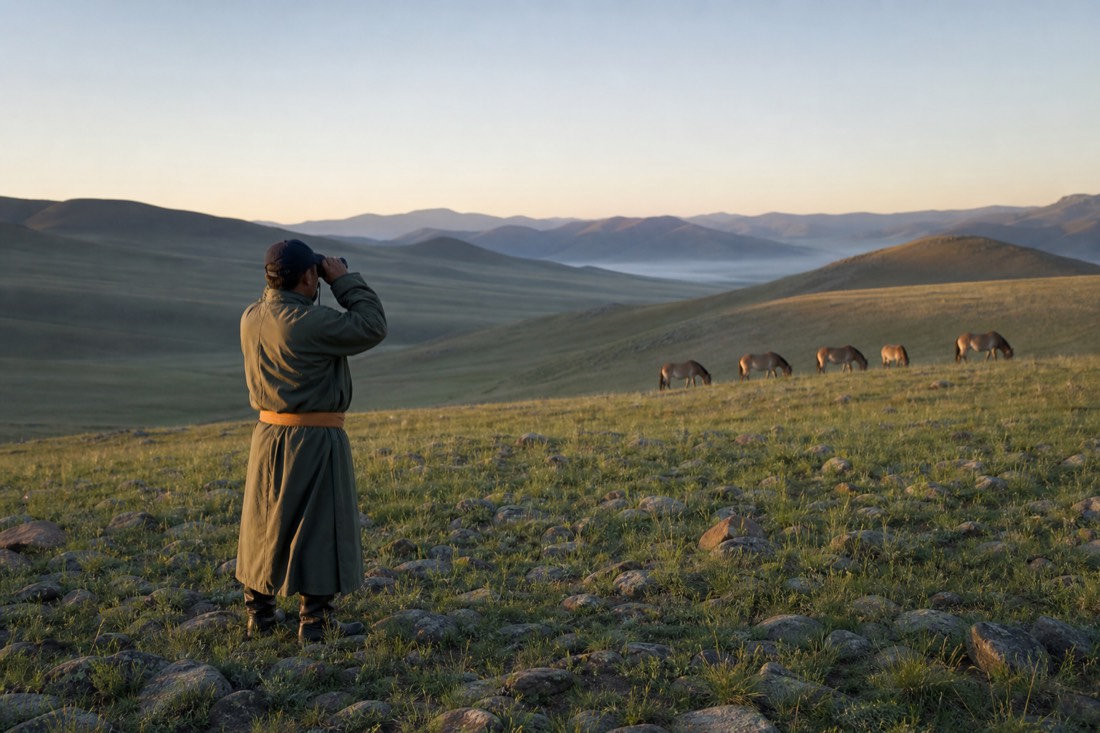
Here is the checklist I would give a friend who wanted the best possible day and only had one shot at it.
| Move | Why it works |
|---|---|
| Enter at dawn, before 8 am | Takhi and deer are grazing the open valleys before the day heats up |
| Go in spring or autumn | April to May and September to October are the strongest viewing seasons |
| Bring binoculars, not just a phone | The 200 to 300 metre distance rule means the naked eye undersells the scene |
| Stay quiet and stay on the tracks | Sudden noise pushes a nervous harem back over the ridge |
| Give the guide time, do not rush the loop | The best sightings often come after a patient wait, not a fast drive |
| Go back out at dusk if you can | A second low-light window doubles your chances on deer and wolves |
If you would rather not gamble on a fixed group schedule, a private day lets your guide chase the light instead of the clock. You can book the private day trip like the Private Hustai Day Tour and check live availability and prices on Viator if that flexibility matters to you. The group option on our secondary day trip is friendlier on budget and still gets you to the valleys, it just runs to a set 9 am departure.
Is a "quiet" wildlife day still worth it?
Yes, if you arrive understanding what wild means. The takhi are the only never-domesticated horse left on earth, brought back from extinction in the wild, now grazing free where they belong. Seeing even one harem at range, with marmots whistling around you and raptors overhead, is a conservation story you cannot get in a zoo.
I think the disappointment some people feel is really a mismatch of stories. If you come expecting a big-cat safari, the steppe will feel empty. If you come to witness a species that was declared extinct in the wild in 1969 and is standing in front of you today because of a reintroduction that started in 1992, the same day feels extraordinary. The UNESCO biosphere designation the park earned in 2002 is not decoration, it marks a place doing serious conservation work, and you are walking through the result.
The marmots, for what it is worth, are not a consolation prize. They are ecosystem engineers whose burrows shape the grassland the horses depend on. When the Smithsonian and the park talk about a functioning steppe, the whistling rodents you photographed are part of what makes it function. If you still want to weigh it up before booking, is Hustai worth visiting tackles that question head on.
Common questions about wildlife sightings at Hustai
Am I guaranteed to see the wild horses? No park can guarantee it, and the group listings say so plainly. With a guide who knows the harems and a dawn or dusk visit, your odds are high, but the takhi are free-roaming and nothing is promised.
Why did some visitors only see marmots and horses? Usually a combination of midday timing and no guide working the valleys. The animals are there. Reaching the open valleys in low light, with someone who tracks the harems, changes the day.
When is the worst time for variety? Deep winter. Marmots hibernate and many animals move to shelter, so the takhi become almost the entire show. It is still a striking visit, just a narrower one.
Can I get close to the takhi? No. The park rule keeps you 200 to 300 metres away to protect them. Bring binoculars or a long lens rather than expecting a close approach.
Are wolves really present? Yes, grey wolves live here and prey on takhi foals, but they are shy and sightings are rare. Treat any wolf encounter as a lucky bonus, not an expectation.
Manage the expectation, book the light, bring the binoculars. Do that, and "we only saw marmots" turns into "we watched a lost species graze free at dawn, and the marmots were the soundtrack."