What Animals Live in Hustai National Park?
The full cast of the Hustai steppe, from the famous wild horses to the marmots you cannot miss, with honest odds on what you will actually see.
 Written with Bat-Erdene Ganbaatar, Hustai National Park tour guide and wildlife specialist
The short answer
The headline animal is the takhi, the wild Przewalski's horse, about 380 of them. Alongside them the park protects tarbagan marmots in their thousands, over 1,300 red deer, more than 500 Mongolian gazelle, grey wolves, Siberian roe deer, and around 223 bird species including birds of prey. In practice most visitors reliably see takhi and marmots, with the larger mammals as season-dependent bonuses.
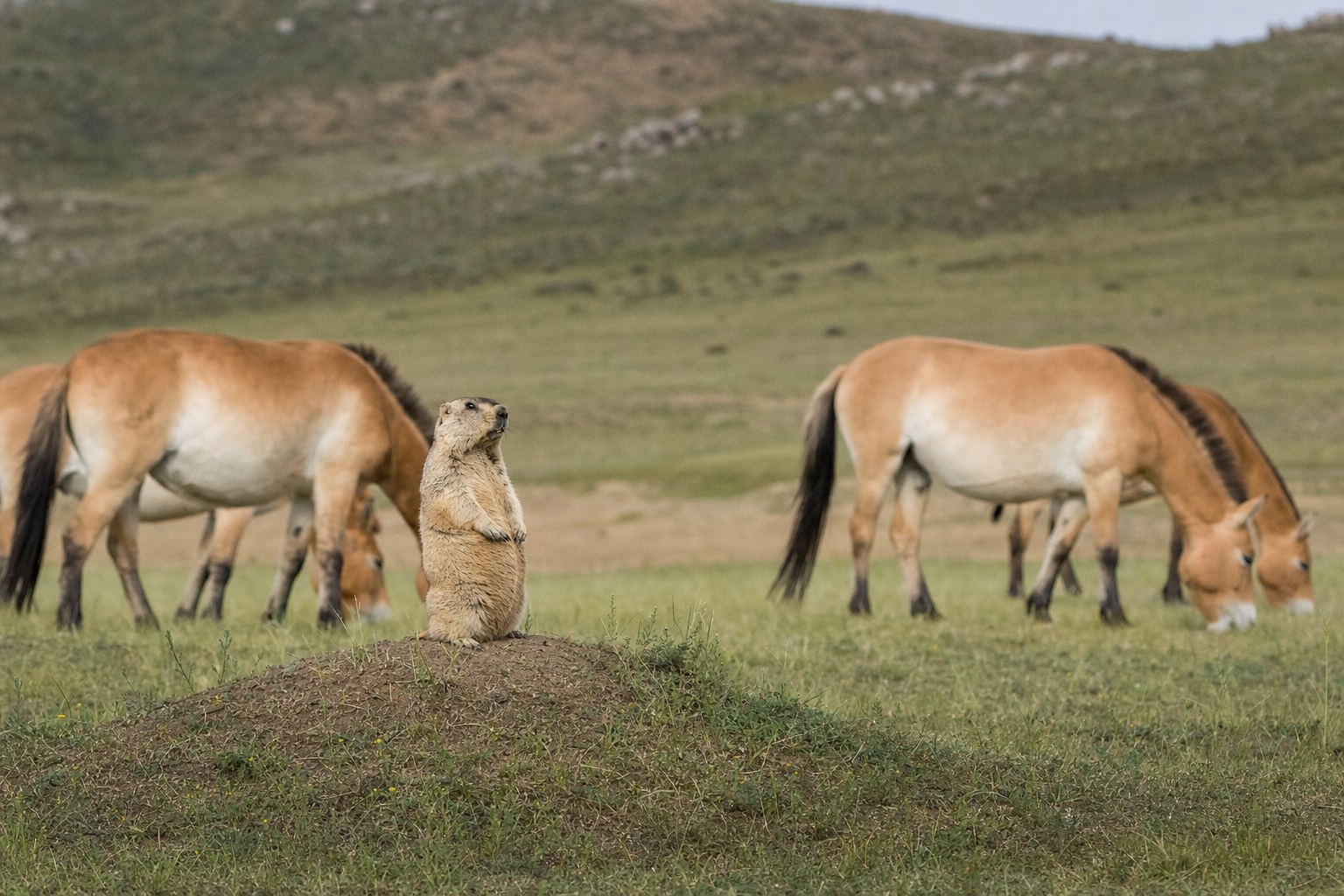
The first animal nearly everyone actually meets at Hustai is not a horse. It is a tarbagan marmot, sitting fat and upright on its burrow mound near the entrance road, whistling a warning before it drops out of sight. I have watched hundreds of visitors point their first camera of the day at a marmot, then spend the rest of the afternoon hoping for the takhi. Both are worth your attention, and so is the rest of the cast. Guiding here since 2022, I have learned that the honest question is less which animals live here and more which ones you will realistically see, and when.
What animals live in Hustai National Park?
The star is the takhi, the wild Przewalski's horse, around 380 across 34 harems. The park also holds tarbagan marmots in huge numbers, over 1,300 red deer, more than 500 Mongolian gazelle, grey wolves, Siberian roe deer, and roughly 223 bird species. Takhi and marmots are near-certain sightings; the rest depend on season and luck.
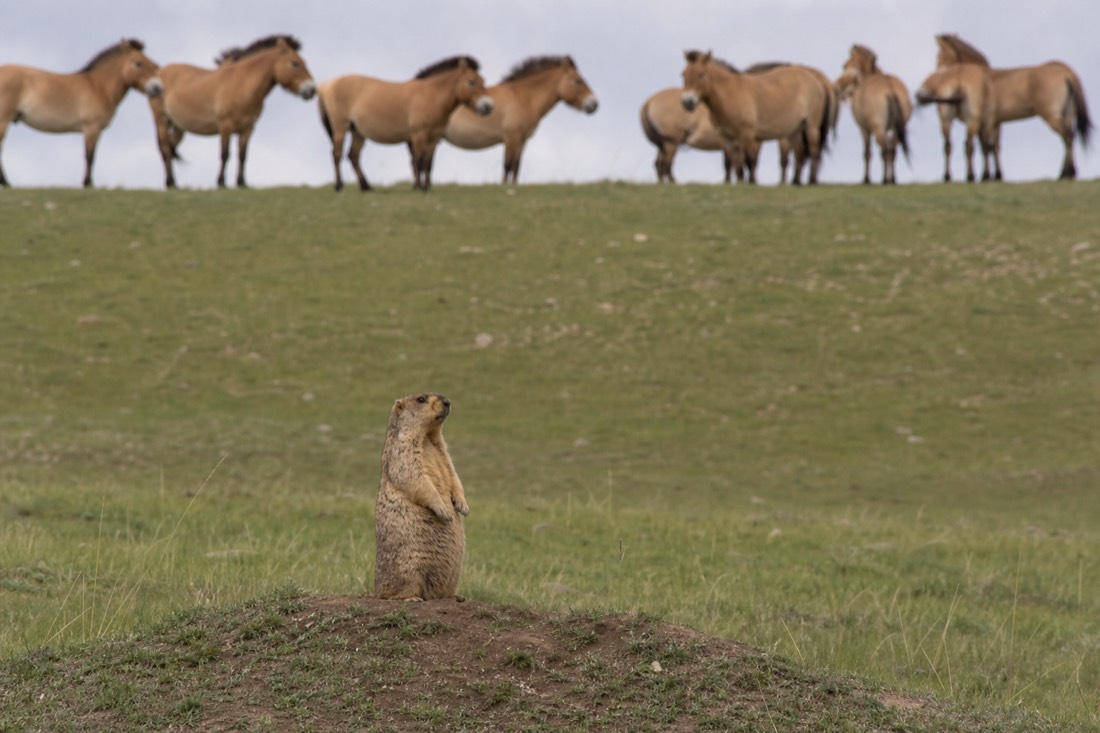
Hustai is a working conservation reserve, not a game park, and its species list reflects a whole steppe ecosystem rebuilt around the returning horses. The official park fauna records count about 55 mammal species and 223 birds. What makes the place singular is the takhi, the only horse never domesticated, extinct in the wild by 1969 and reintroduced here from 1992. The Smithsonian's Przewalski's horse profile traces how the whole living population descends from a tiny founder group, which is why every foal born on this steppe matters.
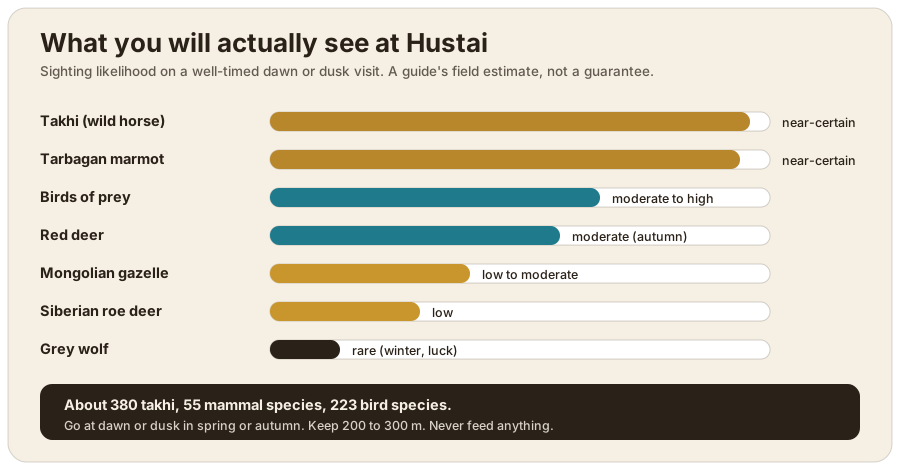
Here is the practical cast, ranked by how likely you are to actually see each one on a well-timed day. These odds are my own guiding judgment from years of dawn and dusk drives, not a published figure, so treat them as a seasoned steer rather than a guarantee.
| Animal | Best season | Best time of day | Rough sighting odds |
|---|---|---|---|
| Takhi (Przewalski's horse) | Spring and autumn | Dawn and dusk | Very high at the right hour |
| Tarbagan marmot | Late spring to early autumn | Daylight, warm hours | Near-certain when active |
| Red deer | Autumn (rut) | Dawn and dusk | Moderate |
| Mongolian gazelle | Summer and autumn | Early morning | Low to moderate |
| Siberian roe deer | Spring and autumn | Dawn and dusk | Low |
| Grey wolf | Winter mostly | First and last light | Rare |
| Birds of prey | Spring to autumn | Daytime thermals | Moderate to high |
When are you most likely to see the wild horses?
Dawn and dusk, in spring or autumn, are the prime windows. Takhi shelter in higher, cooler ground through the heat of a summer midday and drift down to the valley floors to graze and water in the cool hours. A visit that reaches the valleys around 6pm, or an early start, dramatically improves your odds over a midday stop.
This is the single most useful thing I can tell you, because timing beats luck at Hustai. In the flat glare of noon the valleys can look empty while the horses stand in the shade of the hills. The same ground at first or last light can hold three or four harems on the move. Spring, roughly April and May, and autumn, September and October, are the strongest seasons, with mild temperatures and horses in visible condition. My full breakdown lives in the best time to visit Hustai guide, which folds in weather and crowds too.
Summer still works, but you have to be disciplined about the hour. Some summer departures start earlier for exactly this reason. Winter offers the clearest air and a chance at wolves tracking the herds, at the cost of severe cold. If you want your expectations set honestly before you go, our piece on seeing mainly marmots is the reality check I wish every visitor read first.
How do you tell a takhi from an ordinary horse?
A takhi is stockier and shorter than a domestic horse, with a dun coat, a dark upright mane with no forelock, a dark dorsal stripe down the spine, and faint zebra-like leg bars. Genetically it carries 66 chromosomes to the domestic horse's 64. It has never been tamed and cannot be ridden.
Mongolia has plenty of free-roaming domestic horses, so visitors often ask how to be sure they are looking at the real thing. The differences are clear once you know them, and a good pair of binoculars settles it at distance. For the deeper species background, the Wikipedia Przewalski's horse entry is a solid primer on the traits and the genetics.
| Feature | Takhi (Przewalski's horse) | Domestic horse |
|---|---|---|
| Build | Stocky, short-legged, heavy head | Taller, leaner overall |
| Mane | Dark, erect, no forelock | Flops to one side, has a forelock |
| Coat | Dun with pale belly and muzzle | Any of many colours |
| Markings | Dorsal stripe, faint leg bars | Usually none |
| Chromosomes | 66 | 64 |
| Tameable | Never domesticated | Domesticated for millennia |
What are the rules for watching the animals?
Keep 200 to 300 metres from the takhi, stay on the marked tracks, and never feed any animal. A park guide accompanies wildlife drives in the protected zone. These rules are why the herd stayed wild and recovered, so they are not red tape, they are the reason there is anything to watch.
The distance rule does real work. Takhi are genuinely wild and easily stressed, and a harem that feels crowded will move off and take your sighting with it. I position guests uphill and downwind where I can, then let the horses set the pace. Feeding is banned outright, for the marmots as much as the horses, because habituated animals lose the wariness that keeps them alive around wolves and traffic.
| Rule | Why it matters |
|---|---|
| Stay 200 to 300 m from takhi | Wild horses spook and leave; distance protects the sighting |
| Never feed any animal | Feeding breaks natural behaviour and harms the animal |
| Stay on marked tracks | Off-track driving damages burrows and grassland |
| Follow the park guide | A guide is required for wildlife drives in the protected zone |
| No drones or loud noise | Disturbance scatters herds and nesting birds |
Because the good viewing is at a distance, this is one park where binoculars change your whole day. If you would rather have someone else handle the timing, the route and the reading of the herds, book the group day out like the Hustai Day Trip from Ulaanbaatar and check live availability and prices on GetYourGuide. Whether the day feels rich or thin usually comes down to hour and patience, and a guide handles the first while you supply the second. If you are still weighing the trip at all, my honest verdict on whether Hustai is worth visiting lays out who it suits.
How does the sighting picture change through the seasons?
Spring and autumn bring the widest mix of activity, with takhi in strong condition and red deer approaching rut. Summer is reliable for marmots and birds of prey but coincides with the hardest midday heat. Winter strips the cast back to takhi, hardy birds and, rarely, a wolf, under the clearest air of the year.
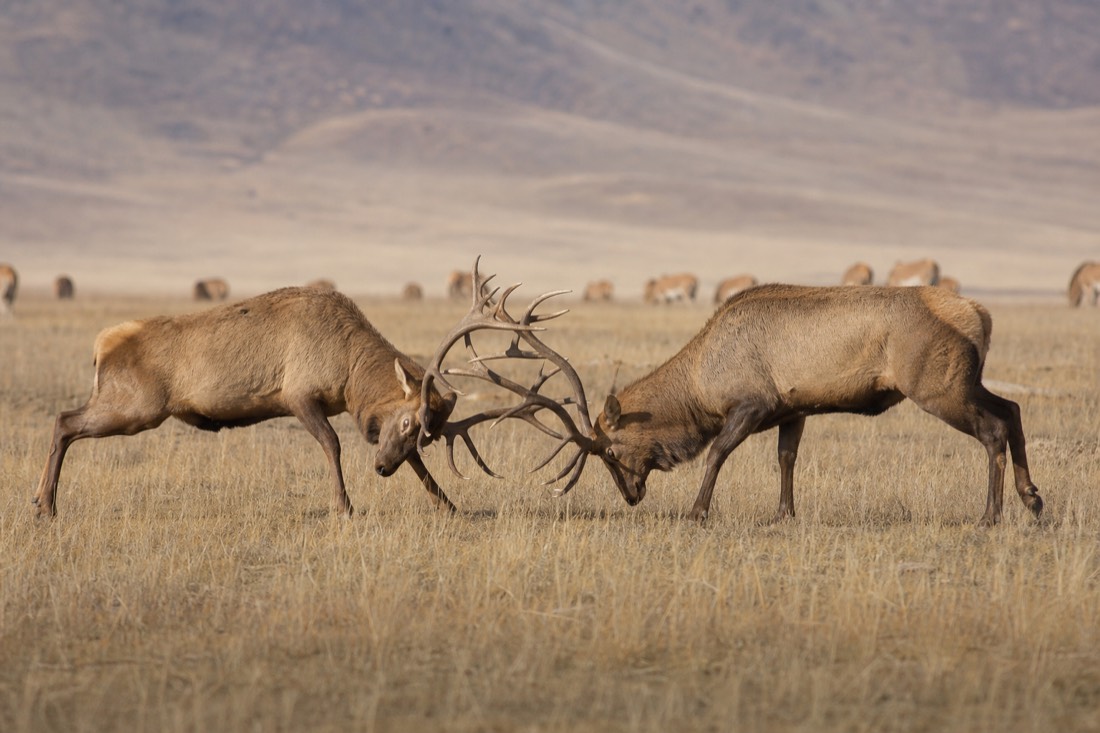
Season shapes this park's whole cast, not just the horses. Red deer, which the park's own fauna records show growing from about 50 animals to over 1,300, become far more visible around the autumn rut as stags compete for hinds. Marmots are loud and constant through the warm months, then den up for winter and effectively disappear from the sightings list until spring. Birds thin out with the cold too, leaving a smaller set of hardy species to hold the steppe through the coldest months.
I plan my own recommendations around this shift more than around anything else. A guest who tells me they specifically want deer will hear a different answer in March than in late September, and someone chasing marmots gets steered firmly toward June through August rather than a shoulder month where the burrows sit quiet. None of this is a guarantee, wild animals do not read calendars, but the pattern is consistent enough across years of guiding that I trust it more than any single day's forecast.
| Season | What is most active | What is scarce or absent |
|---|---|---|
| Spring (Apr to May) | Takhi in strong condition, marmots emerging, returning birds | Gazelle numbers still building for the season |
| Summer (Jun to Aug) | Marmots at their most visible, raptors on thermals | Midday wildlife activity drops in the heat |
| Autumn (Sep to Oct) | Red deer rut, takhi and gazelle both active | Marmots beginning to den up |
| Winter (Nov to Mar) | Takhi, hardy raptors, a rare wolf tracking the herds | Marmots hibernating, most birds gone |
What is birding like at Hustai?
With 223 recorded bird species across 16 orders, Hustai rewards anyone who brings binoculars beyond the horses. Raptors ride the thermals over the ridgelines most days, and the park sits on a migration route that has produced real records, including a count of 100 Ruddy Shelduck on a single autumn day.
The park's official fauna page puts the bird list at 223 species across 40 families, a number that reflects the whole steppe and hill habitat rather than any single hotspot. The clearest evidence of that scale sits on eBird, where a hotspot list for the park recorded 100 Ruddy Shelduck on 26 October 2024, a single strong passage day rather than a daily guarantee, but a useful sign of how much moves through in autumn.
| Bird group | When to look | What to expect |
|---|---|---|
| Birds of prey | Daytime, strongest spring to autumn | Raptors riding thermals over the ridgelines |
| Waterfowl and shelduck | Autumn passage | Flocks moving through, including recorded Ruddy Shelduck |
| Steppe and grassland birds | Year-round, most active at dawn | Smaller species foraging in open grass |
| Winter residents | Winter | A reduced but hardy set of species holds on through the cold |
Neither featured tour is a dedicated birding trip, so treat this as a bonus layer on top of the takhi day rather than the main event. Anyone travelling with a scope or a long lens should still pack it: the same ridgelines that reward horse-watching tend to produce the raptor sightings too.
Guests who mention birding upfront get a slightly different route from me, favouring the ridges and the water edges over the flatter valley floors where the horses graze. It rarely costs the takhi sighting, since the two habitats sit close together here, but it does change where I point the vehicle first thing in the morning. If birds matter to you, say so before the day starts rather than partway through, since the early hours are when the thermals and the passage birds are most active.
What is the one wildlife mistake I see every week?
The mistake I flag most is treating the midday stop near the visitor centre as the wildlife viewing itself, then leaving before the valleys wake up again in the late afternoon. The horses are usually still there, just not at the hour most groups are watching.
I have guided Hustai since 2022 and this pattern repeats on group departures more than private ones, simply because a fixed schedule can compress the day around lunch. Guests arrive mid-morning, take a short walk near headquarters, eat, and head back to Ulaanbaatar before four in the afternoon, right as the light softens and harems start moving toward water. It is an honest scheduling problem, not a lack of wildlife, and it is exactly why timing gets more attention in this guide than almost anything else.
The second version of the same mistake is subtler: guests who do stay for the late-afternoon window but spend it near the vehicle rather than walking a short distance to a proper vantage point. A ridge a few hundred metres from the parking area can make the difference between an empty-looking valley and three harems in view, simply because the sightline opens up. I try to build that short walk into every late-day stop I run, and it is the single change that turns a quiet afternoon into a memorable one more often than any other adjustment I make.
| Common mistake | Why it misses the animals | Fix |
|---|---|---|
| Treating the midday stop as the main viewing | Takhi rest on cooler high ground at midday | Push activity to the first and last two hours of daylight |
| Watching from beside the vehicle instead of scanning | Wildlife at 200 to 300 metres is easy to miss with the naked eye | Bring binoculars and scan the ridgelines methodically |
| Expecting every species on the list in one visit | The park protects a whole ecosystem, not a curated display | Treat takhi and marmots as near-certain, everything else as a bonus |
How has Hustai's wildlife recovered beyond the takhi?
The takhi story gets the headlines, but red deer, Mongolian gazelle and Siberian marmots have all rebuilt real populations inside the park's boundaries, alongside grey wolves that sit naturally back at the top of the food chain.
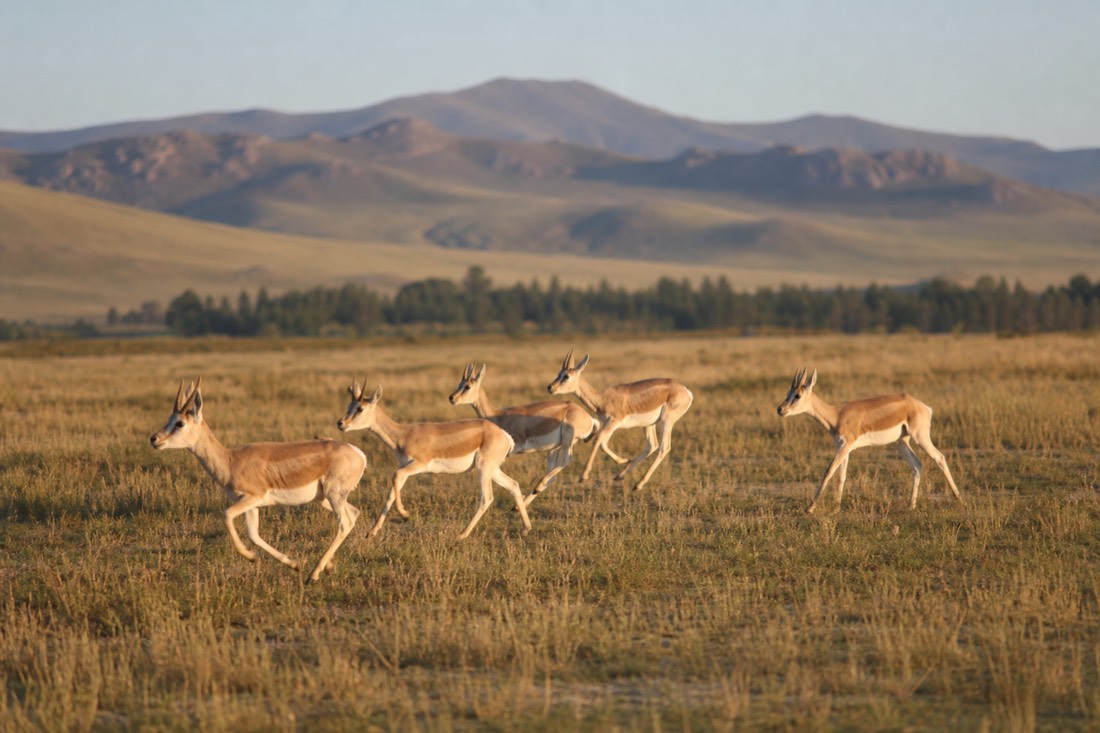
None of this happened by accident. The same protection that let the takhi come back, no feeding, a guided approach, distance kept from every animal, gave the rest of the ecosystem room to recover too.
It is a useful thing to hold in mind when a day feels quiet on the takhi front. The reserve exists because a whole system needed protecting, not one photogenic species, and a slow afternoon for horses is still a working reserve doing its job for deer, gazelle, marmots and the predators that depend on all three. I remind guests of this on the drive back more often than they expect, mostly because it tends to reframe a middling wildlife day as a genuinely good one once the bigger picture is in view.
| Species | Then | Now | Trend |
|---|---|---|---|
| Red deer | About 50 animals | Over 1,300 | Roughly 26-fold increase in about 25 years |
| Mongolian gazelle | None at the start of takhi reintroduction | More than 500 | A self-sustaining population built from zero |
| Siberian marmot | Present, lower density outside the park | Thousands of burrows recorded in a 2024 survey | Denser than the surrounding unprotected land |
| Grey wolf | Present historically | High occurrence, preys on takhi foals | A natural predator sustained within the ecosystem |
The wolf line in that table surprises people more than any other. Visitors arrive expecting a predator-free petting zoo built around one famous horse, and instead find a working food chain where wolves take foals in most years, which is exactly what a healthy ecosystem does. I do not dress that up for guests. It is the same protection regime, distance, no feeding, guided access, that let the wolves stay wild rather than turning into camp scavengers, and a system with a functioning predator at the top is a stronger sign of recovery than a paddock full of safe horses would be. It also explains why herd behaviour matters so much on a viewing day: a stallion that stays alert and keeps his mares bunched is reading the same landscape the wolves are reading, and watching that tension play out is its own kind of wildlife encounter, takhi or not.
Quick questions
Are the marmots the ones people mostly see?
Yes, alongside the takhi. Tarbagan marmots are abundant and active in daylight through the warm months, so they are almost always part of the day. Many visitors report seeing mainly horses and marmots, which is normal for open-steppe wildlife watching.
Are there wolves at Hustai, and will I see one?
There are grey wolves, and they do prey on takhi foals as part of the natural food chain. Sightings are rare, most likely at first or last light in winter. Consider a wolf a genuine stroke of luck rather than something to plan around.
Can you ride or touch the takhi?
No. Przewalski's horses have never been domesticated and cannot be ridden or tamed. The viewing distance is 200 to 300 metres, and there is no contact of any kind. That wildness is exactly what you have come to see.
How many bird species are there?
Around 223, including birds of prey riding the thermals over the hills. Spring through autumn is the birdier stretch. Bring binoculars and you will pick up raptors and steppe species alongside the mammals.