Is Hustai National Park Worth Visiting?
A park guide's straight answer on whether the wild-horse day earns your time, with the caveats the brochures leave out.
 Written with Bat-Erdene Ganbaatar, Hustai National Park tour guide and wildlife specialist
The short answer
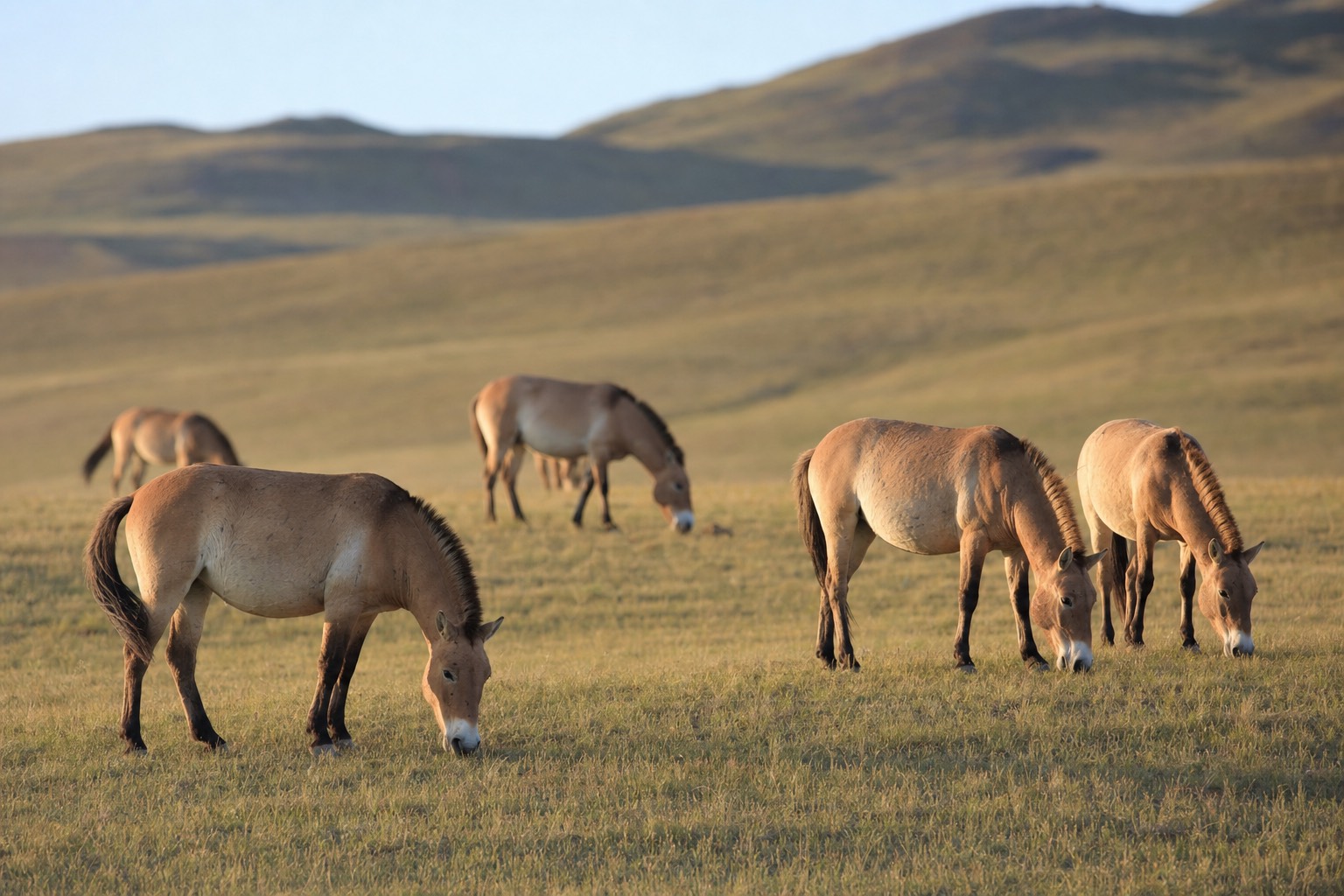
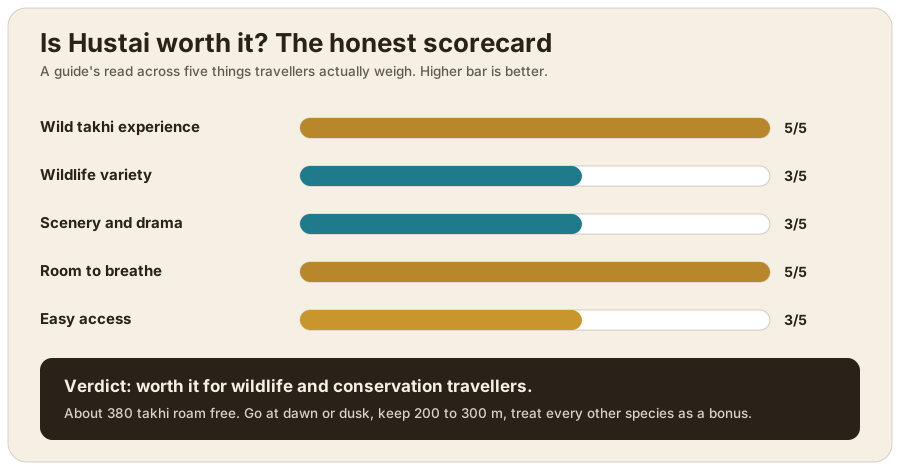
Yes, for wildlife and conservation-minded travellers. Hustai is the most reliable place on earth to watch Przewalski's horses roaming free, about 380 of them across the valleys, and the reintroduction story is genuinely moving. Temper expectations: this is one narrow park, sightings are never guaranteed, and many visitors see mainly takhi and marmots rather than the full species list. Come for the horses and the quiet, not for a zoo-style parade.
The question reaches me most often in a hotel lobby at 8am, usually from someone with a packed Mongolia itinerary and one spare day. They have read the brochures. They want to know whether the drive west is worth trading against a lie-in or a museum in Ulaanbaatar. I have guided visitors through these valleys since 2022, watched harems come down at dusk in every season, and my honest answer is not the tour-brochure answer. It depends entirely on what you came to see.
Is Hustai National Park worth visiting?
Yes, if you care about wildlife and conservation. Hustai holds the world's largest free-ranging population of Przewalski's horses, roughly 380 takhi in 34 harems, brought back from zoo stock after the species went extinct in the wild. For most nature travellers it lands. For sightseers wanting scenery or culture, Terelj may serve better.
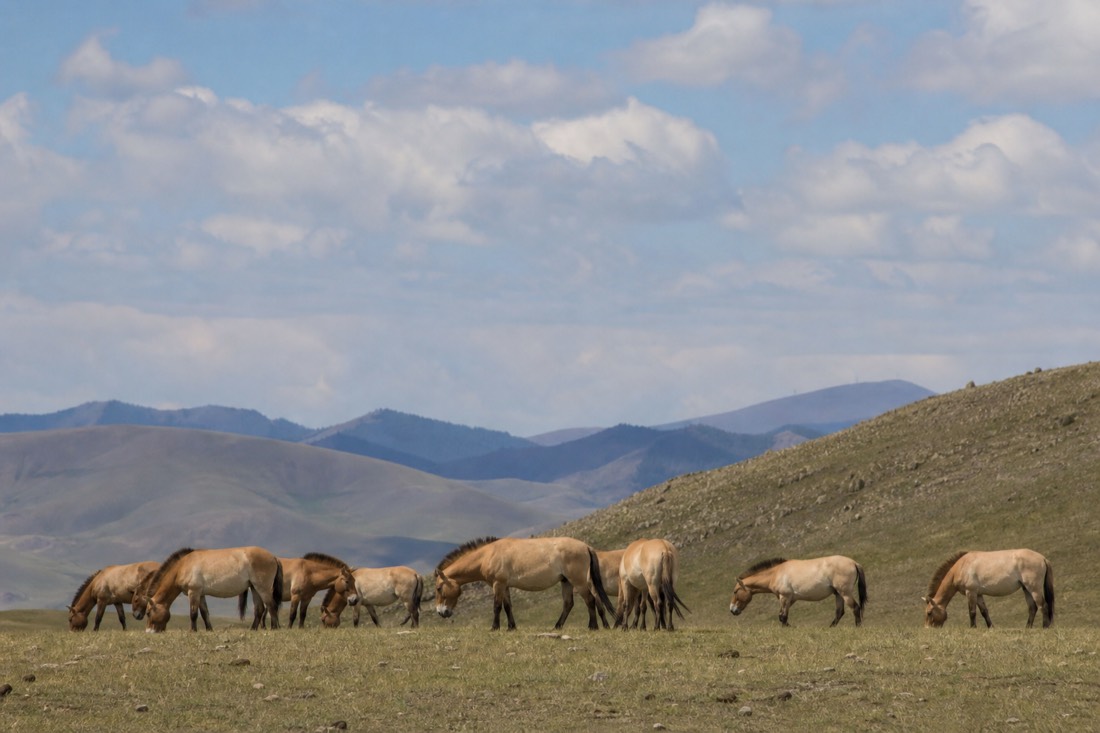
The case for going rests on one rare fact. The takhi is the only horse never domesticated, and by 1969 it survived nowhere in the wild. Reintroduction to Hustai began in 1992 with animals from European zoos, and the herd has bred back to a self-sustaining population. You can read the outline of that recovery on the official park site and the wider species history on Wikipedia's Hustai entry. Standing on a ridge at dusk while a stallion herds his mares across a valley floor, you are watching an animal that came within a whisker of vanishing. That is the thing no photograph quite carries.
Among travellers who make the trip, the consensus runs strongly positive. The phrase you see again and again in trip reports and forum threads is blunt: Hustai is totally worth it. What follows is the honest texture behind that verdict, so you can decide whether you are the visitor it suits.
Who is Hustai a good fit for, and who should skip it?
Hustai suits wildlife watchers, conservation-minded travellers, photographers with patience, and anyone drawn to the takhi story. It suits poorly those chasing dramatic scenery, cultural sights, guaranteed close-up animals, or a fast-paced day. It is a single-track wildlife park, not a highlights reel.
The park rewards a particular temperament. If you enjoy scanning a hillside with binoculars and waiting for movement, you will have a fine day. If you need a marquee sight every twenty minutes, the long steppe silences may frustrate you. Here is how it breaks down.
| This visitor tends to love Hustai | This visitor tends to leave underwhelmed |
|---|---|
| Wildlife and birdwatchers | Travellers wanting temples, rock formations, culture |
| Conservation and science-curious | Those expecting guaranteed close animal encounters |
| Patient photographers | Anyone on a tight, sight-every-hour schedule |
| People who like quiet, open country | Visitors who dislike long drives and bumpy final tracks |
| Anyone here specifically for the takhi | Families with very restless young children |
If you sit in the right-hand column, the honest move is Gorkhi-Terelj instead, with its Turtle Rock and Aryabal Temple, often paired with the giant Chinggis Khaan statue. I break that choice down fully in the Hustai versus Terelj comparison. Neither park is better in the abstract. They answer different questions.
How does Hustai compare with other day trips from Ulaanbaatar?
Hustai is the wildlife day: takhi, marmots, red deer, and steppe under a two-hour drive west. Terelj is the scenery and culture day. City-based options fill a half day. If you have one day and want wild horses specifically, Hustai has no substitute anywhere near Ulaanbaatar.
Most visitors weighing Hustai are really choosing between a small set of day options out of the capital. Setting them side by side clears up the decision quickly.
| Day option | Main draw | Drive one way | Best for |
|---|---|---|---|
| Hustai National Park | Wild Przewalski's horses, steppe wildlife | 1.5 to 2 hours | Nature and conservation travellers |
| Gorkhi-Terelj | Turtle Rock, Aryabal Temple, Chinggis statue | 1 to 1.5 hours | Scenery and culture |
| Ulaanbaatar city sights | Museums, Gandan monastery, squares | In city | Short on time, rainy days |
The wild-horse experience is what makes Hustai singular. No other reachable day trip offers it. That is also why I tell people not to expect Hustai to double as a scenery trip: it is a wildlife reserve first, and its beauty is understated rather than postcard-dramatic.
What should you realistically expect to see?
Expect the takhi and a lot of marmots, with red deer, gazelle, and birds of prey as strong maybes depending on season and hour. The brochures list ten-plus species, but many visitors report seeing mainly horses and marmots. Manage expectations and you will not be disappointed.
The gap between brochure and reality is worth naming plainly, because it is the single most common source of disappointment. One well-travelled visitor summed it up in a review: most travel books say there are over ten different animal species here, but we only saw squirrels, marmots and the takhi. That is not a failure of the park. It is the nature of wildlife watching on open steppe, where deer melt into folds of land and predators keep their distance.
| The brochure suggests | The honest reality |
|---|---|
| Ten-plus mammal species on show | Takhi and marmots near-certain; the rest are lucky sightings |
| Horses close to the road | Best viewing is from a distance, 200 to 300 metres |
| Wildlife on demand | Dawn and dusk are the windows; midday is quiet |
| A big-game safari feel | Quiet, patient scanning of hillsides |
The fix is simple. Go at the right hour, keep your expectations honest, and treat every sighting beyond the horses as a bonus. My guide to what animals actually live in Hustai sets realistic odds by season, and for the raw traveller-eye view I would read our honest piece on seeing mainly marmots before you go.
How do you make Hustai worth the trip?
Arrive for the golden hours. Takhi drift down to the valleys around dawn and dusk, so a private day that reaches the park by late afternoon, or an early start, beats a midday visit every time. Bring binoculars, keep the 200 to 300 metre distance, and give the harems time.
Timing is the whole game. In the flat light of midday the horses shelter in higher, cooler ground and the valleys look empty. The same valleys at 6pm can hold three or four harems moving to water. If you want the best odds and a slower pace, book the private day out like the Private Hustai Day Tour and check live availability and prices on Viator. A private vehicle lets you chase the light rather than the group's clock.
Whatever you book, respect the rules that keep the herd wild: stay on the tracks, never feed anything, and hold your distance. The takhi have recovered precisely because the park keeps people at arm's length. That distance is also why binoculars matter more here than at almost any other park near the capital.
What actually surprises first-time visitors?
Most people arrive expecting a wildlife park with clear sightlines, something closer to a safari. What actually catches them off guard is the scale of the place: a harem can be a set of small dun shapes half a kilometre off, more felt than seen until binoculars come up, and the drama of the day comes from watching rather than proximity.
I have guided Hustai specifically since 2022, and by my own count I have taken more than 1,000 international travellers into these valleys since then. The reaction I hear most on the drive back is not disappointment, it is surprise at how quiet the whole day was. There is no queue of animals filing past a viewpoint. There is wind, grass, the odd marmot bolting for its burrow, and long stretches where nothing much happens until, suddenly, a stallion drives his mares down a slope at dusk and the whole valley seems to move.
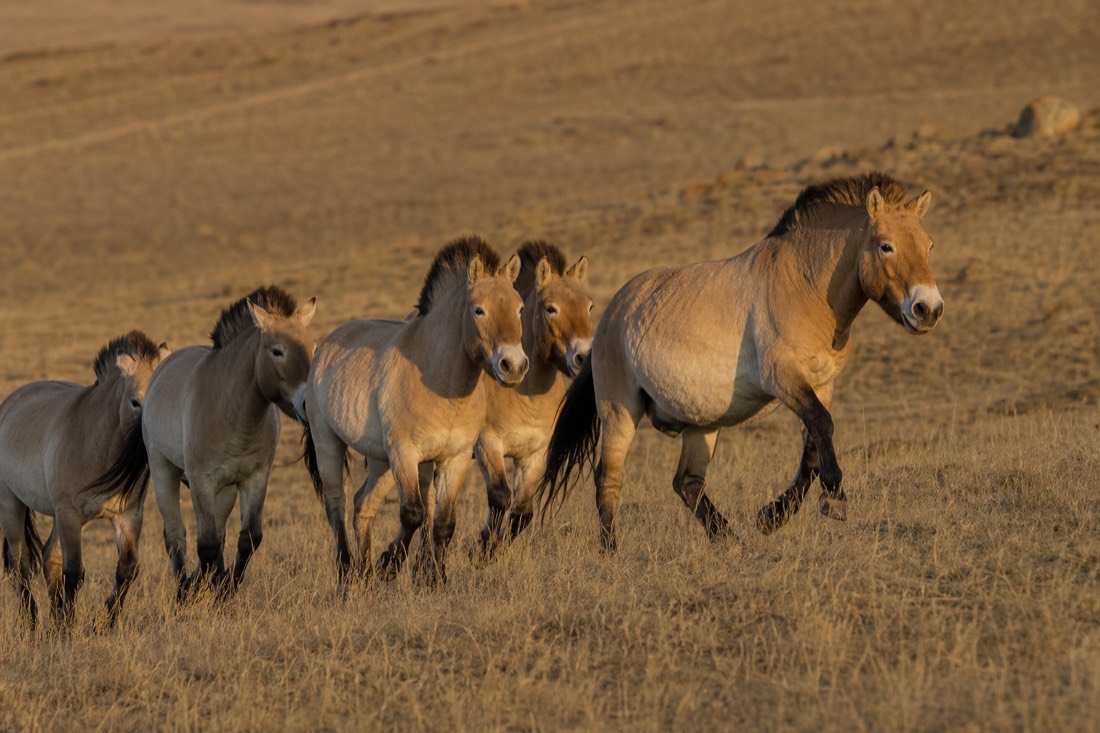
The second surprise is how much of the day is landscape rather than event. Visitors who come in expecting a checklist safari tend to leave a little stunned by how much the day rewards patience over pace. Those who arrive already knowing that almost always call it one of the best days of their trip, and I would rather tell you this now than let you find it out cold on the ridge.
There is a third surprise I only started naming out loud in the last couple of years, and it has nothing to do with animals. Guests underestimate how much the emptiness itself does to them. Mongolia's capital is dense and loud in the way most capitals are, and then within two hours you are somewhere with almost no straight lines, no fences on the skyline, and a silence broken only by wind and the odd marmot call. People who arrived tired and distracted often go quiet themselves by the second hour, in a good way. I cannot promise that reaction to everyone, but I see it often enough that I now mention it before we even leave the hotel, so nobody mistakes the calm for boredom.
Is Hustai worth the money against other Ulaanbaatar day trips?
Hustai's day price sits above the cheapest scenery-and-culture combo tours, but it buys something those tours cannot: a real chance at watching an animal that was extinct in the wild within living memory. Measured against a multi-day Central Mongolia trip, a single Hustai day covers a large share of that budget for the one experience most visitors actually came for.
Money is a reasonable filter for a one-day-in-Mongolia decision, so here is how the main options line up in 2026.
| Day trip | Typical price | What's included | Wild horses included? |
|---|---|---|---|
| Terelj plus Chinggis Statue combo | From about $34 per person | Guide or driver, sights, sometimes lunch | No, scenery and culture only |
| Generic private Ulaanbaatar day tour | Around $314 total for 1 to 6 people | Private driver and guide, flexible stops | Depends entirely on the itinerary |
| Hustai private day tour (Viator) | From $165 per person | Private transport, lunch, park admission | Yes, wild takhi and steppe wildlife |
| Hustai group day trip (GetYourGuide) | From $195 per person | Guide, lunch, entrance, transfers, travel insurance | Yes, wild takhi and steppe wildlife |
| 3-day guided Central Mongolia tour | From about $390 total | Multi-day itinerary, accommodation, guide | Varies by itinerary |
Judged purely as a day out, Hustai costs more than the cheapest Terelj combo. Judged as the one place near the capital that sells a genuine wild-horse encounter, at any price, it has no real competitor to be compared against. That is the value question underneath the dollar figures: you are not buying scenery, you are buying odds on a specific, rare animal, and both featured tours already fold the admission fee into that number.
Worth adding to that math: Gorkhi-Terelj itself charges no general entrance fee, so the low Terelj combo price is genuinely a low total, not a figure that hides admission costs elsewhere. Both Hustai tours, by contrast, quote a single figure that already folds in the park's own entrance fee, which the operators state plainly on their listings. Neither approach is dishonest pricing, they are just different parks with different fee structures, so the fair comparison is the final number you actually pay, not the headline price alone.
How does the day actually break down, hour by hour?
On the private tour's 8 to 10 hour window, expect roughly 3 to 4 hours total on the road, since Ulaanbaatar sits about 100 km and 1.5 to 2 hours away each way, and 4 to 6 hours actually inside the park split between driving between ridges, watching, and lunch.
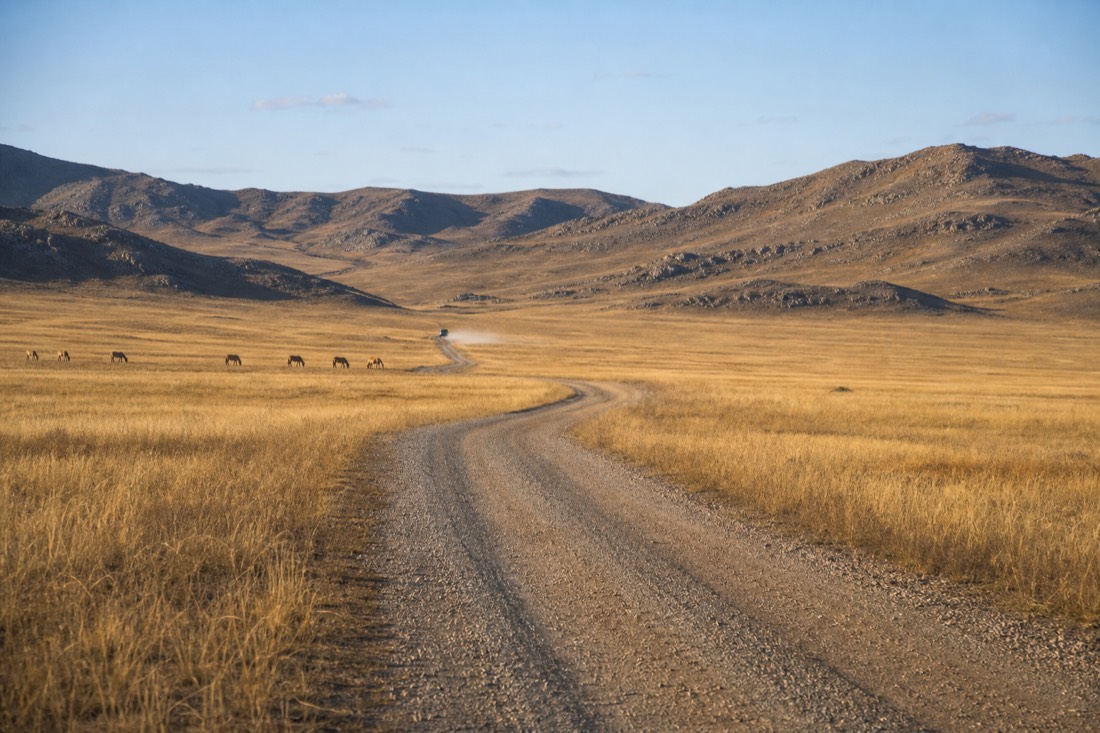
A rough shape for the day, useful for setting expectations before you book either tour:
| Time block | What happens | Duration |
|---|---|---|
| Early pickup | Hotel or guesthouse pickup in central Ulaanbaatar | 15 to 30 minutes |
| Drive out | Paved highway, then a short gravel stretch to the gate | 1.5 to 2 hours |
| Park entry and briefing | Register, confirm fees, meet your guide | 15 to 30 minutes |
| Valley drives and viewing | Slow driving between ridges, scanning for harems, marmots and birds | 3 to 4 hours |
| Lunch | Local-style meal, usually at the park or camp | 45 minutes to 1 hour |
| Drive back | Same route in reverse | 1.5 to 2 hours |
An 8 to 10 hour private departure leaves genuine slack to linger at a good sighting or wait out better light, which a fixed group schedule cannot always offer. For the fuller minute-by-minute version, including where to stop and when to eat, see the one day in Hustai itinerary.
The group day trip follows a similar shape but on a tighter schedule, since it collects several guests from different hotels before heading out and returns everyone to the same drop-off points at the end. That is not a criticism, it is simply the trade-off of a lower price shared across a group rather than a private vehicle. If your priority is flexibility over cost, the private tour buys you the ability to hold a viewpoint for an extra twenty minutes when a harem is finally moving well, something a shared itinerary cannot always accommodate.
What should each type of traveller realistically expect?
A photographer gets the most from the private tour and a willingness to wait. A family with young children should plan for a long, quiet day better suited to school-age kids than toddlers. A backpacker on a budget can join the cheaper group tour and still see the horses. A dedicated wildlife enthusiast should treat one day as a taster and think about an overnight for two viewing windows instead of one.
| Traveller type | What to expect | Verdict |
|---|---|---|
| Photographer | Distant subjects, best light at dawn and dusk, a long lens required | Book the private tour and chase the light |
| Family with young children | A long drive, quiet stretches, limited facilities | Suits school-age children better than toddlers |
| Backpacker on a budget | The group day trip covers the essentials at a lower price | The group tour delivers the core experience affordably |
| Dedicated wildlife enthusiast | One day is a taster; two viewing windows need an overnight | Consider a ger camp night for the best odds |
None of these verdicts are a reason to skip Hustai. They are a reason to pick the right version of the day. If your itinerary has room, pairing the tour choice above with a look at where to stay near Hustai will tell you fast whether an overnight suits your trip.
The one group I have not mentioned yet is the traveller squeezing Hustai into a single free day between other Mongolia plans, which in my experience is the largest single group booking either tour. For them the calculus is simpler than any of the categories above: one well-timed afternoon or morning slot, a private or group vehicle depending on budget, and realistic expectations set before departure. That combination covers the great majority of visitors who write to ask whether the trip is worth the detour, and for nearly all of them the honest answer, once expectations are set correctly, is yes.
Quick questions
Is one day at Hustai enough?
For most visitors, yes. A day trip from Ulaanbaatar gets you into the valleys at a good hour and back the same night. Stay overnight in a ger camp only if you want both a dawn and a dusk viewing, which lifts your odds noticeably.
Are the wild horses guaranteed?
No, and the honest operators say so on their listings. Sightings are very likely at dawn or dusk in spring and autumn, less certain in the flat light of a summer midday. Going at the right hour is the single biggest thing in your control.
Is Hustai better than Terelj?
Neither is better outright. Hustai is the wildlife and conservation day; Terelj is the scenery and culture day with Turtle Rock and the Chinggis statue nearby. Choose by what you came to Mongolia to see.
Will I be disappointed if I only see horses and marmots?
Only if you arrive expecting a safari. The takhi are the reason to come, and watching a wild harem move across the steppe is the memory people carry home. Treat everything else as a bonus and the day delivers.