Hustai vs Terelj: Which Day Trip from Ulaanbaatar?
Two national parks, two very different days out of Ulaanbaatar. Choosing well comes down to what you actually want to see.
 Written with Bat-Erdene Ganbaatar, Hustai National Park tour guide and wildlife specialist
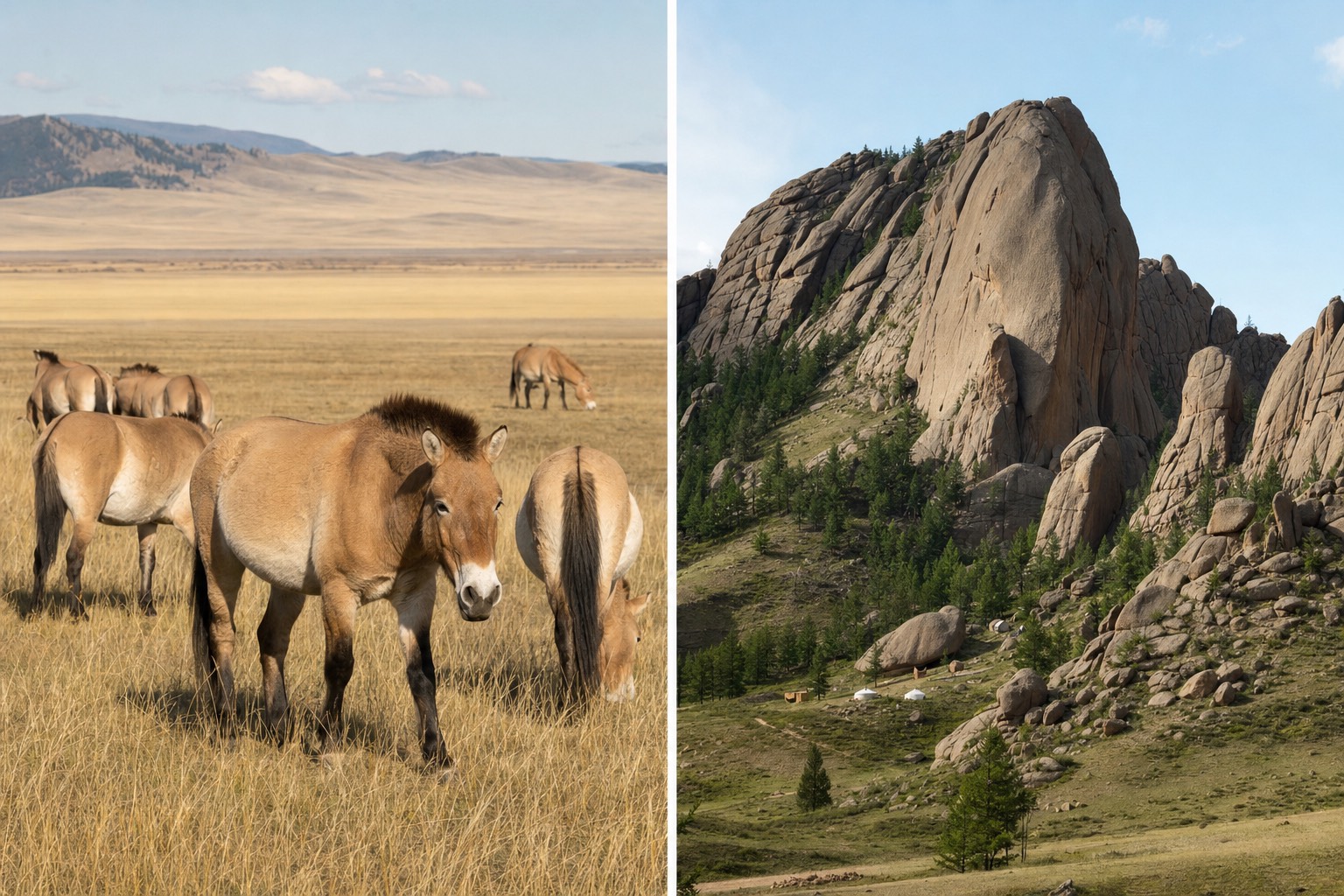
Short answer
Choose Hustai if you want wild Przewalski's horses and conservation; choose Terelj if you want dramatic scenery, temples, and the Chinggis Khaan Statue. Hustai sits about 100 km west and is a wildlife day. Terelj lies northeast, closer to the city, and pairs easily with the giant statue. You cannot do both properly in a single day.
Travellers stand at the hostel desk in Ulaanbaatar with one free day and the same fork in the road every time: the wild horses at Hustai, or the rock formations and temples of Terelj. Both are sold on every street corner, both take a full day, and the marketing photos make them look interchangeable. They are not. I guide the Hustai side, so I will be straight about who should skip it and go to Terelj instead, because a mismatched day out here is a long drive to disappointment.
TL;DR: Hustai is the wildlife and conservation day, built around wild Przewalski's horses roughly 100 km west of the city. Terelj is the scenery and culture day, northeast and closer in, with Turtle Rock, Aryabal Temple, and the giant Chinggis Khaan Statue nearby. Wildlife watchers pick Hustai; scenery and photo-stop travellers pick Terelj. Doing both in one day means doing neither well.
Hustai or Terelj: which should you choose?
Pick Hustai if the wild takhi is the thing you came to Mongolia for, or if quiet, uncrowded wildlife watching appeals. Pick Terelj if you want scenery, a Buddhist temple, an easy horse ride, and the option to add the 40-metre Chinggis Khaan Statue. Hustai is a longer haul for one remarkable payoff; Terelj packs more variety closer to the city.
The core difference is what fills your camera. Hustai gives you a living conservation story and a strong chance of watching wild horse harems at dawn or dusk, with red deer, marmots, and open steppe in between. Terelj gives you granite formations, a hillside temple, ger camps, and a short ride on domestic horses, then the enormous silver statue of Chinggis Khaan on the way in or out. Neither is better in the abstract. They answer different questions.
Distance shapes the day too. Hustai is about 100 km west, a drive of roughly 1.5 to 2 hours on paved road with a short gravel approach, as the official park site and the Hustai National Park Wikipedia entry describe. Terelj sits northeast and closer, which is exactly why it combines so readily with the statue. If you are still weighing whether the horses justify the drive, my is Hustai worth visiting guide is the honest version.
What is Hustai best for?
Hustai is best for wild Przewalski's horses, conservation-minded travellers, and anyone who prefers quiet nature over busy attractions. It protects one of the world's largest wild takhi populations across roughly 50,600 hectares, and the harems come down into the valleys at dawn and dusk. Sightings are strong but never guaranteed; this is genuine wildlife, not a show.
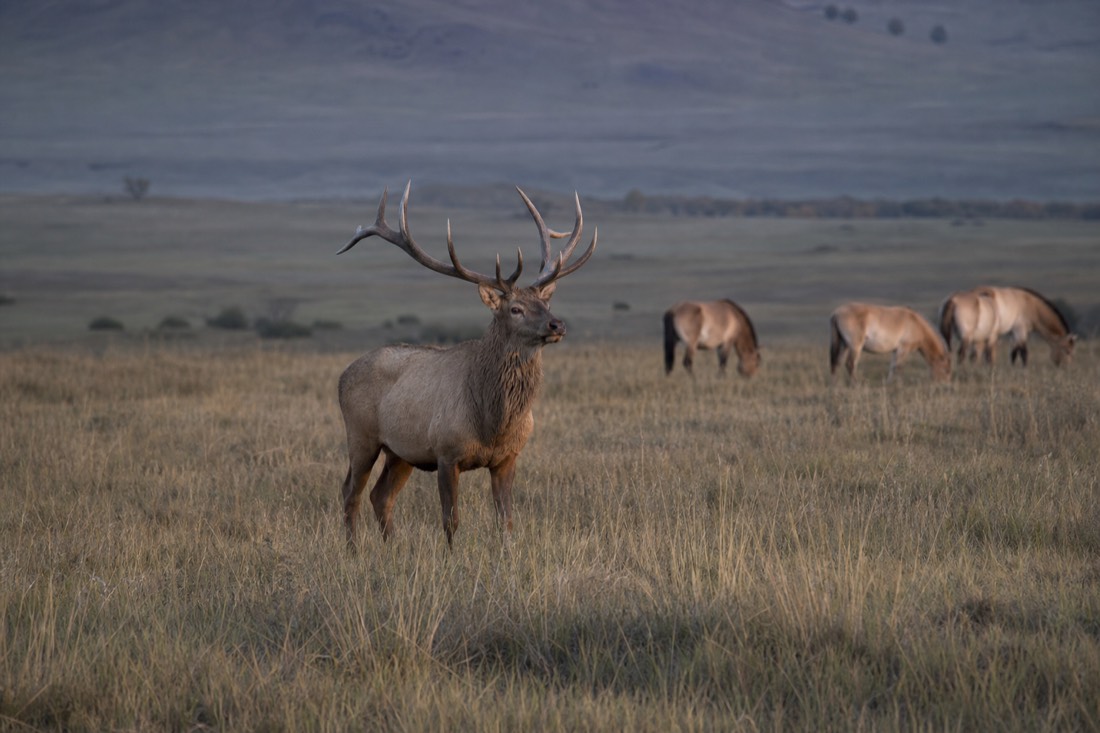
The pull of Hustai is singular and real. Nowhere else offers a better chance to watch the only never-domesticated horse living wild, in family groups, behaving exactly as it would with no fence in sight. The park is a UNESCO Man and Biosphere Reserve, and a park guide accompanies wildlife drives in the protected zone, which keeps both the animals and the experience intact. Beyond the horses you get red deer, a great many marmots, gazelle, and birds of prey across the steppe.
What Hustai is not is a varied sightseeing day. There is no giant statue, no famous rock to climb, no temple on the itinerary. It is one long, patient focus on wildlife, and the people who love it most are the ones who wanted precisely that. Timing matters more here than at Terelj, so the best time to visit Hustai guide is worth a look before you lock in a date.
What is Terelj best for?
Terelj is best for scenery, culture, and variety in one day. Gorkhi-Terelj National Park has no general entrance fee, though vehicle fees can apply in peak season, and its highlights are Turtle Rock, the hillside Aryabal Meditation Temple, and easy horse riding. Most day trips pair it with the 40-metre Chinggis Khaan Statue, which sits between the park and the city.
Terelj is the crowd-pleaser, and I mean that plainly. In a single day you can photograph Turtle Rock, climb the steps to Aryabal Temple for a valley view, ride a domestic horse for an hour, eat at a ger camp, and stand inside the vast steel statue of Chinggis Khaan on his horse. That combination, drawn from GetYourGuide, Viator, and TripAdvisor listings for 2026, is why so many operators sell Terelj and the statue as one package.
The trade-off is people. Terelj is closer to Ulaanbaatar and far more developed, so the popular stops get busy, especially in summer and around the Naadam period. If your ideal day is variety, photo stops, and a bit of culture, that bustle is a fair price. If it is solitude and wildlife, it is not.
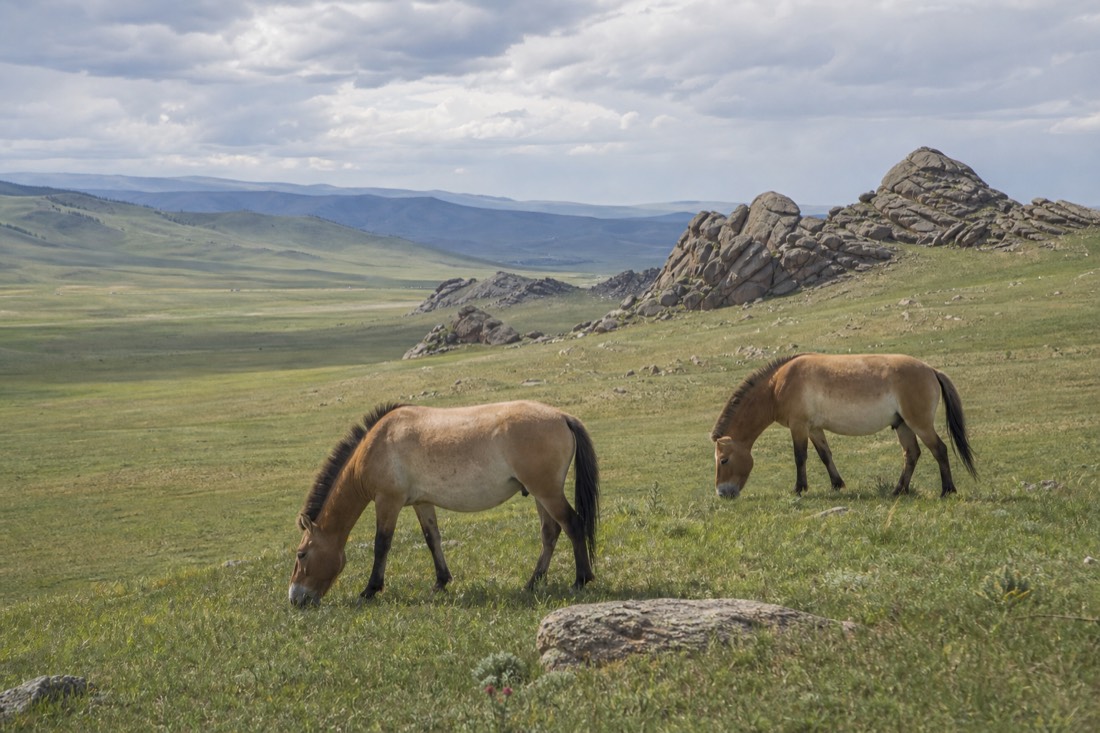
Hustai vs Terelj, head to head
| Factor | Hustai | Gorkhi-Terelj |
|---|---|---|
| Main draw | Wild Przewalski's horses (takhi) | Rock formations, temple, statue |
| Direction from UB | West, about 100 km | Northeast, closer in |
| Best for | Wildlife, conservation, quiet | Scenery, culture, variety |
| Entrance | Foreigner fee at HQ, tours include it | No general entrance fee; vehicle fees in peak season |
| Horse riding | None; wild-horse viewing only | Yes, on domestic horses |
| Signature add-on | The steppe and its wildlife | 40-metre Chinggis Khaan Statue |
| Crowds | Low, spread out | Higher at popular stops |
| Sightings guaranteed? | No, genuine wildlife | Scenery is always there |
Which should you pick by traveller type?
Wildlife watchers, conservation travellers, and photographers after wild animals should choose Hustai. First-time visitors wanting variety, families with a mix of ages, and anyone keen on the Chinggis Khaan Statue should choose Terelj. Couples and slow travellers can go either way, depending on whether they want quiet nature or a fuller sightseeing day.
Match the park to the person and the day works. I have watched wildlife lovers light up at Hustai and I have watched restless teenagers wilt there, wishing they were climbing Turtle Rock. There is no shame in either. The mistake is picking on reputation rather than on what your group actually enjoys.
| Traveller type | Better pick | Why |
|---|---|---|
| Wildlife and nature lovers | Hustai | The wild takhi and quiet steppe |
| First-timers wanting variety | Terelj | Rocks, temple, statue in one day |
| Families with young children | Terelj | Horse rides, short walks, the statue |
| Photographers of wild animals | Hustai | Harems at dawn and dusk |
| Culture and history seekers | Terelj | Aryabal Temple and Chinggis Khaan Statue |
| Couples wanting calm | Hustai | Fewer crowds, slow pace |
| Short-on-time sightseers | Terelj | Closer, more stops per hour |
If Hustai is your pick, the practical logistics are covered in how to get to Hustai from Ulaanbaatar, and you can book a group departure like the Hustai day trip from Ulaanbaatar and check live availability and prices on GetYourGuide.
Can you do Hustai and Terelj in one day?
Not well. They lie on opposite sides of Ulaanbaatar, Hustai to the west and Terelj to the northeast, so combining them means most of your day is spent driving and neither park gets the time it needs. Listings and 2026 visitor guides pair Terelj with the nearby Chinggis Khaan Statue precisely because those sit together; Hustai does not. Treat them as two separate days.
The geography settles it. To reach both you would cross the city twice and add hours in the van, arriving at each park outside the times that make it worth going. Hustai rewards the dawn and dusk hours when horses move; a rushed midday drop-in is the weakest version of it. Terelj rewards an unhurried wander among the rocks and up to the temple. Cram both together and you get the tired middle of each.
| Combo idea | Realistic? | The catch |
|---|---|---|
| Hustai + Terelj in one day | No | Opposite sides of the city, too much driving |
| Terelj + Chinggis Khaan Statue | Yes | They sit close together; a standard pairing |
| Hustai as a full day | Yes | Its own dedicated day for dawn or dusk horses |
| Hustai overnight in a ger camp | Yes | Best odds for both dawn and dusk sightings |
The better move, if you have two days, is one for each park. If you have one day and the takhi is the dream, give it to Hustai and plan the hours around when the horses come down. My one day in Hustai itinerary shows how to shape that single day for the best chance at a sighting.
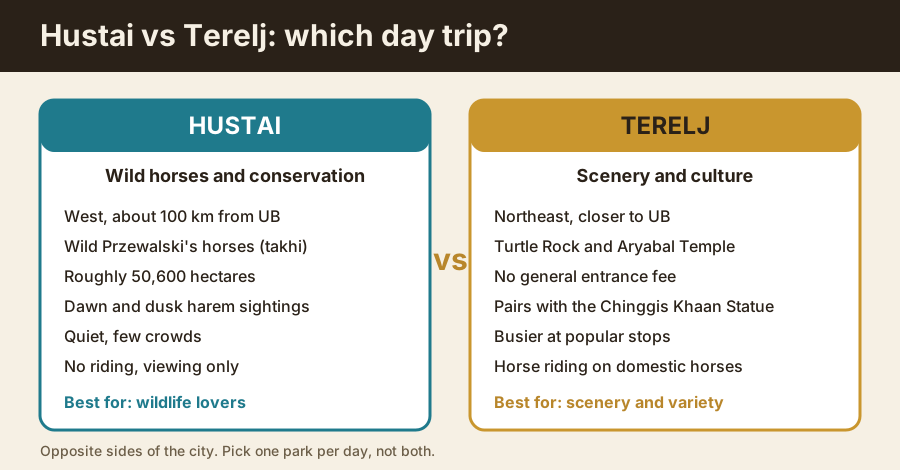
One more honesty note. Hustai is wild horses only, with no riding, so if a saddle is on your wish list that belongs to Terelj or a ger camp. The can you ride a Przewalski's horse guide explains why the takhi stays hands-off.
Planning two days in Ulaanbaatar: which park goes first?
With two days in the capital, do Hustai first while you are fresh for its early start, then Terelj second as the easier, closer day. Hustai rewards a dawn or dusk arrival and a longer drive, which suits a first full day more than a tired second one. Terelj's shorter drive and varied stops make a relaxed finish to the trip.
The order matters more than people expect. Hustai's best sightings cluster around dawn and dusk, which usually means an earlier start and a longer day, roughly 100 km each way at 1.5 to 2 hours a leg. Putting that on day one, while your body clock and enthusiasm are both intact, gets you the best odds of a strong takhi sighting rather than a rushed attempt on day two. Terelj, closer to the city and built around fixed scenery rather than an animal that may or may not show, forgives a later start and a more relaxed pace, which makes it the natural second day.
There is a practical reason too. Terelj combines easily with the Chinggis Khaan Statue on the way in or out, since the two sit close together northeast of the city. Hustai does not pair with anything else in a single day, since it lies west and needs its own dedicated time. Front-loading the trip with the thing that cannot be combined, then closing with the day that naturally bundles two highlights, is simply the more efficient shape for two days.
| Day | Park | Why this order works |
|---|---|---|
| Day 1 | Hustai | Fresh for the early start; best odds at dawn or dusk |
| Day 2 | Terelj plus the Chinggis Khaan Statue | Shorter drive, relaxed pace, natural pairing |
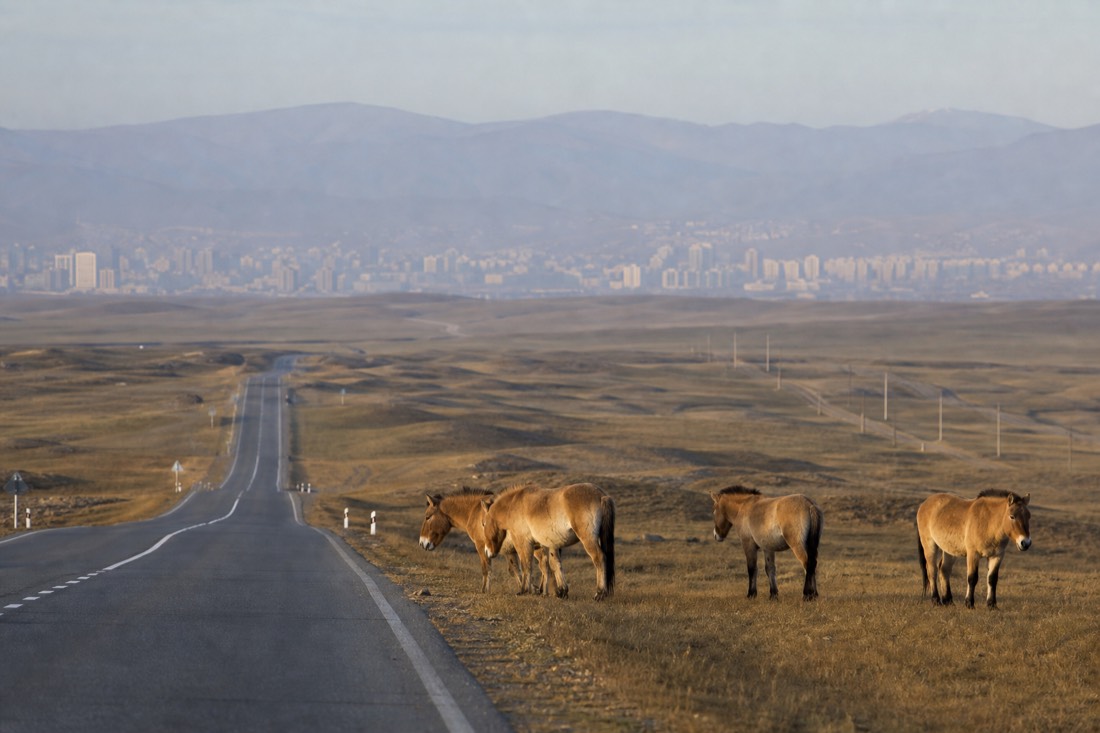
If your two days fall on different logic, for instance a late flight in that rules out an early Hustai start, simply reverse the order. The rule that matters is not which day comes first, it is giving Hustai its own full day rather than squeezing it into leftover hours.
A three-day version of this trip solves the tension entirely: Hustai on day one, a full rest morning on day two before the shorter Terelj and statue loop in the afternoon, and a buffer day either side for the flight or for Ulaanbaatar itself. Few travellers have that much time, but if you do, it removes the pressure of treating either park as a box to tick between other plans.
How do the costs compare across a Hustai day and a Terelj day?
A Hustai day is not meaningfully more expensive at the gate. Foreigners pay roughly USD 5 to 8 entrance plus about USD 5 per vehicle, both usually folded into a booked tour's price. Terelj charges no general entrance fee at all, though a vehicle fee, around 9,000 MNT for a standard car in peak season, can apply. The bigger cost swing between the two days is transport and tour type, not the parks themselves.
Once you look past the gate, the real cost differences show up in how each day is typically booked. Terelj day trips that include the statue and some riding are widely listed from around US$34 per person, reflecting the shorter drive and the sheer number of operators running it daily. A private day around the capital, whichever park it visits, runs closer to US$314 total for a group of one to six, a flat cost that gets cheaper per person the more people share it. Multi-day trips that head further into Central Mongolia, well beyond either park, start from roughly US$390 for three days. None of these figures are fixed prices, current listings simply cluster around them in 2026.
| Cost line | Hustai | Gorkhi-Terelj |
|---|---|---|
| Entrance fee | ~USD 5 to 8 per person | None generally charged |
| Vehicle fee | ~USD 5 | ~9,000 MNT in peak season |
| Typical group day trip from | Included in tour price | From about US$34 per person |
| Typical private day trip | Around US$314 total, 1 to 6 people | Around US$314 total, 1 to 6 people |
| What usually drives the total | The drive and the tour type, not the gate | The drive and the tour type, not the gate |
The honest takeaway is that neither park will break a Mongolia budget, and the entrance fees barely register against what you already pay for transport. Choose on what you want to see, not on which gate costs less.
Mongolia's tourism numbers give some sense of scale behind these prices. The country recorded around 727,000 foreign visitor arrivals in 2024 and close to 847,000 in 2025, a record year, according to national statistics, and the two capital day trips, Hustai and Terelj, are consistently among the most-booked single-day products in that growing market. That volume is exactly why so many operators compete on the Terelj route in particular, and why its from-prices sit lower than a bespoke, less-travelled day would.
Which traveller type Bat-Erdene actually sees regret their choice
I guide Hustai, not Terelj, so I will not pretend to have led anyone up to Turtle Rock. What I do hear, from guests who did Terelj first or asked around before booking, is a repeating pattern: people who wanted variety and a full sightseeing day end up disappointed by Hustai's single, patient focus, and people who wanted quiet wildlife time find Terelj's popular stops busier than they hoped.
The mismatch is rarely about either park being bad. It is about arriving with the wrong day's expectations. A guest who pictures a Mongolia day trip as photo stop after photo stop, temple then statue then market, can find a slow morning scanning an empty valley genuinely frustrating, however good the eventual sighting is. Equally, a guest hoping for solitude and open steppe can find Terelj's busier viewpoints, especially in summer, a bit much after building up an image of untouched wilderness from the marketing photos. Neither reaction means they picked wrong in any objective sense. It means the day did not match the trip they had built in their head.
What I tell people who ask me directly, before they book either day, is to be honest about which feeling they actually want from the day: the patient, uncertain thrill of wild animals on their own schedule, or the reliable variety of fixed, photogenic stops. That one question sorts almost everyone correctly, faster than any comparison table can.
I will add one more honest note, since it is the one thing I would want to know before booking either day myself. Groups with a genuine mix of interests, one wildlife enthusiast and several people who would rather see a temple, often do better splitting up for a day than forcing everyone onto the same itinerary. Mongolia's two capital day trips are common and well served enough that a small group can comfortably divide for a day and reconvene that evening with two completely different sets of photos.
How does the wildlife-watching actually compare?
Hustai is a dedicated wildlife reserve with a real species list behind it: about 380 takhi across 34 harems, roughly 223 bird species, 55 mammal species, over 1,300 red deer recovered from a founder group of about 50, and more than 500 Mongolian gazelle. Gorkhi-Terelj is not run as a wildlife-viewing park in the same sense; sightings there are incidental to a day built around scenery, and there is no equivalent census or reintroduction programme behind it.
The contrast is structural, not a matter of luck on the day. Hustai exists specifically because of a reintroduction programme, and every number attached to it, the takhi count, the red deer recovery, the bird list, comes from a park actively managed for that purpose, with guides who read the valleys for exactly this reason. Terelj was never built around a species count. Its rock formations and temple draw the visitors, and whatever marmots, birds, or the odd deer you notice along the way are a pleasant bonus rather than the reason the park exists.
| What you're comparing | Hustai | Gorkhi-Terelj |
|---|---|---|
| Managed for wildlife | Yes, a dedicated conservation reserve | No, a scenery and culture park |
| Headline species | Takhi, around 380 across 34 harems | None; no equivalent census |
| Other tracked wildlife | Red deer (1,300+), gazelle (500+), marmots, wolves | Not systematically tracked |
| Guide requirement for wildlife zones | Yes, mandatory in the protected core | No equivalent zone |
| What you are likely to notice | Animals, as the main event | Animals, as a background detail |
If wildlife is the actual reason for your Mongolia trip, this is the clearest single argument for choosing Hustai over Terelj, cost and distance aside. Everything else in this comparison, scenery, culture, convenience, is a matter of taste. This part is not.
Common questions
Is Hustai or Terelj closer to Ulaanbaatar?
Terelj is closer and lies northeast of the city. Hustai is about 100 km west, a drive of roughly 1.5 to 2 hours. That extra distance is part of why Hustai feels quieter and why it does not combine with the Chinggis Khaan Statue the way Terelj does.
Can I ride a horse at Hustai like at Terelj?
No. Hustai is wild Przewalski's horse viewing only, with no riding at all. The horse rides you see advertised are at Terelj and at ger camps, on domestic Mongolian horses. If riding matters to you, that points you toward Terelj.
Which has better wildlife, Hustai or Terelj?
Hustai, clearly. It is a dedicated wildlife reserve with wild takhi, red deer, marmots, and more. Terelj is beautiful but is chosen for scenery and culture rather than animals. For a wildlife-led day, Hustai is the pick.
If I only have one day, which should I do?
It depends on your priority. Want the wild horses and quiet nature? Hustai. Want variety, a temple, a horse ride, and the giant statue? Terelj. You cannot do both parks well in one day, since they sit on opposite sides of the city.