Can You Ride a Przewalski's Horse?
The takhi is a wild horse, not a riding horse, and the difference runs deeper than temperament.
 Written with Bat-Erdene Ganbaatar, Hustai National Park tour guide and wildlife specialist
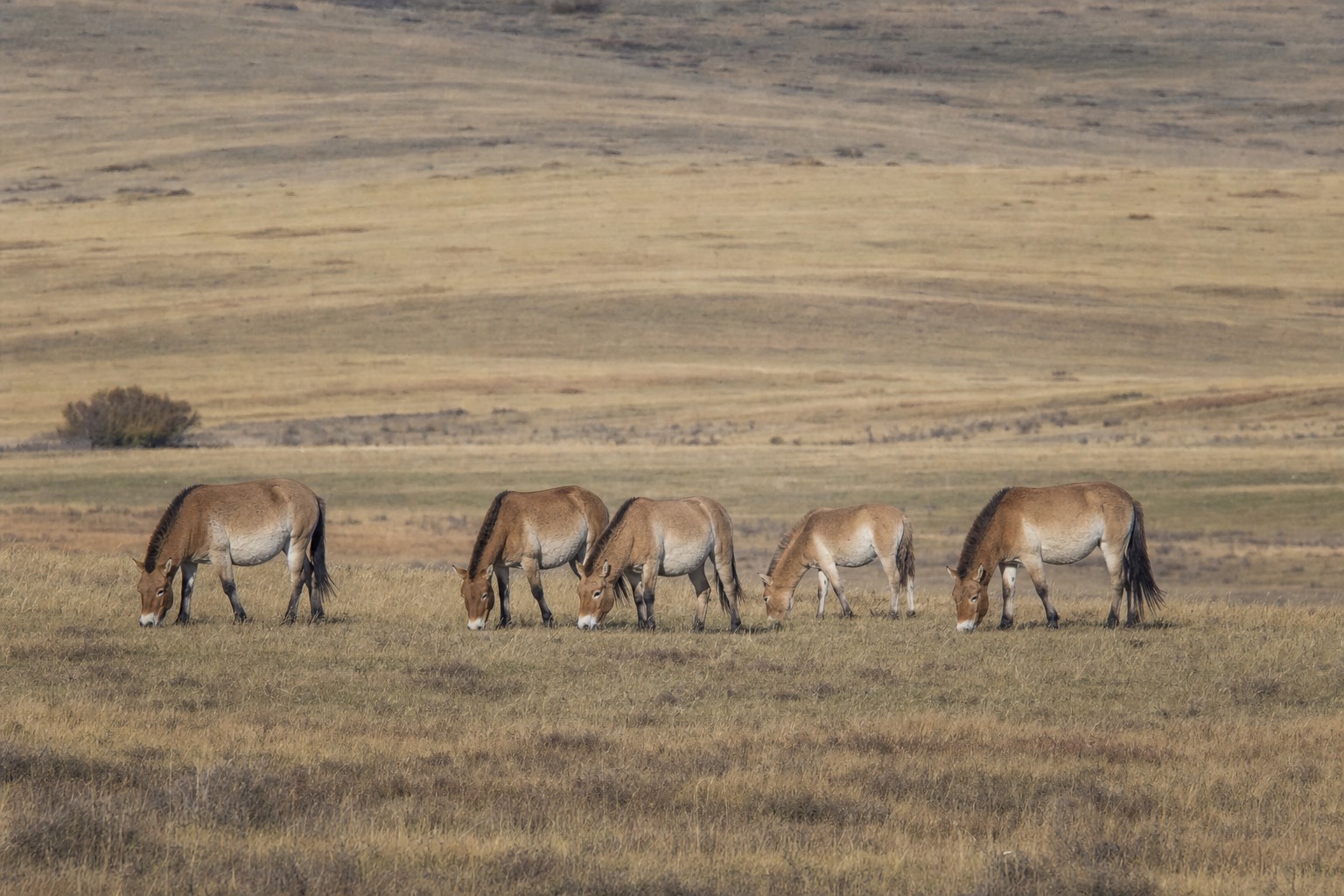
Short answer
No, you cannot ride a Przewalski's horse. The takhi is the only horse species never domesticated, so it has no history of carrying riders, no tolerance for handling, and a hair-trigger flight response. At Hustai you watch harems from a respectful distance. If you want to ride, book domestic Mongolian horses through herders instead.
The first question I get from families at the visitor centre, almost before they have their boots on, is whether the children can sit on one of the wild horses. I understand the instinct. You drive two hours from Ulaanbaatar, the harems come down into the valley at dusk, and something in you wants to close the distance. The honest answer changes the whole visit once people hear it, and it usually makes them look at the takhi differently.
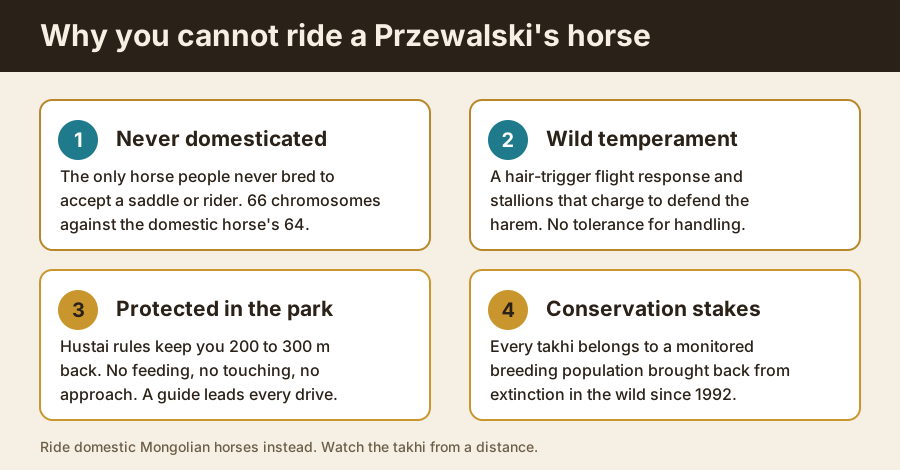
TL;DR: A Przewalski's horse cannot be ridden or tamed. It is the only horse never domesticated, with 66 chromosomes against the domestic horse's 64, and Hustai's rules keep you 200 to 300 metres back for the animal's sake and yours. If you want to ride in Mongolia, that is a separate, easy thing to arrange on domestic horses with herders, often near Terelj rather than inside Hustai.
Can a Przewalski's horse be ridden?
No. A Przewalski's horse cannot be ridden. The takhi is the only horse species never domesticated, so it carries no history of accepting a saddle, a bit, or a human on its back. It keeps a wild flight response, and it is legally protected inside Hustai. You watch harems from a distance; you do not handle them.
This is not a training problem waiting for a patient enough rider. Every domestic horse on earth descends from a lineage people shaped over roughly six thousand years, selecting for animals that tolerate handling. The takhi sits outside that story entirely. Genetically it is distinct, carrying 66 chromosomes where the domestic horse carries 64, a difference confirmed in the species literature summarised on the Przewalski's horse Wikipedia entry. A stallion defending his harem will charge a rival or a person who gets too close, and mares with foals spook and bolt at a fraction of the distance a domestic horse would tolerate.
There is also the conservation side. The Smithsonian National Zoo describes the takhi as the last truly wild horse, brought back from extinction in the wild. Every animal at Hustai belongs to a monitored, breeding population that the park counts harem by harem. Approaching one to ride it would stress the animal, disrupt the harem structure, and break the rules the whole reintroduction depends on.
Has anyone ever tamed a Przewalski's horse?
Not in any lasting, ridable sense. Individual takhi in zoos and reserves have grown used to keepers and vehicles, but that is habituation, not domestication. No line of Przewalski's horses has ever been bred or trained to carry riders, and the species has never gone through the generations of selective breeding that make a horse ridable.
People sometimes point at old photographs of captured takhi from the early twentieth century, when foals were caught for European zoos, and assume tameness followed. It did not. Those animals fed a captive breeding programme that later saved the species, and their descendants are the horses now roaming Hustai and a handful of other reserves. Being comfortable enough around a keeper to accept food is a long way from tolerating a saddle and a rider's weight, and no breeding effort has ever tried to close that gap.
Habituation is real and useful, and it is exactly what lets you watch takhi at Hustai. The harems near the main track have grown used to slow vehicles and quiet people at a distance, which is why sightings are reliable at dawn and dusk. That calm is fragile. Push it, and you teach the animals to fear the very visitors whose respect keeps the park funded and the horses wild.
Takhi versus the domestic Mongolian horse
The contrast with the small, hardy horses Mongolian herders ride every day makes the point clearly.
| Trait | Przewalski's horse (takhi) | Domestic Mongolian horse |
|---|---|---|
| Domestication history | Never domesticated | Ridden for millennia |
| Chromosomes | 66 | 64 |
| Can be ridden | No | Yes |
| Tolerates handling | No, wild flight response | Yes, halter and saddle trained |
| Where you meet it | Wild, at a distance in Hustai | With herders, tack included |
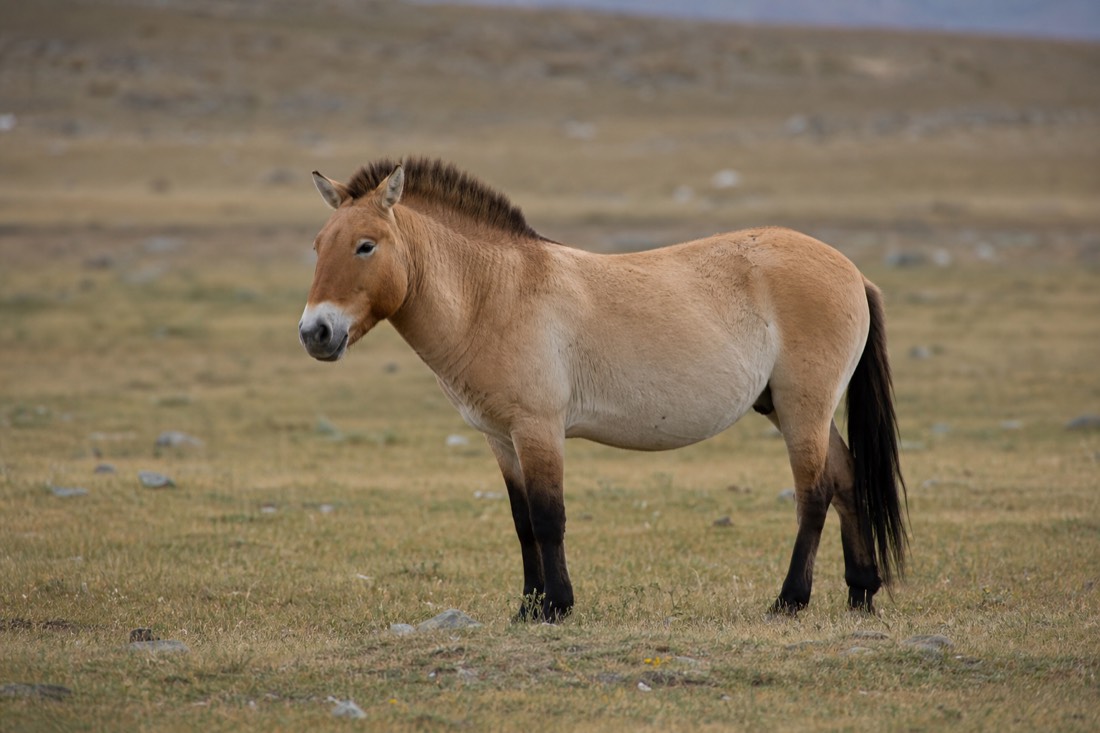
| Coat and mane | Dun coat, erect dark mane, dorsal stripe | Varied colours, flopping mane |
| Legal status here | Protected, no contact | Working animal, private property |
The erect mane is the giveaway in the field. A domestic horse's mane falls to one side; the takhi's stands up like a brush, a wild-type feature it never lost.
What are you actually allowed to do at Hustai?
You are allowed to watch, photograph, and walk on the marked tracks with a park guide, keeping roughly 200 to 300 metres between you and any harem. You cannot ride, feed, touch, or approach the horses, and off-track wandering in the protected zone is not permitted. A park guide accompanies wildlife drives inside the protected area.
The rules are simple and they exist because takhi are wild animals in a working conservation reserve, not a petting attraction. The park's own guidance, laid out on the official Hustai National Park site, frames the whole visit around low-impact viewing. In practice I position guests uphill and downwind of a harem when the terrain allows, so our scent and outline stay out of the stallion's alarm zone, and we let the animals set the distance.
| At Hustai you can | At Hustai you cannot |
|---|---|
| Watch harems from a distance | Ride any horse in the park |
| Photograph with a zoom lens | Feed or touch the animals |
| Walk marked tracks with a guide | Wander off-track in the protected zone |
| Ask the guide to reposition the vehicle | Approach a harem on foot to get closer |
| Visit at dawn and dusk for best sightings | Chase or herd the horses for a photo |
Keep this in mind if you are weighing Hustai against a more hands-on horse day. The park delivers wild animals behaving wildly, which is a different experience from a saddle. My guide to whether Hustai is worth visiting walks through who tends to love it and who leaves disappointed.
Where can you actually ride horses in Mongolia?
You ride domestic Mongolian horses, arranged through herder families and ger-camp operators, not the wild takhi. Horse riding is easiest to organise around Gorkhi-Terelj National Park and at steppe ger camps, where short guided rides or multi-day treks come with tack and a herder. It is a genuinely core part of Mongolian travel, just separate from Hustai.
Mongolia is one of the great horse cultures on earth, so the option is everywhere once you know to ask for the right thing. Most steppe and Terelj ger camps keep riding horses and can set up an hour in the saddle or a full day with a herder leading. Prices and operators shift year to year, so I point people to their camp or a Terelj operator on the day rather than promising a fixed rate here. If you are choosing between the two big day trips from the capital, my honest Hustai versus Terelj comparison lays out which one suits a rider and which suits a wildlife watcher.
| Where | What you get | Good for |
|---|---|---|
| Terelj ger camps | Short guided rides, herder-led | First-timers, families, half-day |
| Steppe ger camps | Hour rides to multi-day treks | Riders wanting distance |
| Central Mongolia trips | Longer treks with support | Experienced riders, weeks not hours |
| Hustai National Park | No riding, wild-horse viewing only | Wildlife and conservation, not saddles |
A practical tip: the domestic horses are smaller than many Western riders expect and the wooden saddles take getting used to, so ask for a padded seat and a calm horse if you are new to it. This is where the ride belongs. Hustai is where the watching belongs, and if you want to see the takhi properly you can book the private day tour like the Private Hustai Day Tour and check live availability and prices on Viator for a full day built around the harems.
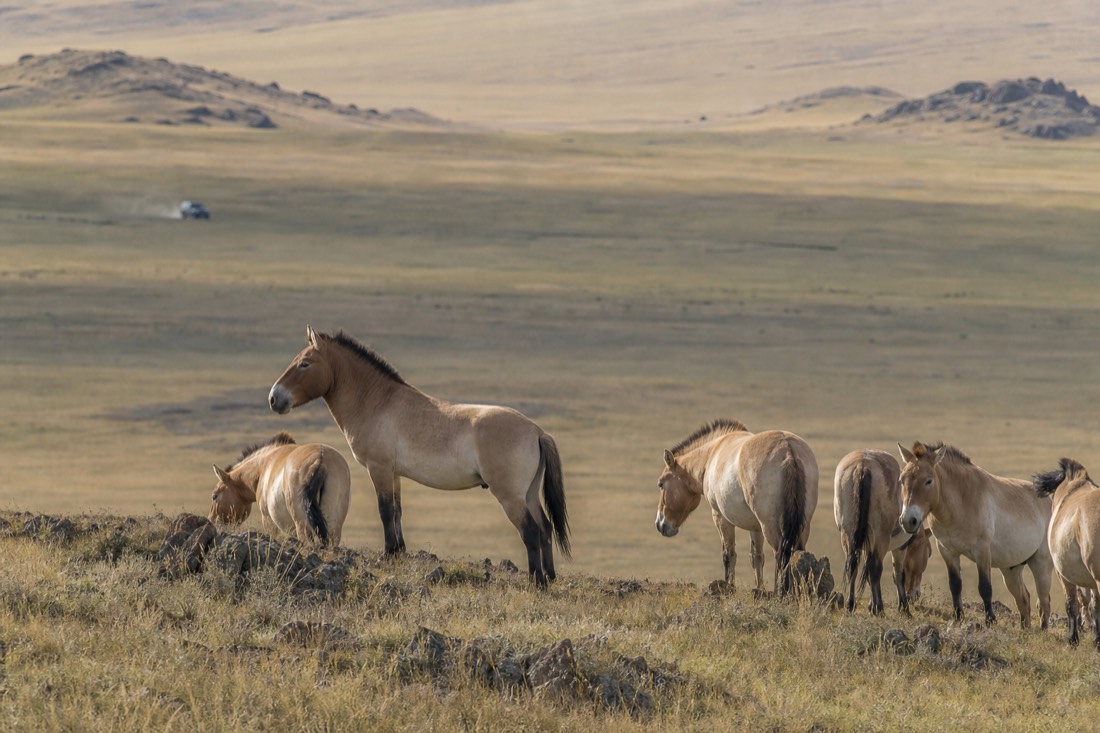
Why the "why not" matters more than the rule
The takhi cannot be ridden because it was never bred to be, and that fact is the whole reason it is worth the drive. It is a living wild horse, not a tamed one, and Hustai exists to keep it that way. Understanding the "why" turns a small disappointment into the point of the trip.
Once families hear that these are the only never-domesticated horses left, the mood at the viewpoint changes. Children stop asking to ride and start asking why the stallion keeps circling, why the foals stay in the middle, why the mane stands up. That curiosity is exactly what conservation needs, and it is a better souvenir than a saddle photo.
For the fuller story of how these horses came back from the edge, the wild horses of Mongolia guide traces the reintroduction, and the Przewalski's horse guide covers the biology in more depth.
What can you actually ride near Ulaanbaatar?
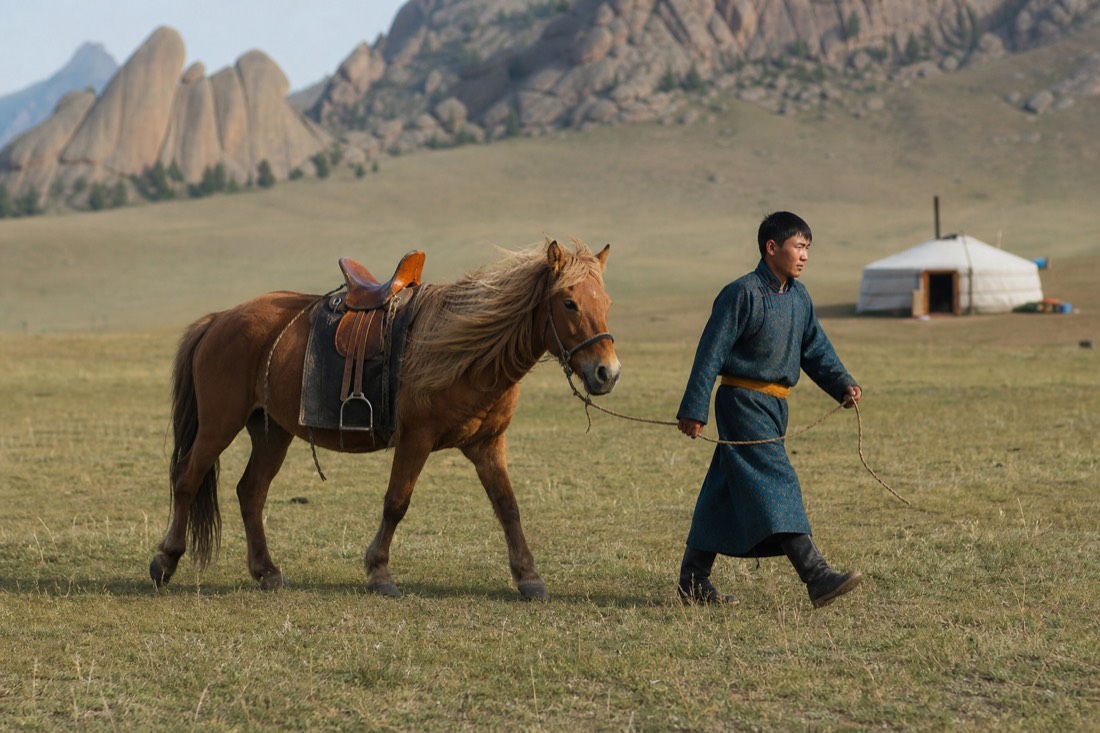
Domestic Mongolian horses, arranged through herders and ger camps, not the wild takhi. These are working animals bred and handled for generations, mostly around Gorkhi-Terelj National Park and the open steppe beyond Ulaanbaatar. Booking a ride is simple once you know it belongs to a different park and a different animal entirely.
Ulaanbaatar sits at the centre of one of the world's great horse cultures, so the option is close at hand, just not inside Hustai. Day trips that include Terelj's easy horseback riding start from around US$34 per person, and a private full-day tour around the capital typically runs near US$314 total for one to six travellers, prices reported across current 2026 listings rather than fixed rates. Multi-day riding, where the horse becomes the whole point of the trip rather than an add-on, starts from roughly US$390 for a guided three-day route into Central Mongolia. None of that overlaps with what happens at Hustai. Both bookable Hustai tours, the private Viator day and the GetYourGuide group day, are built around watching wild horses, not sitting on one; neither lists riding among its inclusions.
| What you're comparing | Watching takhi at Hustai | Riding a domestic horse near Ulaanbaatar |
|---|---|---|
| Contact with the animal | None, viewing only | Direct, in the saddle |
| Skill required | None | Basic balance, some instruction |
| Where it happens | Hustai's protected valleys | Terelj and steppe ger camps |
| Typical starting price | Included in the day-tour price | From about US$34 per person for a half or full day |
| Guide's role | Reads harems, keeps distance | Leads the horse, sets the pace |
| What it's really about | A wild species behaving wild | A working animal doing its job |
First-time riders should expect a smaller, hardier horse than they picture and a simpler wooden saddle than a riding-school back home ever used. Ask for a calm horse and a padded seat if you are new to it, and treat the first ten minutes as an adjustment, not a problem. None of that makes the experience less real. It is simply the Mongolian version of an activity as old as the steppe itself, entirely unrelated to anything you will see inside Hustai.
Which animals do visitors commonly assume they can ride or tame?
Most confusion is not really about horses, it is about the difference between a wild animal that lives near people and a domesticated one that works with them. Takhi, red deer, gazelle, and marmots at Hustai are wild and protected. Bactrian camels and yaks, common working animals elsewhere in Mongolia, are genuinely domesticated and are the ones you can ride or load.
The mix-up is understandable. Hustai's wildlife feels approachable because it is habituated to slow vehicles and quiet visitors at a distance, and people extend that calm into an assumption of tameness. It does not follow. A marmot that ignores your vehicle will still bite if you reach for it, and gray wolves, also present in the park's fauna, prey on takhi foals rather than tolerate anyone at all. Mongolian gazelle and red deer, both recovering strongly inside the park, are shy and keep their own distance without being asked. None of these animals has been bred for handling, so none of them belongs anywhere near a rope or a saddle.
Contrast that with the Bactrian camel and the yak, both real working animals across rural Mongolia, selectively bred over centuries for exactly the load-bearing, herder-led role that no takhi has ever had. Meeting one of those on a Mongolia trip is a genuine, safe experience; meeting Hustai's wildlife is a genuine, hands-off one.
The distinction is worth carrying into the rest of your trip, not just this one park. Anywhere in Mongolia an animal seems calm around people, ask yourself whether that calm comes from generations of breeding for it, like the camel and the yak, or from a wild animal simply tolerating distant, quiet observers, like the takhi. The first is domestication. The second is habituation, and habituation can end the moment someone pushes too close.
| Animal | Where you might meet it | Rideable or tameable? |
|---|---|---|
| Przewalski's horse (takhi) | Hustai's protected valleys | No, never domesticated |
| Mongolian gazelle | Hustai's open steppe | No, wild and shy |
| Red deer | Hustai's valleys and hills | No, wild and recovering |
| Tarbagan marmot | Hustai's burrow fields | No, wild, will bite if handled |
| Gray wolf | Hustai, mostly winter | No, wild predator |
| Bactrian camel | Rural Mongolia, working herds | Yes, long domesticated |
| Yak | Highland and steppe herding regions | Yes, long domesticated |
The question Bat-Erdene hears most at the viewpoint
In more than a thousand trips guiding Hustai since 2022, the question I field before anyone has their boots properly on is whether the children can get closer, ideally onto a horse. I have learned to answer it early rather than let it hang over the whole visit, because the honest answer changes how people watch everything that follows.
I do not treat it as a nuisance question. It tells me the family has driven two hours expecting something more interactive than binoculars, and that is a fair expectation to arrive with. What works is naming the two animals apart immediately: this is a takhi, never ridden, never tamed, and what you are about to watch is closer to a nature documentary than a farm visit. Once that lands, the questions change shape. Children stop asking to touch the horses and start asking why the stallion circles the harem, why the foals cluster in the middle, why the ears turn before the head does. That shift, from wanting contact to wanting to understand, is the best outcome a guide can hope for on a wildlife day.
It is not only children. Adults ask a quieter version of the same question, usually phrased as whether the guide could arrange "just a photo up close" for the right tip. I understand the impulse, since a photo beside a wild horse would be a genuinely rare souvenir. I still say no every time, for the same reason the park says no: a harem that learns humans mean closer contact stops behaving like a wild harem, and the whole point of the drive out here disappears with it.
A few assumptions come up often enough that I now address them before anyone asks.
| What guests often assume | What is actually true |
|---|---|
| "It looks calm, so it must be friendly" | Calm from a distance is not tolerance up close; the flight response is still there |
| "It's basically a wild version of a normal horse" | It is a separate species with 66 chromosomes, not a feral domestic horse |
| "The zoo ones must be tame by now" | Zoo takhi are habituated to keepers, not trained to carry riders |
| "Surely the guide can arrange a closer look" | No guide can, and no ethical one would try; the 200 to 300 metre rule protects the harem |
Do either of the two Hustai tours include horseback riding?
No. The private Viator day and the GetYourGuide group day both centre on watching wild takhi and the surrounding wildlife, and neither lists riding among its inclusions. The private tour includes transport, lunch, and admission; the group tour adds a local guide, transfers, and travel insurance. If riding matters to your trip, plan it as a separate day at Terelj or a steppe ger camp rather than expecting it here.
This is worth saying plainly because the two experiences get bundled in people's heads before they arrive, especially by travellers building a short Mongolia itinerary from a list of highlights rather than a map. A Hustai day and a riding day solve different wants, and forcing both into one booking usually means neither goes well. Treat them as what they are: one day for watching a species that was never meant to be ridden, and, if you want it, a separate day for the horses that were.
Some travellers ask if a Hustai guide can simply detour to a ger camp for an hour of riding on the way back to Ulaanbaatar. It is not something either featured tour is built to do, since the itinerary and the driver's route are set around the wildlife day, and bolting on an unrelated stop tends to eat the light you came for in the first place. If riding is genuinely part of the plan, book it as its own separate outing, either before or after the Hustai day, so neither experience gets rushed to make room for the other.
Common questions
Can children sit on a Przewalski's horse at Hustai?
No. There is no contact with the takhi at all, for any visitor. The horses are wild and protected, and viewing happens from a distance on the tracks. Children who want to ride can do so on domestic horses at Terelj or steppe ger camps instead.
Are Przewalski's horses dangerous to people?
They are wild animals and a stallion will defend his harem, so they can be if you crowd them. Kept at the proper 200 to 300 metre distance with a guide, they simply graze and move off. The risk comes from people approaching, not from the horses seeking you out.
Why can't a Przewalski's horse just be trained like a wild mustang?
Feral mustangs descend from domestic horses that escaped, so they carry the genetics of domestication. The takhi never went through that process at all. It is a separate wild species, not a domestic horse gone wild, which is why no training programme has ever produced a ridable takhi.
Where is the closest place to ride a horse near Hustai?
Riding is easier to arrange around Gorkhi-Terelj National Park and at steppe ger camps than inside Hustai, which offers no riding. Ask your ger camp or a Terelj operator on the day, since horses and rates vary by season.