One Day in Hustai: What the Trip Actually Looks Like
Pickup to horses to home in a single day is entirely doable. Here is the real timeline, the guided-drive rule, and what your odds of a sighting actually are.
 Written with Bat-Erdene Ganbaatar, Hustai National Park tour guide and wildlife specialist
The short version
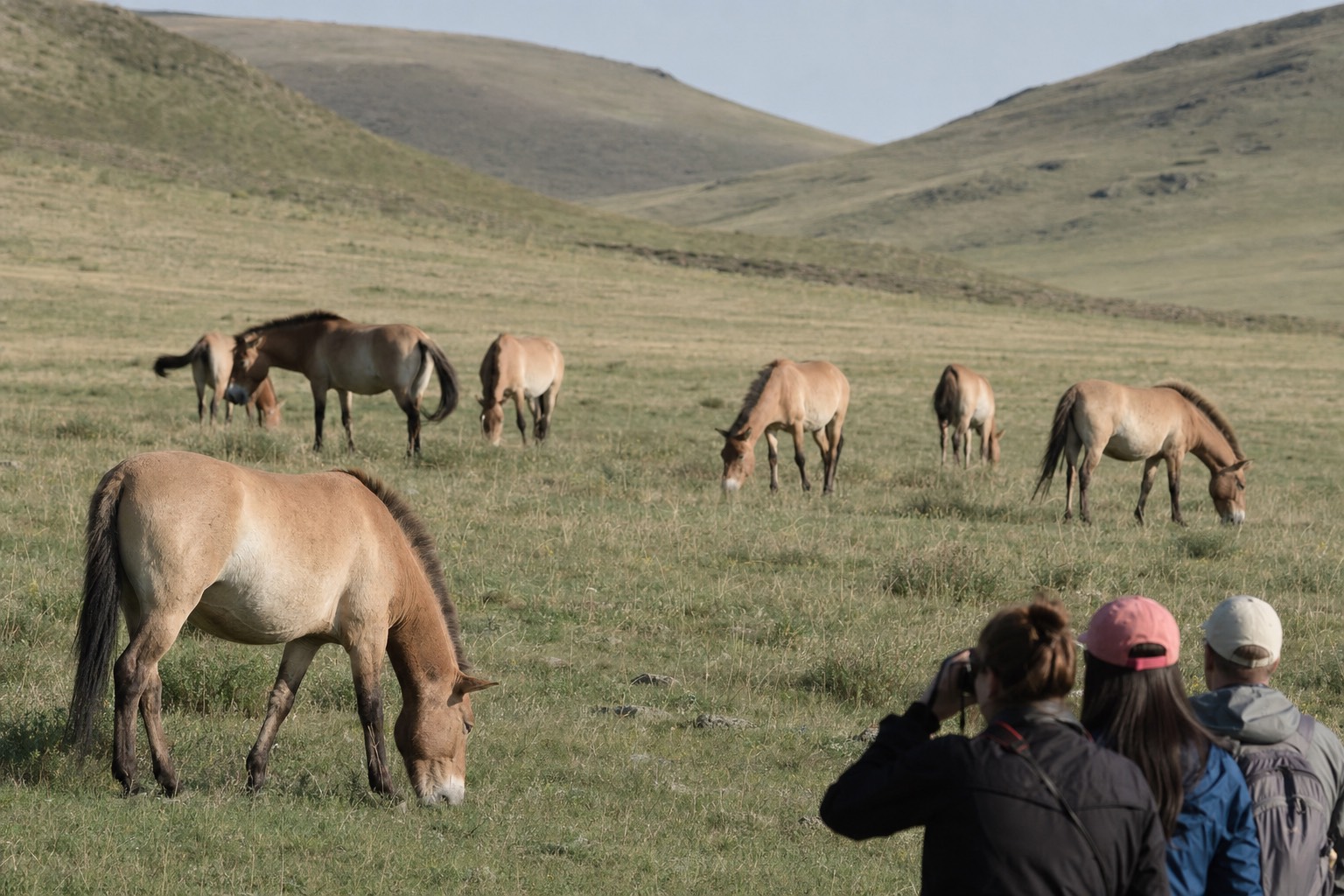
Yes, Hustai works as a full day from Ulaanbaatar. A typical trip is pickup around 9 AM, a 1.5 to 2 hour drive west, registration at the gate, a guided wildlife drive in the protected zone, lunch, more viewing, then back to the capital by evening. Private trips run 8 to 10 hours and let you time the light.
The best day I ever ran here started badly. Empty valley at 10 AM, a group quietly deflating, and then a harem of eleven takhi walked over a rise while we were eating lunch. That is Hustai in a sentence: patient, unscripted, worth the early alarm. People always ask me what a day here actually involves, minute to minute, so let me walk you through it honestly, the waiting included.
Is it possible to visit Hustai and get back to UB in one day?
Yes, comfortably. With a 1.5 to 2 hour drive each way, a morning departure gets you to the park, through a guided wildlife window and lunch, and back to Ulaanbaatar by evening. The group day trip picks up around 9 AM; a private trip runs 8 to 10 hours and lets you leave earlier to catch the horses at first light. Overnighting is optional, not required.
This is the single most common question on travel forums, and the honest answer is that the day trip is the standard way people see Hustai. The park is close enough that you do not need to sleep over to make it work. What an overnight buys you is the dawn window without a pre-dawn drive, which matters if takhi are your whole reason for coming. For a first visit on a tight schedule, one day does the job. The how to get to Hustai guide covers the drive itself; here I am focused on how the hours fall once you commit to a single day.
What does a Hustai day trip look like hour by hour?
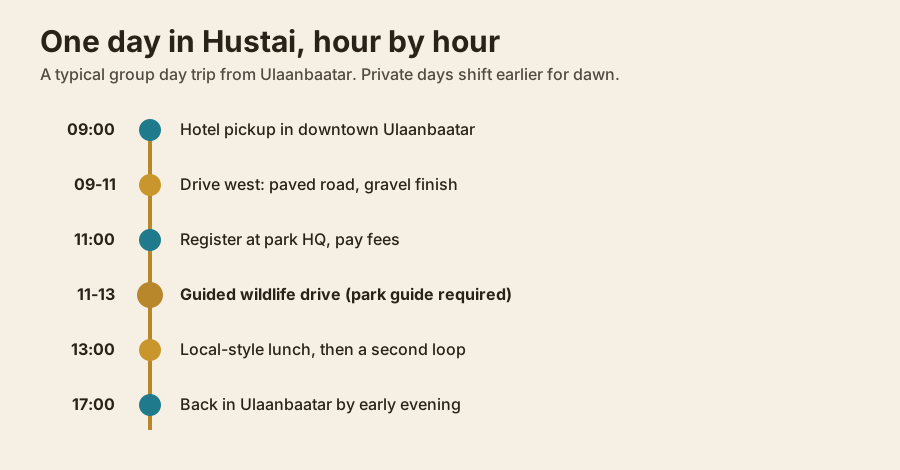
A group day trip runs roughly: 9 AM hotel pickup in downtown Ulaanbaatar, drive west until about 11 AM, register at the park gate, then a guided drive into the valleys for the late-morning wildlife window. Lunch follows, then a second viewing loop, and departure by mid-afternoon to reach the capital by early evening. Private trips shift these hours earlier or later to suit the light.
Times flex with the season and traffic, but the shape holds. The wildlife windows bookend the middle of the day, so a good guide paces the loops to sit you in the valleys when the horses are likeliest to be down. Here is a realistic group-trip timeline; treat it as a template, not a train schedule.
| Time | What happens |
|---|---|
| ~09:00 | Hotel pickup in downtown Ulaanbaatar |
| ~09:00 to 11:00 | Drive west, paved road then gravel approach |
| ~11:00 | Register at park headquarters, pay fees |
| ~11:15 to 13:00 | Guided wildlife drive in the protected zone |
| ~13:00 | Local-style lunch |
| ~14:00 to 15:30 | Second viewing loop, valleys and viewpoints |
| ~15:30 | Depart the park |
| ~17:00 to 17:30 | Back in Ulaanbaatar |
Why do I need a park guide inside the wildlife zone?
Inside Hustai's protected core, a park guide must accompany every wildlife drive. You cannot roam the takhi valleys alone, whether you are on a tour or self-driving. The guide keeps vehicles on the tracks, holds the 200 to 300 metre distance the horses need, and knows where the harems tend to graze at that hour. It is a conservation rule that also improves your odds.
Newcomers sometimes read this as a restriction. On the ground it is the opposite. The park runs this as a firm rule because the takhi are a reintroduced population, back from European zoos since 1992, and pressure from wandering vehicles would undo decades of work. A ranger who reads the valley daily is far more likely to put you onto horses than a map is. On a booked trip this is handled for you; self-drivers register at the gate and wait to be paired with a guide before entering the core. Either way, no one reaches the horses unaccompanied.
Private or group day: which day suits you?
A group day trip is cheaper and social, with a fixed 9 AM start and a set route. A private trip costs more but hands you the clock: an earlier departure for the dawn window, longer at a productive valley, and a pace set by your party rather than a schedule. For serious wildlife watching or photography, the timing control of a private day is the real advantage.
The choice usually comes down to whether the horses are the point or a bonus. If you want the best shot at a close, unhurried sighting, the ability to leave before dawn is worth paying for. Book a private trip like the Private Hustai Day Tour and check live availability and prices on Viator, an 8 to 10 hour day with a private vehicle, guide, lunch and admission included. A group day still delivers the same core experience for less; it simply moves on the operator's clock rather than yours.
Think about who you are travelling with, too. Families with young children or anyone prone to car sickness often prefer the private day, because you can break the drive, linger where it suits and turn for home the moment energy flags. Solo travellers and couples on a budget tend to enjoy the group van, where you swap horse sightings and steppe stories with strangers who become, for a day, a small expedition. Neither is the wrong answer. They are two shapes of the same day.
| Feature | Private day | Group day |
|---|---|---|
| Start time | Flexible, can chase dawn | Fixed, around 9 AM |
| Pace | Yours to set | Shared schedule |
| Duration | 8 to 10 hours | Full day, set route |
| Cost per person | Higher, split across party | Lower, shared vehicle |
| Best for | Photography, wildlife focus | Value, sociable travellers |
| Languages | English, French, Korean, Russian | English-speaking guide |
What is included, and what are my odds of seeing takhi?
Both featured day trips include the park entrance fee, transport from your hotel, an English-speaking guide and lunch. The private day adds a private vehicle and flexible timing; the group day lists travel insurance and transfers too. Sightings are never guaranteed, and the operators say so. Time your visit for a viewing window and the odds are strongly in your favour, but marmots may outnumber horses on a slow day.
Here is what actually sits inside each day so you can see, line by line, where they overlap and where they part.
| Included | Private day | Group day |
|---|---|---|
| Park entrance fee | Yes | Yes |
| Transport from your hotel | Private vehicle | Shared van |
| English-speaking guide | Yes | Yes |
| Lunch | Yes | Local-style lunch |
| Travel insurance | Not listed | Listed as included |
| Flexible start time | Yes | Fixed ~9 AM |
| Wild-horse sighting | Not guaranteed | Not guaranteed |
I keep this honest because disappointment comes from bad expectations, not bad luck. Some visitors mainly see takhi and a great many marmots, and that is a real Hustai day, not a failed one. The we only saw marmots piece tells that story straight. What tilts the odds your way is arriving at dawn or dusk in spring or autumn, which the best time to visit guide covers in full. The park still draws only 15,000 to 20,000 visitors a year across 50,600 hectares, so even a busy day rarely feels crowded.
A word on patience, since it is the skill the day quietly asks of you. Takhi are wild animals in a landscape the size of a small city, not exhibits on a timetable. The best sightings I have shared with guests came after twenty minutes of nothing, a scan of the far slope, and then a shape resolving into a stallion holding his harem. Bring binoculars, keep your voice low, and let the guide work the valley. The reward for sitting still is usually the horses deciding you are no threat and drifting closer on their own terms.
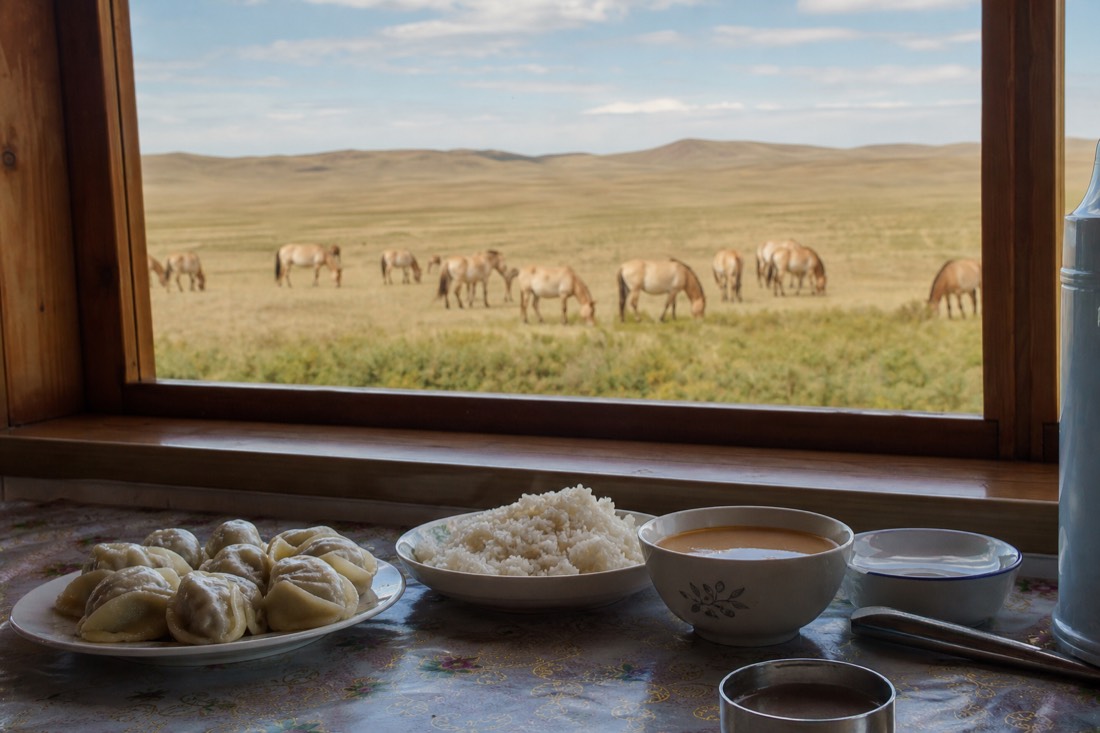
One day is enough for a strong first taste of Hustai, and most visitors leave glad they came out rather than wishing they had stayed in the city. If the horses hook you, an overnight at the ger camp on a return trip lets you own both the dawn and the dusk window without a pre-dawn drive.
What does a private, dawn-chasing day look like instead?
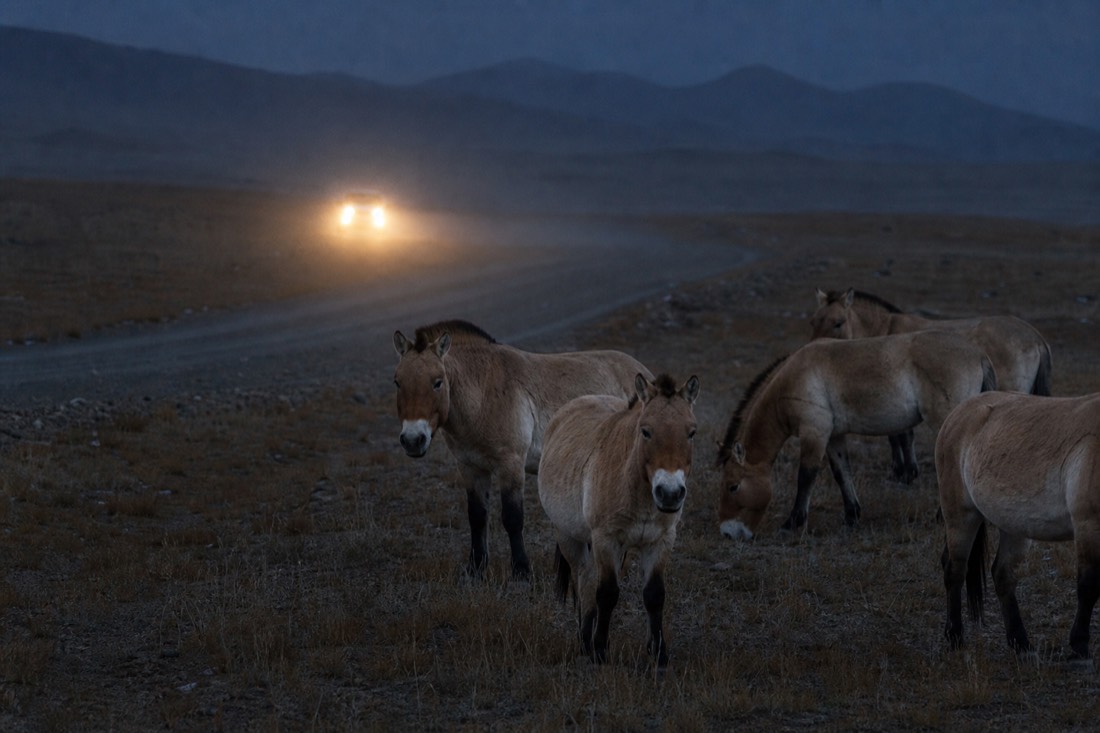
A private day built around the dawn window starts well before the group trip does, often before 6 AM, so you are in the valleys as the takhi come down rather than arriving after they have already climbed. The trade-off is an early alarm; the reward is a viewing window a group departure structurally cannot offer.
Not every guest wants this version of the day, and that is fine. It suits people who would rather trade a lie-in for a real shot at close, unhurried horses, and it suits photographers most of all, since the dawn light and the dawn wildlife activity arrive together rather than one after the other.
This is the itinerary I build for guests who tell me, plainly, that the horses are the whole trip. It shares the same driving and registration steps as the group day, just shifted to the front of the clock.
The early pickup is the only real cost, and most guests forget it by the second viewing loop. Ulaanbaatar's roads are quiet at 5:30 AM in a way they never are at 9, so the drive itself often runs faster than the group departure's, and you arrive at the gate with the park still holding the stillness of the night before. That stillness tends to carry into the valley, where the horses have not yet had a single vehicle's worth of activity to react to.
| Time | What happens |
|---|---|
| ~05:30 | Early hotel pickup in downtown Ulaanbaatar |
| ~05:30 to 07:30 | Drive west in pre-dawn light, paved road then gravel approach |
| ~07:30 | Register at park headquarters |
| ~07:45 to 09:30 | Dawn wildlife drive, the strongest window of the day |
| ~09:30 to 10:30 | Breakfast or an early lunch, guide's choice on timing |
| ~10:30 to 12:00 | Second loop while the light is still workable |
| ~12:00 to 14:00 | Return drive to Ulaanbaatar |
| ~14:00 | Back in the city with the afternoon still free |
Private versus group: where does the day's time actually go?
Both trip types spend roughly the same four hours driving, since the distance does not change. Where they differ is how the remaining hours split between the two wildlife windows, lunch and buffer. The group day fixes that split for you; a private day lets you weight it toward whichever window matters most.
Working from the hour-by-hour group timeline above, the day breaks down to about four hours of driving, three and a half hours of wildlife viewing across two loops, and an hour for lunch, which adds up to the 8.5 hours between the 9 AM pickup and the 5.30 PM return. A private day covers the same driving distance but, being 8 to 10 hours and flexible on start time, can shift more of its viewing time into the dawn or dusk window rather than splitting it evenly across the middle of the day.
This is really a question of when you spend your viewing hours, not how many you get. Both trip types put roughly three and a half to five hours in front of the horses across a full day; a private trip simply lets you front-load that time into the two windows that matter most, rather than having one loop land in the low-activity stretch between mid-morning and early afternoon that a fixed 9 AM start cannot avoid.
| Activity | Group day (fixed) | Private day (flexible, estimated) |
|---|---|---|
| Driving (both ways) | ~4 hours | ~4 hours |
| Wildlife viewing, two loops | ~3.5 hours | ~4 to 5 hours, weighted to dawn or dusk |
| Lunch | ~1 hour | ~1 hour, timing your choice |
| Buffer or extra loop | None built in | Remaining time, guide's discretion |
| Total day length | 8.5 hours | 8 to 10 hours |
What happens if it rains or snows on your Hustai day?
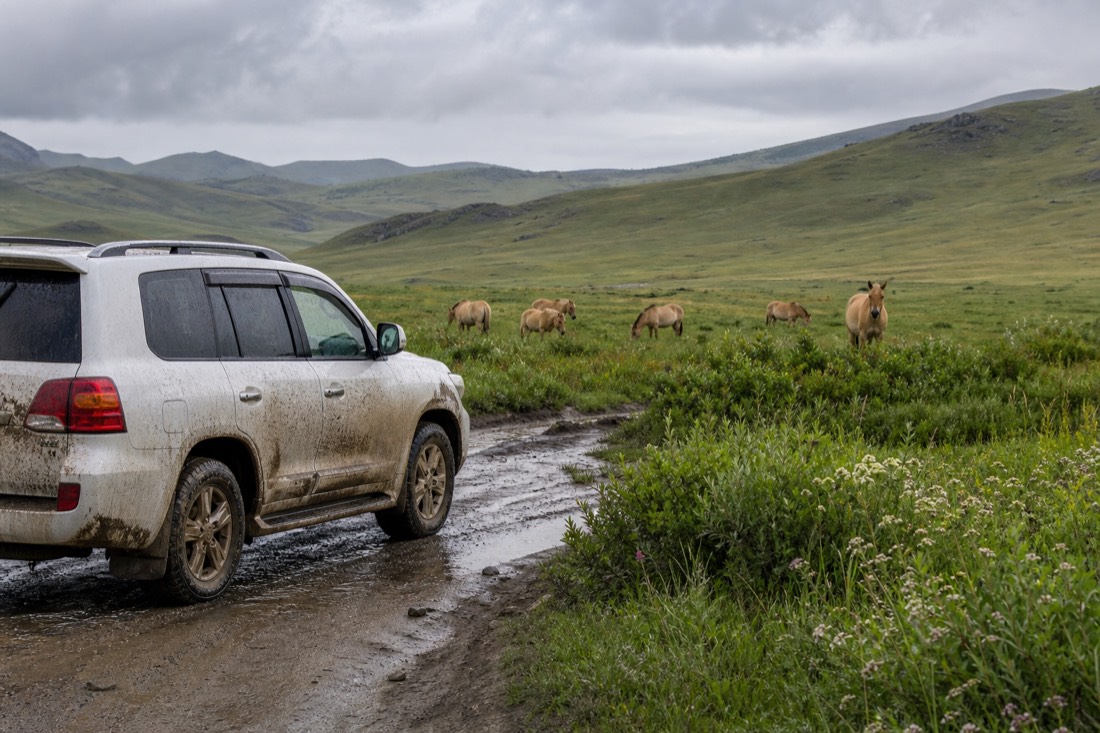
Both featured trips run in all weather, and the GetYourGuide listing says so directly: bring a warm layer regardless of forecast. Rain turns the gravel and dirt sections of track soft and slows the drive; snow adds a genuine cold-weather test on top of that. The guided drive still happens, just at a more careful pace.
Do not build a whole day around a forecast you saw the night before. Steppe weather shifts fast, and a grey morning in Ulaanbaatar can be blue sky an hour west by the time you reach the park, or the reverse. Pack for the range of conditions rather than the single number in a weather app, and let your guide make the real call once you are on the ground.
Bat-Erdene has run plenty of these days. "We do not cancel for weather," he says. "What changes is the pace on the track and sometimes the route the ranger picks through the valley. Wet ground is where I ask everyone to be patient with the driver rather than the horses." Visibility for spotting takhi at distance can drop in heavy rain or snow, so a guide's local knowledge of where harems shelter matters even more than usual.
There is an upside most visitors do not expect. A grey, damp morning often keeps other vehicles off the track entirely, and a valley with one guided drive in it instead of three tends to unsettle the horses less. Some of the calmer, closer sightings I have shared with guests came on days that looked, from the hotel window at dawn, like a washout.
| Weather | Typical impact | What to do |
|---|---|---|
| Light rain | Gravel and dirt sections turn soft, drive runs slower | Build in extra time, wear waterproof layers |
| Heavy rain | Reduced visibility for spotting horses at distance | Trust the guide's route choice, patience over persistence |
| Snow (shoulder or winter months) | Genuine cold on top of the usual dawn chill | Full winter layers, not just a jacket |
| High wind | Common on open steppe in any season | A windproof outer layer earns its place in every bag |
What should you pack specifically for one long day out, not an overnight?
A single 8 to 10 hour day asks for different packing priorities than an overnight stay: a full phone or camera battery plus a power bank, layered clothing for a dawn-to-afternoon temperature swing, something for motion sensitivity on the bumpy stretch, and snacks, since there are no shops between the city and the park gate.
I always check batteries before an overnight is even a question, because a long single day with no chance to recharge is where phones and cameras die at exactly the wrong moment, usually mid-sighting. A day this long also asks more of your body than people expect from what is, on paper, a sightseeing trip. You are up early, sitting for long stretches on an occasionally rough road, and out in wind and open sun for hours at a stretch. None of that is hard, but it is real, and packing for it properly is what turns a long day into a comfortable one rather than an endurance test.
| Pack for a long single day | Why |
|---|---|
| Power bank | 8 to 10 hours away with no charging point along the route |
| Layers, not just one warm coat | Dawn chill through to a warmer afternoon, all in one day |
| Motion sickness tablets, if prone | The gravel approach is genuinely bumpy |
| Snacks and a full water bottle | No shops between Ulaanbaatar and the park gate |
| Cash in tögrög | For the gate fee if self-driving, and any tips |
Common questions about a Hustai day trip
Can you really do Hustai and get back to Ulaanbaatar in one day? Yes. With a 1.5 to 2 hour drive each way, a morning start gives you the guided wildlife window, lunch and a second loop before heading back to the capital by evening. It is the standard way to visit.
How long is a Hustai day trip? A private day runs about 8 to 10 hours door to door. The group departure fills a full day, picking up around 9 AM and returning in the early evening.
Do I have to book a tour, or can I go alone? You can self-drive, but you still register at the gate and must be paired with a park guide before entering the protected wildlife zone. No vehicle enters the takhi valleys unaccompanied.
What is included in the day trips? Both include the park entrance fee, transport from your hotel, an English-speaking guide and lunch. The private day adds a private vehicle and flexible timing; the group day also lists transfers and travel insurance.
Am I guaranteed to see wild horses? No, and the operators say so. Timing your day for the dawn or dusk window in spring or autumn stacks the odds strongly in your favour, but a slow day may show more marmots than takhi.