How to Pronounce Przewalski (and Hustai)
Two names trip up almost every visitor before they arrive. Here is how to say them without flinching.
 Written with Bat-Erdene Ganbaatar, Hustai National Park tour guide and wildlife specialist
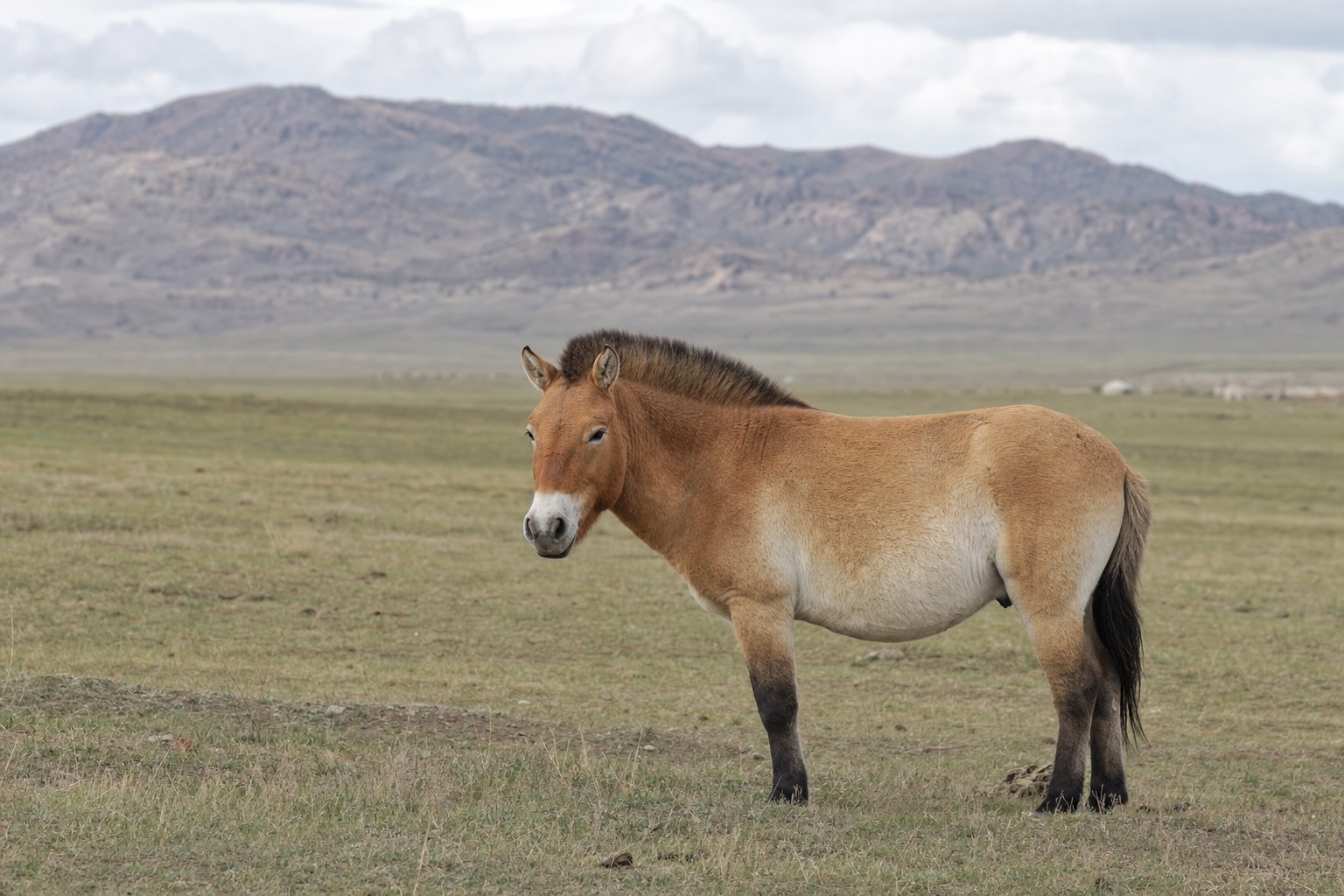
Short answer
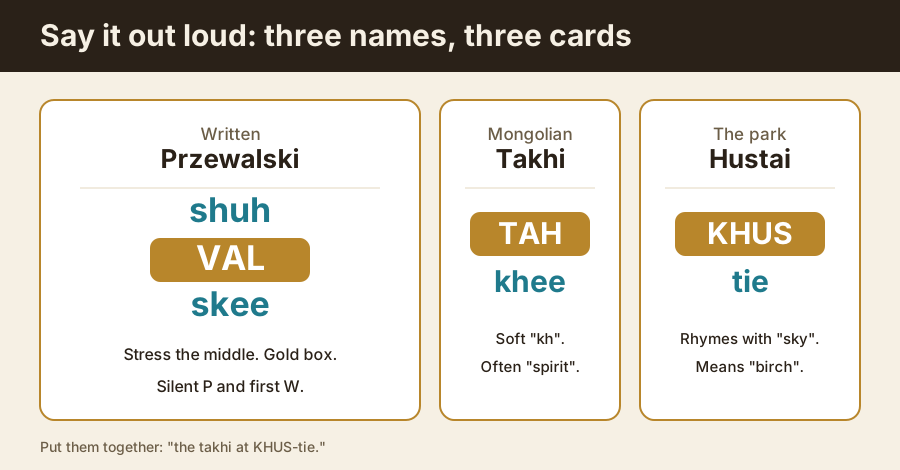
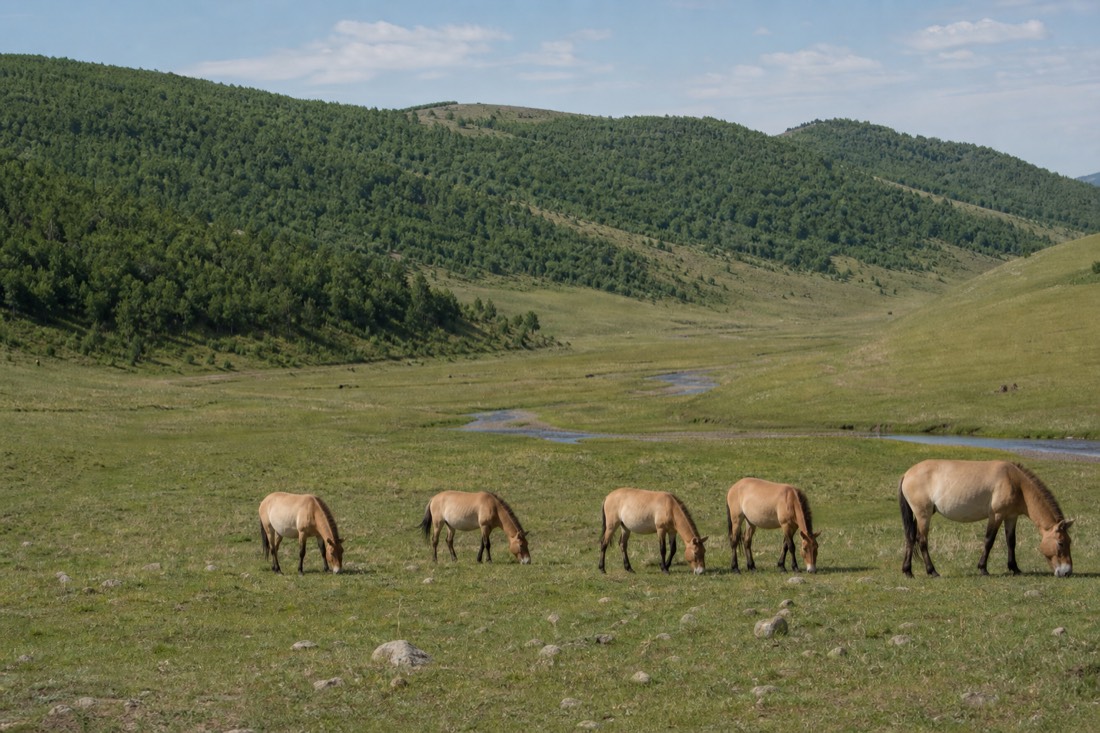
Przewalski is pronounced shuh-VAL-skee (the P and the first W are silent), Hustai is KHUS-tie (a soft throaty K, rhyming with 'sky'), and the Mongolian name for the horse, takhi, is said TAH-khee. Say 'the takhi at KHUS-tie' and any Mongolian guide will know exactly what you mean.
The word stops people mid-sentence. They will happily describe the whole trip, the harems, the marmots, the long drive out of the city, and then hit "Przewalski" and their voice drops to a mumble. I hear a dozen versions a week at the visitor centre, most of them heroic attempts at a Polish spelling that gives no clue how it actually sounds. It is simpler than it looks, and once you have it, the Mongolian names fall into place too.
TL;DR: Przewalski is shuh-VAL-skee. Hustai is KHUS-tie, rhyming with "sky". The Mongolian name for the horse, takhi, is TAH-khee, often translated as "spirit". The park's full Mongolian name, Khustain Nuruu, means the Birch Mountains, and "Hustai" itself comes from the word for birch.
How do you pronounce Przewalski's horse?
Przewalski is pronounced shuh-VAL-skee, with the stress on the middle syllable. The opening P is silent, the first W is silent, and the "ew" softens to a "uh" sound. Think "shuh" then "VAL" then "skee". The trailing "'s horse" is just English possessive, so the whole phrase is shuh-VAL-skees horse.
The spelling looks impossible because it is Polish, and English speakers reach for every letter. Resist that. The consonant cluster at the front collapses to a single soft "shuh", the way you would start the word "should" without the L. From there it is smooth: VAL as in the name Val, then a light "skee" to finish. Guides in Mongolia hear the name constantly and will follow along with almost any reasonable attempt, but shuh-VAL-skee is the version that sounds like you have said it before.
Anglophone naturalists sometimes use a harder "sheh-VAL-ski" and Polish speakers roll the consonants far more than any English mouth will manage. Neither is wrong. For a traveller the goal is to be understood, not to pass a phonetics exam, and the four-beat shuh-VAL-skees-horse gets you there. If the horse itself is new to you, the Przewalski's horse guide covers what makes it the last truly wild horse.
Where does the name Przewalski come from?
The horse is named after Nikolai Przhevalsky, a nineteenth-century Russian explorer of Polish descent whose expeditions across Central Asia brought the species to Western scientific attention. The Polish spelling of his surname stuck to the horse, which is why an English speaker is wrestling with Polish orthography to name a Mongolian animal.
Przhevalsky did not discover the horse in any meaningful sense, since Mongolian herders had known the takhi for centuries. He was the European who documented it, and by the naming conventions of the era his surname went onto the species, as the Przewalski's horse Wikipedia entry records. The Russian pronunciation of his name and the Polish spelling on the label pull in slightly different directions, which is a large part of why the word feels so unstable in English.
This is worth knowing because it explains the mismatch you are feeling. You are reading a Polish spelling, of a Russian name, attached to a Mongolian horse, in an English sentence. No wonder it fights back. The Mongolian name sidesteps the whole tangle.
Name-by-name pronunciation grid
Here is the whole cast of names in one place, with a plain phonetic spelling you can read aloud.
| Name | Say it | Rhythm | Notes |
|---|---|---|---|
| Przewalski | shuh-VAL-skee | 3 beats, stress middle | Silent P, silent first W |
| Przewalski's horse | shuh-VAL-skees horse | 4 beats | English possessive on the end |
| Takhi | TAH-khee | 2 beats, stress first | Soft throaty kh, the Mongolian name |
| Hustai | KHUS-tie | 2 beats, stress first | Rhymes with "sky" |
| Khustain Nuruu | KHUS-tine NOO-roo | 4 beats | The park's full Mongolian name |
Read straight down that column and you can hold a whole conversation about the park without stumbling once.
How do you say the Mongolian name, takhi?
The Mongolian name for the horse is takhi, said TAH-khee, with the stress on the first syllable and a soft throaty "kh" in the middle. It is often translated as "spirit", reflecting the animal's near-sacred standing in Mongolian culture. Many guides prefer takhi to Przewalski, and it is far easier to pronounce.
If shuh-VAL-skee defeats you, use takhi. It is two clean syllables, TAH then KHEE, and the middle sound is the same soft kh you get in the Scottish "loch" or the German "Bach", not a hard English K. Mongolians use this word every day, and it carries real weight: the takhi is the national animal of Mongolia, a symbol of freedom and endurance rather than just a rare species on a list.
You will hear the reverence in how guides say it. Calling the horse "spirit" is not marketing; it reflects a long relationship between these animals and the people of the steppe. For more on that cultural standing, the Mongolia national animal piece goes deeper into why the takhi holds the place it does. And because it cannot be handled or ridden at all, the can you ride a Przewalski's horse guide explains the wild status behind the name.
How do you pronounce Hustai, and what does it mean?
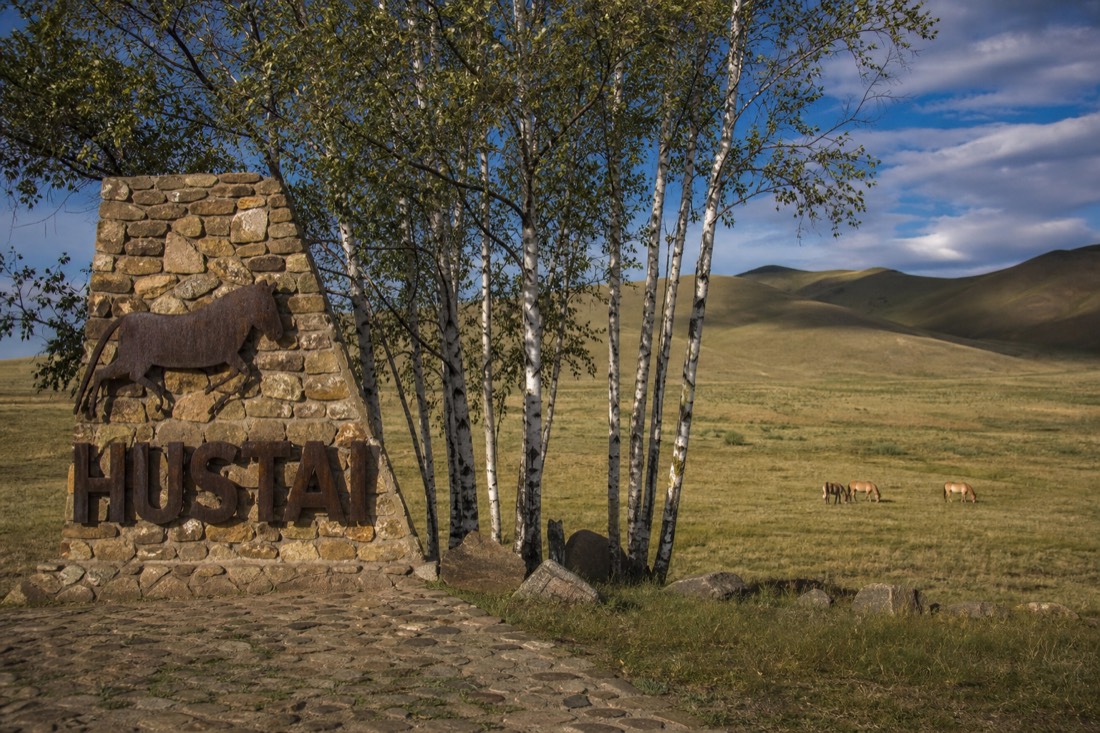
Hustai is pronounced KHUS-tie, with the stress on the first syllable and the same soft throaty "kh" at the start, and it rhymes with "sky". The name comes from the Mongolian word for birch. The park's full name, Khustain Nuruu, translates as the Birch Mountains, after the birch stands in its valleys.
Notice you have already met that opening sound in "takhi". Hustai starts the same way, a breathy KH rather than a hard K, then "US" and a "tie" that rhymes with sky. The English spelling "Hustai" and the transliteration "Khustai" are the same name; the H and Kh are both trying to capture that single throaty consonant, which is why you see the park written both ways. The official park site uses Hustai, while the Hustai National Park Wikipedia entry leads with the Khustain Nuruu form.
The meaning is quietly lovely once you know it. You are visiting the Birch Mountains, and in the valleys you really do find the birch that gave the range its name. Saying "the takhi at KHUS-tie" links the horse and its home in two easy words, and it is the phrase I most want visitors to leave with.
Name origins at a glance
| Name | Language | Literal sense | Named after |
|---|---|---|---|
| Przewalski | Polish spelling of a Russian name | A surname | Explorer Nikolai Przhevalsky |
| Takhi | Mongolian | Often translated as "spirit" | The animal's cultural standing |
| Hustai | Mongolian | Birch | The birch in the park's valleys |
| Khustain Nuruu | Mongolian | Birch Mountains | The mountain range itself |
What are the most common mispronunciations?
The usual slips are sounding the silent P in Przewalski, saying every letter as "per-zeh-wall-ski", hardening the "kh" in Hustai into a flat "hoo-stay", and stressing the wrong syllable in takhi as "tah-KEE". None of these will get you blank looks in Mongolia, but the corrections below sound noticeably more fluent.
The single biggest tell is treating the P and the first W in Przewalski as real letters. They are not sounded. The second most common is the hard English K where a soft throaty kh belongs, in both Hustai and takhi. Fix those two habits and everything else falls in line.
| Common attempt | What sounds better | Why |
|---|---|---|
| per-zeh-WALL-ski | shuh-VAL-skee | The P and first W are silent |
| PREZ-walski | shuh-VAL-skee | Stress sits on the middle syllable |
| hoo-STAY | KHUS-tie | Soft kh, stress the first syllable |
| tah-KEE | TAH-khee | Stress the first syllable, soft kh |
| shuh-VAL-skee horse (dropping the s) | shuh-VAL-skees horse | Keep the English possessive |
None of this is about being precious. Guides will understand you either way, and the wild horses certainly do not care. But a traveller who steps off the van saying "we've come for the takhi at KHUS-tie" gets a warm nod every time, and that small confidence sets the tone for the whole day. When you are ready to go, you can join a group departure like the Hustai day trip from Ulaanbaatar and check live availability and prices on GetYourGuide.
If the reintroduction story behind these names interests you, the wild horses of Mongolia guide traces how the takhi came home.
How do you pronounce the other Mongolian words you will hear at Hustai?
Przewalski and Hustai are not the only names that catch visitors out. Ger, tögrög, Naadam, and Ulaanbaatar itself all get stumbled over at some point on a Mongolia trip, and each has a plain phonetic version worth learning before you land. None of them are difficult once you have heard them said out loud a single time.
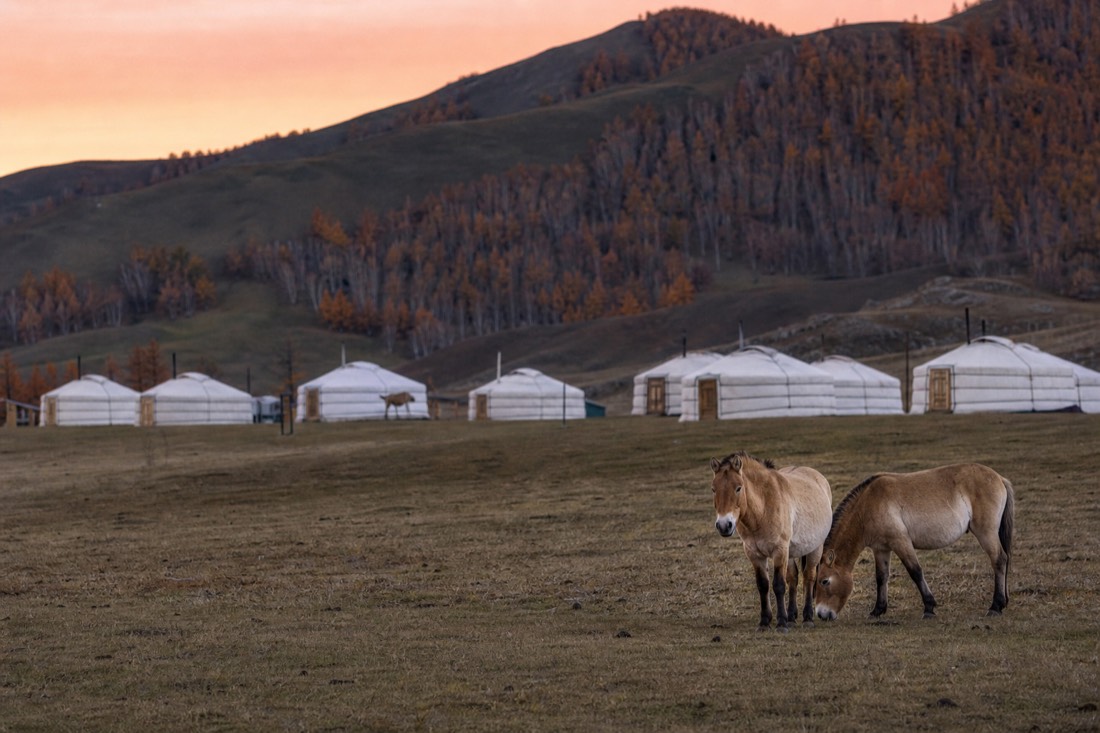
Ger comes up constantly once you start planning, since it is the word this whole site uses for the felt tents you sleep in and eat lunch beside. Say it GAIR, rhyming with "hair", not the "jer" or flat "gurr" that English spelling tempts you toward. Tögrög, Mongolia's currency, is closer to TUR-rug, with that first vowel pulled forward the way German speakers say ö. You will need the word at Hustai's gate if you are paying entrance and vehicle fees in cash. Ulaanbaatar itself, the capital every trip to Hustai starts and ends in, is OO-lahn BAH-tar, though almost everyone, guides included, shortens it to UB within a day of arriving.
Two more are worth knowing specifically because they sit on this site already. Töv is the province Hustai belongs to administratively, said TUV, short and rhyming loosely with "move". Moiltiin Am is the valley area inside the park where harems are often found, said roughly MOYL-teen AHM, a name that comes up throughout our map and orientation guide.
None of these words are difficult in isolation. What trips visitors up is stacking two or three of them into one sentence on the first morning, before your ear has adjusted to Mongolian rhythm at all. "We are staying in a ger near Töv, heading out to see the takhi at Hustai" is a perfectly ordinary sentence here, and it is also five unfamiliar sounds in a row for a first-time visitor. Give yourself the first hour of the drive to get comfortable, and by lunch it will feel like your own vocabulary rather than borrowed words.
| Word | Say it | What it means |
|---|---|---|
| Ger | GAIR | The round felt tent, sometimes called a yurt in English |
| Tögrög | TUR-rug | Mongolia's currency, MNT |
| Naadam | NAH-dahm | The national summer festival of wrestling, archery and horse racing |
| Ulaanbaatar | OO-lahn BAH-tar | The capital, almost always shortened to UB |
| Töv | TUV | The province Hustai sits within |
| Moiltiin Am | MOYL-teen AHM | A valley area inside the park, prime for horse viewing |
Practise them out loud once, in order, before you meet your guide: GAIR, TUR-rug, NAH-dahm, OO-lahn BAH-tar, TUV, MOYL-teen AHM. That short drill covers almost every Mongolian word you will need across a whole Hustai trip, from paying at the gate to naming the valley you are standing in.
What is Naadam, and does it change a Hustai visit?
Naadam, said NAH-dahm, is Mongolia's national summer festival, built around wrestling, archery and horse racing, sometimes called the Three Manly Games. The 2026 national festival in Ulaanbaatar runs July 11 to 13. It happens in the capital, not inside Hustai, but travellers passing through the city on those dates will feel it everywhere, from crowded hotels to a livelier, busier Ulaanbaatar.
Naadam is not part of a Hustai itinerary directly. It is a city-wide event, and the wrestling, archery, and racing all take place around Ulaanbaatar's stadiums and open ground, well east of the park. What it does affect is logistics: accommodation fills up fast around those July dates, and a Hustai day trip booked either side of Naadam is worth locking in early rather than assuming a spare afternoon slot will be there. If your Mongolia trip happens to land on the festival, treat it as a bonus rather than a clash. Plenty of visitors do both, the horse racing in the capital and the wild horses at Hustai, in the same week.
The word itself is worth carrying even outside festival dates, since guides and hosts will say it in passing all trip, whether or not you land on the national event itself. Wrestling, archery, and horse racing, the three disciplines the festival is built on, sit close to the identity of the country in a way few Western festivals compare to, which is part of why the 2026 dates are worth checking against your own if the timing is at all flexible.
Why do Mongolian names look different across different sources?
Mongolia writes its own language in Cyrillic script, so almost every place name you read in English is someone's transliteration, not a fixed original spelling. That is why Hustai and Khustai are both correct, and it is also why Ulaanbaatar shows up as "Ulan Bator" on older maps and some travel guides still in circulation.
This is the same pattern behind the H and Kh you have already met with Hustai, just wider in scope. There is no single official Latin-alphabet spelling that every source agreed to use, so different organisations, at different times, made their own reasonable calls about how to render a Cyrillic word in English letters. The result is a small, harmless mess: park websites, travel guides, and academic papers each settle on a spelling and stick with it, and a searcher moving between sources meets three or four versions of what is really one name.
Knowing this saves you from a specific kind of confusion. If a booking site, a map app, and a guidebook spell something three different ways, none of them is wrong and none of them is the park correcting a mistake. They are just three transliterations of the same Mongolian word.
It is worth searching under more than one spelling too, particularly if you are digging into academic or conservation material rather than tour listings. A search for "Hustai" and a search for "Khustai" can return genuinely different results even though they point at the same 50,600-hectare reserve, since different publications settled on different transliterations years apart and never reconciled them.
| Written form | Where you will see it |
|---|---|
| Hustai | This site and the park's own English pages |
| Khustai | Wikipedia and much of the scientific literature |
| Khustain Nuruu | The park's full Mongolian name, meaning Birch Mountains |
| Ulaanbaatar | The current standard English spelling, used almost everywhere today |
| Ulan Bator | An older Western spelling, still seen on some older maps and guidebooks |
The names Bat-Erdene hears mixed up most
Guiding Hustai since 2022, past a thousand travellers by my own count, I hear every possible version of these names, and a handful of mix-ups repeat far more than Przewalski itself. Knowing them in advance will not change your trip, but it makes the first ten minutes with your guide noticeably smoother.
The park's full Mongolian name, Khustain Nuruu, gets shortened, mangled, or dropped entirely, which is fine since "Hustai" alone does the job in conversation. Moiltiin Am, the valley area we work most for sightings, tends to get flattened into something like "moil-teen" with the stress in the wrong place, again harmless, guides will know exactly where you mean. Ger sometimes comes out as "jer", closer to how the letter looks in English than how it sounds in Mongolian. And tögrög, when people are counting out cash at the gate, often loses its second syllable entirely and becomes a flat "togrog".
| What guests often say | Closer to the real sound | Does it matter? |
|---|---|---|
| "Khustain Nuruu" attempted in full, then abandoned | Just say "Hustai"; it does the job | Not at all, this is normal |
| "moil-teen" with flat stress | MOYL-teen AHM, stress the first syllable | No, guides follow along easily |
| "jer" for the tent | GAIR | No, but GAIR sounds more fluent |
| "togrog" flattened | TUR-rug, with the pulled-forward vowel | No, cash is cash either way |
None of this changes whether your guide understands you. What it changes is how quickly the first exchange at the gate feels like a conversation between people who have both been here before, rather than a visitor working through an unfamiliar phrasebook. I would rather spend those first minutes pointing out a harem on the ridge than correcting a name, and travellers who arrive having practised even two or three of these words in the van tend to relax into the day noticeably faster than those who do not.
Common questions
Is it Przewalski or Przhevalsky?
Both refer to the same explorer. Przhevalsky is closer to the Russian pronunciation of his surname, while Przewalski is the Polish spelling that became attached to the horse. In English the horse is almost always written Przewalski and said shuh-VAL-skee.
Should I say Hustai or Khustai?
Either is correct. They are two spellings of the same name, both aiming at a soft throaty consonant at the start. The park's own English site uses Hustai, so that is the safest choice in writing. Out loud, say KHUS-tie.
What does takhi mean?
Takhi is the Mongolian name for the Przewalski's horse and is often translated as "spirit". It carries a sense of reverence, fitting for an animal that is the national symbol of Mongolia. It is also much easier to pronounce than Przewalski, so many guides prefer it.
Will Mongolian guides understand if I mispronounce these?
Almost certainly. Guides hear every version of Przewalski daily and will follow along. Using takhi and KHUS-tie makes you instantly clear, and saying "the takhi at KHUS-tie" is the phrase that gets the warmest response.