What to Pack for a Hustai Day Trip
The kit that makes or breaks a day on the steppe, from binoculars for distant horses to a warm layer you will want even in July.
 Written with Bat-Erdene Ganbaatar, Hustai National Park tour guide and wildlife specialist
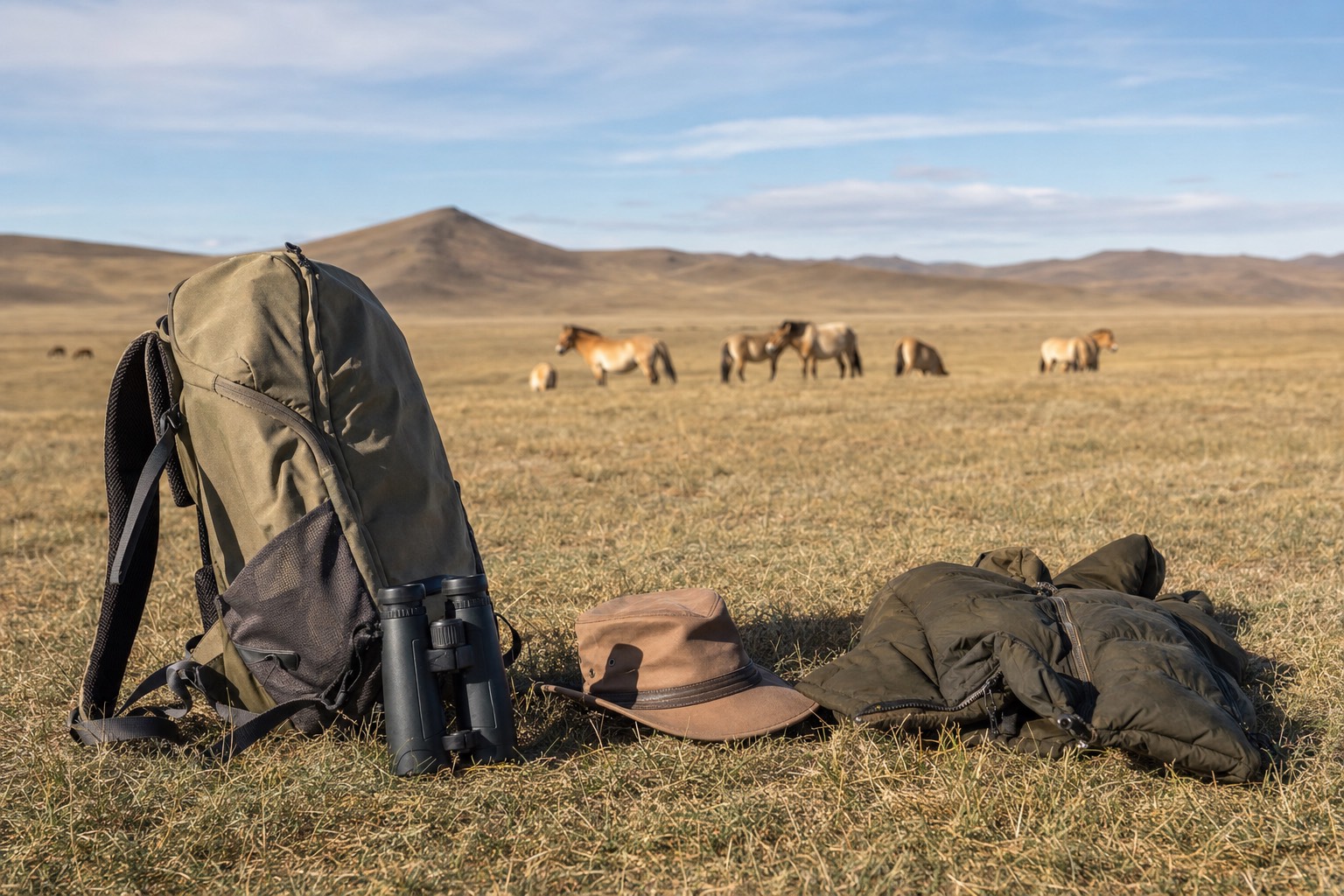
The short answer
Pack for wind, sun and sudden cold, all in one day. The steppe swings hard, so bring layers including a warm one even in summer, a windproof shell, sun protection, and sturdy shoes for uneven ground. Binoculars are close to essential because takhi are watched from 200 to 300 metres. Add a telephoto lens for photos, water and snacks, and cash in Mongolian tugrik if you might pay park fees yourself. The park runs in all weather, so plan for it.
The thing visitors underpack for is the cold, and it catches people out in July of all months. I have stood in a valley at Hustai on a warm summer afternoon, watching a harem graze, when the wind swung round off the hills and the temperature fell like a stone. Guests in a single t-shirt regret it fast. After years of guiding here I have watched the same small kit decisions turn a great day into a rough one, so this is the field-tested list, built around what the steppe actually does to you and what the wild-horse viewing actually asks.
What should you pack for a day at Hustai?
Bring layers you can add and shed, including one properly warm layer even in summer, plus a windproof shell, sun hat, sunglasses and high sun cream. Add binoculars for the distant takhi, sturdy closed shoes for uneven ground, water, snacks, and cash in Mongolian tugrik for any park fees. The last approach road is bumpy gravel, and the park operates in all weather.
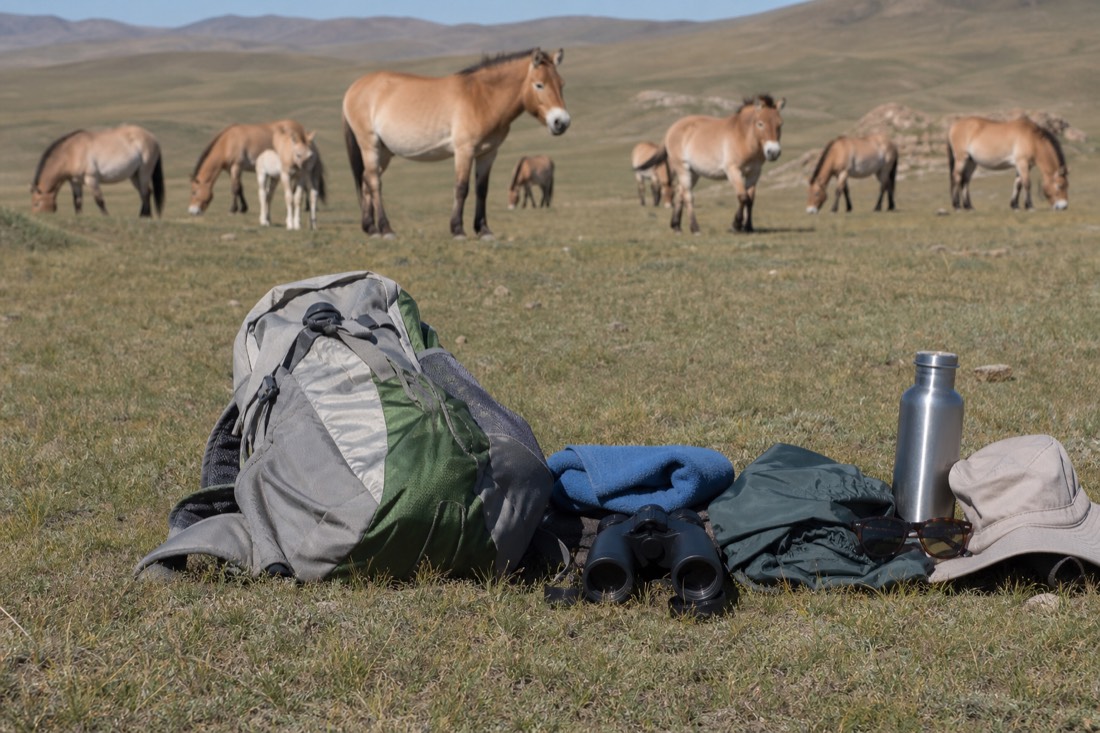
Everything on the list traces back to two facts about this place. First, it is high, open steppe where sun, wind and temperature swing sharply within a single day, so the official park guidance and every honest operator tell you to carry a warm layer whatever the forecast. Second, the takhi are watched from a distance of 200 to 300 metres to keep them wild, which makes optics the difference between a memorable sighting and a row of distant dots. The GetYourGuide day trip listing spells out the all-weather reality plainly: departures run rain or shine, and you bring a warm layer.
Here is the core kit, grouped by what it protects you from. Nothing here is optional padding; each item earns its place on a real day out.
| Need | What to bring | Why it matters |
|---|---|---|
| Warmth | Fleece or insulated mid-layer | Steppe cold arrives fast, even in summer |
| Wind and rain | Packable windproof, waterproof shell | Exposed valleys, all-weather operation |
| Sun | Hat, sunglasses, high-factor cream | Little shade, strong high-altitude sun |
| Feet | Sturdy closed walking shoes | Uneven ground, some short walking |
| Wildlife | Binoculars, telephoto lens | Takhi viewed from 200 to 300 m |
| Fuel | Water, snacks | Long day, limited facilities |
| Money | Cash in tugrik | Park fees if you pay them yourself |
How should you layer for the steppe weather?
Dress in three adjustable layers: a breathable base, a warm mid-layer such as fleece, and a windproof, water-resistant outer shell. Mornings and evenings are cold, midday can be hot, and wind is near-constant. Being able to add and remove layers through the day is far more useful than one heavy coat.
The steppe does not do gentle transitions. A calm, sunny valley can turn windblown and chilly within the hour, and the dawn and dusk viewing windows, when the horses are most active, are also the coldest parts of the day. That timing is why the warm layer keeps coming up: the best wildlife moments happen when it is cold. My best time to visit guide covers how the seasons shift this, and the packing balance changes a lot between a May morning and a January one.
| Season | Layering priority | Add for the season |
|---|---|---|
| Spring (Apr to May) | Warm mid-layer, windproof shell | Gloves for cold mornings |
| Summer (Jun to Aug) | Light base plus one warm layer | Strong sun protection, still pack the fleece |
| Autumn (Sep to Oct) | Insulated mid-layer, shell | Warm hat for dusk viewing |
| Winter (Nov to Mar) | Heavy insulation, thermal base | Serious cold-weather kit, insulated boots |
Whatever the month, keep the warm layer in your day pack rather than the vehicle. When the wind turns during a viewing you do not want it a kilometre away.
What optics and camera gear do you actually need?
Binoculars in the 8x42 or 10x42 range are the single most useful thing you can bring, because the takhi are kept at a distance. For photos, a telephoto lens of at least 200mm, ideally 300mm or more, is what turns distant horses into real shots. A shorter lens will not reach. Pack a padded bag for the bumpy approach.
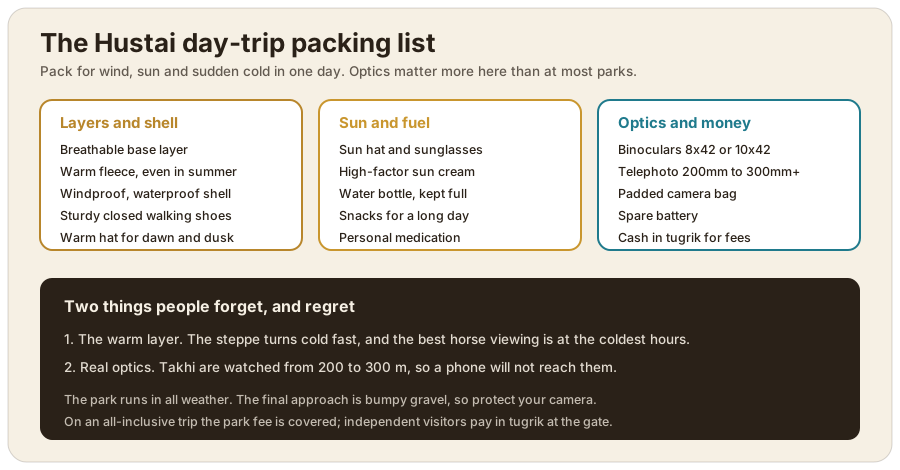
This is where I see the most disappointment, and it is entirely avoidable. Visitors arrive with a phone camera, frame a hillside of grazing takhi 250 metres off, and get a green blur with pale specks. The distance rule that protects the horses also defeats short lenses. Binoculars solve the watching problem for everyone, and a proper telephoto solves the photography problem for those who care about images. Our companion piece on photographing takhi from a distance goes deep on technique, and the animals guide explains why the distance is non-negotiable.
| Gear | Recommendation | Note |
|---|---|---|
| Binoculars | 8x42 or 10x42 | The one item almost everyone should bring |
| Telephoto lens | 200mm minimum, 300mm plus ideal | Shorter lenses will not reach the horses |
| Camera protection | Padded bag or wrap | The gravel approach is genuinely bumpy |
| Spare battery | One or two | Cold drains batteries faster |
| Phone | Fine for scenery, not the horses | Good for the steppe, weak for wildlife |
For the deeper background on why the takhi are watched at arm's length, the Wikipedia Hustai entry covers the reintroduction and the conservation rules that shape a visit.
What about money, documents and the practical bits?
Carry some cash in Mongolian tugrik for park fees and incidentals, since card payment at the gate is not reliable. If your trip is all-inclusive, entry is already covered and you need less. Bring your passport for the drive, any personal medication, and a small first-aid kit. Facilities inside the park are limited, so come self-sufficient.
The money question trips up independent travellers most. Park entry is paid at headquarters, and cash in local currency is the safe assumption. Both featured tours already include the entrance fees, which removes the guesswork, but if you are arranging your own transport you will want tugrik in hand. If you would rather have the fees, lunch and transfers all handled and simply turn up ready, book the group day out like the Hustai Day Trip from Ulaanbaatar and check live availability and prices on GetYourGuide. That takes the fee logistics off your plate entirely.
| Item | Independent visitor | On an all-inclusive tour |
|---|---|---|
| Park entry cash | Bring tugrik for the gate | Already included |
| Passport | Carry for the drive | Carry for the drive |
| Medication and first aid | Bring your own | Bring your own |
| Water and snacks | Pack for the day | Often lunch is provided |
| Warm layer | Essential | Essential |
How does the packing list change beyond just layers, season by season?
Spring adds mud to the equation, so waterproof footwear matters as much as warmth. Summer needs strong sun and dust protection on top of the fleece already in your bag. Autumn wind at dusk calls for a hat and gloves before the real cold sets in. Winter is a different trip altogether, needing serious cold-weather gear beyond anything a spring or summer list covers.
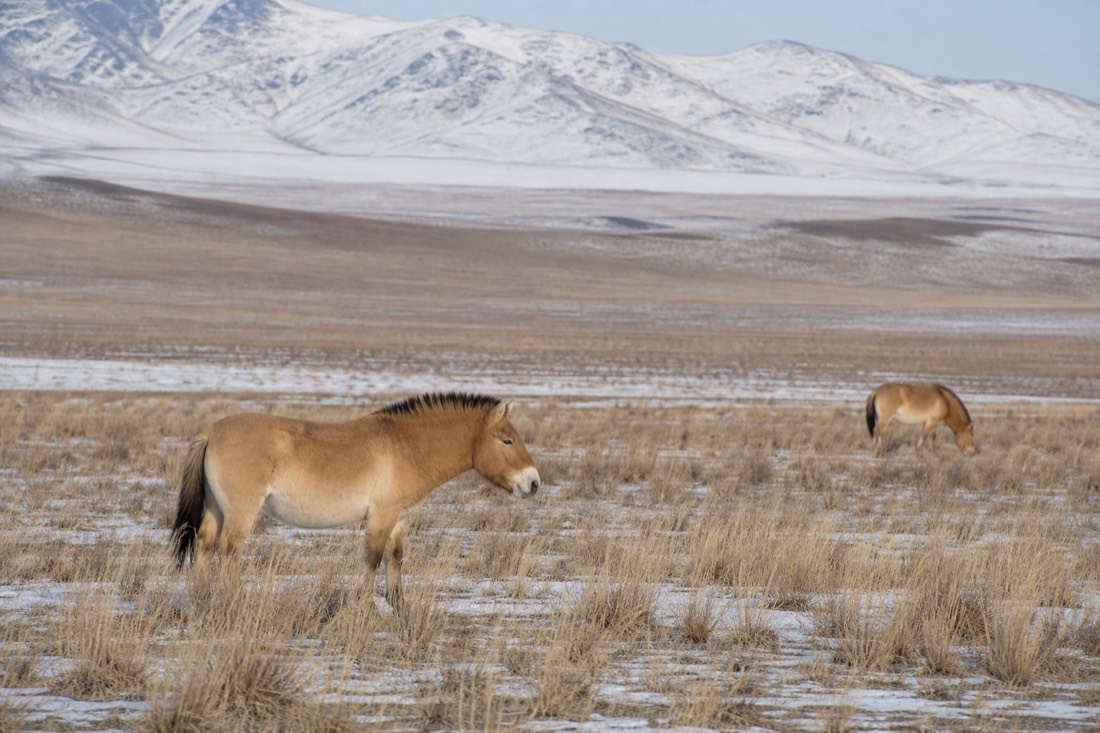
The layering table earlier in this guide covers the base, mid and outer layers you need whatever the month. This is the extra kit each season adds on top of that, the small items that either save a day or ruin one.
| Season | Extra beyond the base layers | Why |
|---|---|---|
| Spring (Apr to May) | Waterproof boots, gaiters | Thaw and rain leave tracks muddy |
| Summer (Jun to Aug) | Sunglasses, a buff or scarf for dust, extra water | Strong high-altitude sun and dry, dusty wind |
| Autumn (Sep to Oct) | Warm hat, gloves for dusk viewing | Wind sharpens fast once the sun drops |
| Winter (Nov to Mar) | Insulated boots, hand and toe warmers, a balaclava | Mongolian winters turn severely cold |
Winter is worth flagging on its own. The park stays open and departures still run, but this is the one season where underpacking is not just uncomfortable, it can cut a viewing short. If winter is your window, pack as though the fleece and shell from the base layering list are the minimum, not the whole answer.
Spring and autumn sit in between and get underrated for it. Neither demands the full winter kit, but both punish anyone who packs as though a mild afternoon is the whole story. A sunny spring midday can feel genuinely warm while the same valley at dawn is bitterly cold, and autumn does the same trick in reverse as the season turns toward winter. The extra items in the table above are small and light enough that carrying them on a day you do not need them costs nothing, while leaving them behind on a day you do costs the whole viewing.
What camera and optics gear should you bring, by budget?
A phone alone covers the steppe scenery but nothing at wildlife distance. A mid-range setup of 8x42 binoculars and a bridge camera gets you real views of the takhi. A serious kit, 10x42 binoculars plus a mirrorless or DSLR body with a 300mm-plus lens, is what turns a distant sighting into a usable photograph.
| Tier | Binoculars | Camera | Realistic result |
|---|---|---|---|
| Budget | None, or compact 8x25 | Smartphone | Good for steppe scenery, weak on distant wildlife |
| Mid-range | 8x42 binoculars | Bridge camera or superzoom | Solid views of the takhi, workable wildlife photos |
| Serious | 10x42 binoculars | Mirrorless or DSLR with a 300mm-plus telephoto, spare battery | Real wildlife photography at the required 200 to 300 metre distance |
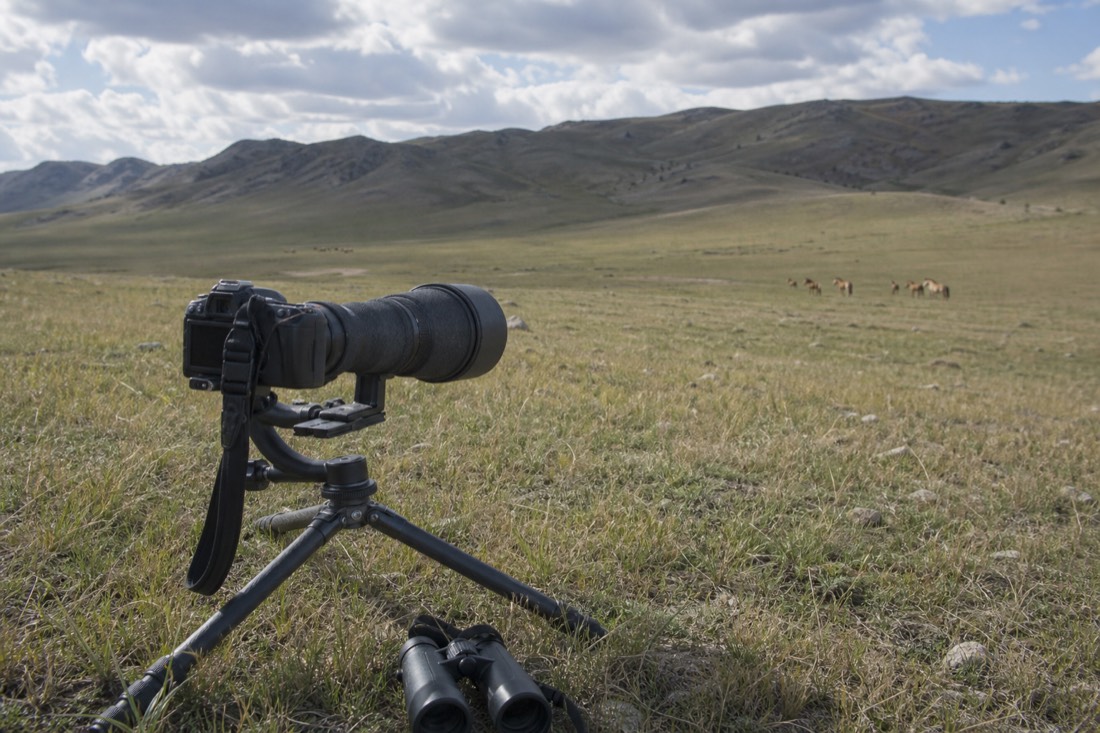
Where you land on this tier list should match what you actually want out of the day. If the takhi story matters more than the photographs, the mid-range tier gets you everything you need to watch well. If you want images you will actually print or share, the serious tier is not optional, because nothing shorter than 200mm reaches a harem kept deliberately at a distance.
One thing I tell every guest with a heavy camera bag: bring one working set rather than two half-good ones. A single reliable pair of binoculars plus one camera body with the right lens beats a bag full of backup gear you are not confident using under pressure, and pressure is exactly what a fast-moving harem at last light creates. Practise with your kit before you fly, not on the ridge, since the light window that matters most rarely lasts long enough to fumble with settings you have not tried before.
What documents and paperwork should be in your day bag?
Carry your passport, since it is needed for the drive out of the city. Check your visa status before you travel: US citizens can enter Mongolia visa-free for up to 90 days, while most EU nationals and travellers from 34 other countries, including Australia, New Zealand and Canada, get up to 30 days visa-free under the extended 2026 policy. Confirm your travel insurance too, since it is included on the GetYourGuide group day trip but not on the Viator private tour.
| Document | Note |
|---|---|
| Passport | Needed for the drive out of the city; carry the original, not a copy |
| Visa or entry confirmation | US citizens: visa-free up to 90 days. Many EU and 34 other nationalities: visa-free up to 30 days under the extended 2026 policy. Check your own nationality before travel |
| Travel insurance proof | Included on the GetYourGuide group day trip; not included on the Viator private tour, so arrange your own if booking that one |
| Cash in tugrik | For park fees or extras not covered by your tour |
The insurance difference between the two featured tours catches people out more than any visa rule. It is a small line in the listing details, easy to miss when you are comparing tours mainly on price and schedule, so check it before you book rather than after.
The visa side is worth double-checking against your own passport specifically, since entry rules can and do change and the extended 30-day policy for the 34 additional nationalities is described as temporary through the end of 2026 in the sources behind this guide. If your passport is not from the United States or one of the listed visa-free countries, confirm your requirements with an official source before you travel rather than assuming the general pattern applies to you.
What do people bring but do not actually need?
The most common over-packing mistakes I see are camping gear on a day trip, large amounts of US dollars instead of tugrik, a short zoom lens that will never reach the horses, and hard suitcase-style luggage that struggles on the gravel approach.
I have watched enough guests unpack at the trailhead to know the pattern by now. None of these mistakes ruin the day outright, but each one adds friction you can avoid with five minutes of thought before you leave your hotel.
The pattern behind all four is the same: people pack for the trip they imagine rather than the day this actually is. Hustai is a single-day wildlife outing with a bumpy final approach and a specific viewing distance, not a multi-day expedition or a scenic photo walk, and the kit that suits those other trips mostly just adds weight here. Pack for the day in front of you and the list gets shorter, not longer, than most people expect.
If you take one thing from this whole guide, let it be that the two genuinely non-negotiable items are a warm layer and something to see distant animals with, whether that is binoculars or a proper telephoto lens. Everything else on these tables is either seasonal, situational, or comfort rather than necessity. Get those two right and a middling packing job everywhere else will not cost you the day.
| Commonly over-packed | Why it is not needed | Bring instead |
|---|---|---|
| Full camping gear | The park does not allow camping inside its boundaries | A ger camp booking, or a same-day return to Ulaanbaatar |
| Large amounts of US dollars in cash | Local fees and small purchases run in Mongolian tugrik | A smaller stash of tugrik, converted before you go |
| A short zoom lens for "wildlife shots" | It will not reach a takhi kept at 200 to 300 metres | A 200mm lens at minimum, ideally 300mm or more, or just binoculars |
| Heavy suitcase-style luggage | A day-trip vehicle has limited space and a bumpy final stretch | A soft day pack that survives the gravel approach |
There is a quieter fifth mistake that does not fit neatly into that table: over-relying on a phone for everything. Signal thins out well before the park gate, so a phone that was doing double duty as your map, your translator and your only camera can leave you without any of the three exactly when the horses appear. A downloaded offline map, a few key phrases written down rather than trusted to an app, and a proper camera or at least a spare battery cover that gap without adding real weight to the bag.
Quick questions
Do I really need a warm layer in summer?
Yes. The steppe cools sharply when the wind turns, and the dawn and dusk viewing windows are the coldest hours of the day. A fleece or light insulated layer weighs little and saves an uncomfortable afternoon. It is the item summer visitors most often wish they had packed.
Are binoculars worth bringing?
Very much so. The takhi are watched from 200 to 300 metres to keep them wild, so binoculars turn distant shapes into a real sighting. If you bring one piece of kit beyond your clothes, make it a pair of 8x42 or 10x42 binoculars.
Will my phone take good horse photos?
Not at the required distance. A phone is fine for the sweeping steppe scenery but cannot reach horses hundreds of metres away. For wildlife shots you need a telephoto lens of at least 200mm, ideally 300mm or more, on a proper camera.
Do I need cash at the park?
If you are travelling independently, yes, carry Mongolian tugrik for the entry fee paid at headquarters, since cards are unreliable there. On an all-inclusive tour the entrance is already covered, so you need less, but a little cash for incidentals never hurts.